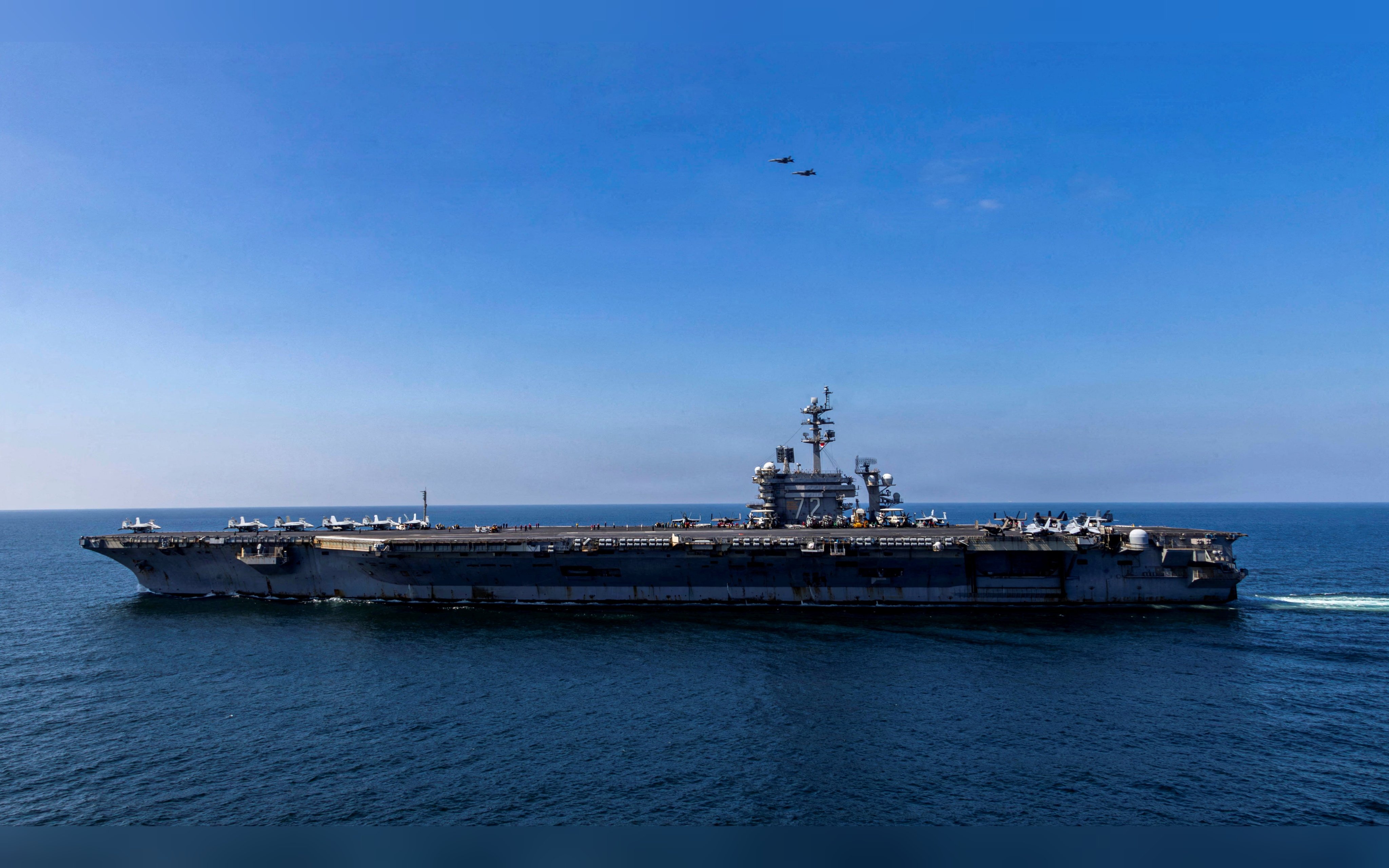
The United States is moving forward with replacing the USS Abraham Lincoln in West Asian operations, President Donald Trump confirmed on Friday, addressing mounting concerns about the prolonged deployment of the naval vessel and the toll it has taken on American personnel. The aircraft carrier will be succeeded by the USS George Washington as part of a routine rotation schedule, marking a significant shift in the carrier presence that has been supporting US military operations in the region for an extended period. The announcement comes after growing pressure from military families and lawmakers who have raised alarm about deteriorating conditions aboard the vessel during its historic deployment length.
Trump characterised the transition as routine, telling reporters that the carrier "is moving right now, or very shortly, and it's being replaced with another very similar ship." When pressed about whether the deployment had extended beyond acceptable limits, the president dismissed such concerns, stating: "No. Not nearly long enough." His remarks reflected the administration's perspective on maintaining sustained military presence in a strategically critical region, even as senior military officials acknowledged the genuine hardships experienced by sailors and marines on extended deployment cycles.
The USS Abraham Lincoln has remained at sea for more than 250 days, an extraordinarily lengthy deployment even by military standards. Most striking is that the vessel has not made a single port call in the last 200 days, depriving sailors of essential opportunities for rest, recreation, and psychological reprieve. The carrier's original deployment began in November, but it was redirected to West Asia in January ahead of heightened US military operations in the region. This extension of duty, driven by operational requirements, has created significant strain on crew morale and physical wellbeing.
Acting Navy Secretary Hung Cao formally announced Friday that the USS Abraham Lincoln would be returning home, emphasising that the decision prioritises the welfare of personnel while acknowledging the operational success achieved during the extended mission. "The USS Abraham Lincoln crushed their deployment and will return home soon as part of a planned rotation," Cao stated. He framed the situation within the broader context of military service, noting that "the safety and security of our Sailors and Marines always comes first," whilst simultaneously insisting that the extended deployment was justified because "the mission demanded it." This delicate balancing act reflects the institutional tension between supporting personnel and maintaining strategic commitments.
Senator Richard Blumenthal of Connecticut had directly raised concerns with Defence Secretary Pete Hegseth and acting Navy Secretary Cao, drawing attention to a troubling catalogue of problems aboard the vessel. These included critical shortages of basic supplies, water contamination issues, malfunctioning plumbing systems, deteriorating mental health conditions among crew members, concerning deck safety hazards, and disruptions to mail delivery that prevented families from sending care packages to sailors for extended periods. Blumenthal's intervention highlighted how operational tempo can cascade into cascading welfare failures that affect every aspect of shipboard life, from the mundane to the critical.
Cao's public statement acknowledged these challenges with unusual candour for military leadership. He revealed that a small number of sailors and marines sought mental health treatment during the deployment, though he emphasised there were no fatalities associated with these cases. The acting Navy Secretary explained the operational context philosophically: "Deployments are hard. Combat operations make them harder. War is hell and normal routines are disrupted." He recognised that even meticulous planning cannot eliminate the uncertainty and rapid changes inherent in active military operations, and that successful adaptation depends on institutional flexibility and personnel resilience.
The operational metrics Cao disclosed illustrate the intensity of the USS Abraham Lincoln's mission across the 266 days of deployment. During 200 of those days, the carrier operated within a designated combat zone, with its aircraft conducting more than 10,000 sorties and delivering more than 1.5 million pounds of ordnance in support of regional operations. These figures demonstrate the sustained intensity of the carrier's operations and the substantial contribution it has made to US military objectives. However, these impressive operational statistics must be weighed against the documented human costs of maintaining such a tempo without adequate operational pauses.
The replacement by the USS George Washington represents a previously scheduled rotation that provides some relief to the Lincoln's exhausted crew while maintaining American naval power projection in a region of significant strategic importance. For Southeast Asian observers, the rotation underscores the persistence of substantial American military commitment to West Asian affairs, which continues to shape regional geopolitics and international dynamics relevant to the broader Indo-Pacific balance. The carrier rotations reflect the US Navy's global commitments and the challenge of sustaining deployments across multiple strategic zones simultaneously.
The extended USS Abraham Lincoln deployment raises important questions about sustainable military operations and the long-term wellbeing of service personnel. The incident highlights tensions between operational necessity and personnel welfare that military establishments across the world, including allied nations in Southeast Asia, must navigate. While military service inherently involves sacrifice and demanding conditions, the documented problems aboard the vessel suggest that deployment schedules may exceed optimal personnel sustainability thresholds. As navies worldwide grapple with recruitment and retention challenges, maintaining acceptable deployment-to-home-time ratios has become increasingly important for force readiness and personnel morale.
The transition to the USS George Washington will allow the Lincoln's crew to return home for extended rest, rehabilitation, and family reunification after the historically extended deployment. This provides important context for understanding how naval operations function in practice, beyond the strategic calculations that drive deployment decisions. For Malaysian and regional observers monitoring American military posture, the carrier rotation cycle demonstrates both the commitment and the logistical complexities involved in maintaining sustained naval presence across vast distances. The incident also reflects broader conversations within the US military about operational tempo, personnel welfare, and the sustainability of current global commitments.

