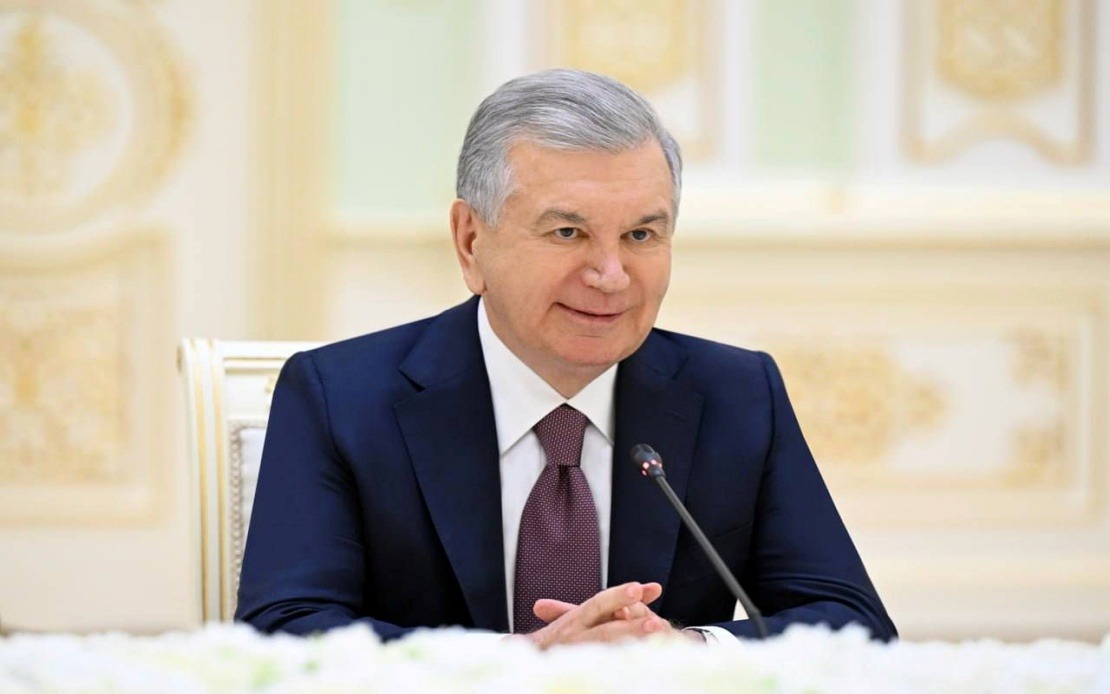
President Shavkat Mirziyoyev of Uzbekistan has issued a powerful call for international cooperation rooted in the intellectual and spiritual traditions of Islamic civilisation, positioning science and education as critical tools for building a more peaceful and tolerant world. Speaking at the First International Islamic Civilisation Forum in Tashkent, the Central Asian leader addressed mounting global tensions, pointing to proliferating conflicts, religious intolerance and deliberate attempts to deepen divisions between cultures and faiths as defining challenges of our age.
The forum, which unfolds across three Uzbek cities—Tashkent, Samarkand and Termez—over five days, brings together roughly 300 international participants including scholars, religious leaders, government officials and cultural experts from over 50 nations. This gathering represents a significant diplomatic effort to reframe Islamic heritage not as a source of contemporary conflict but as an historical wellspring of rigorous intellectual inquiry, scientific discovery and universal moral principles. The event's theme, "The Path of Peace, Tolerance and Enlightenment," signals Uzbekistan's strategic positioning of itself as a custodian of this civilisational legacy and a bridge between East and West.
Mirziyoyev, whose remarks were delivered by presidential adviser Khayriddin Sultanov, emphasised that Islamic values remain foundational to human progress and coexistence in an era marked by profound upheaval and mistrust. He argued that throughout history, these principles have catalysed breakthroughs in science, propelled cultural flourishing and nurtured spiritual growth, ultimately enriching all of humanity's intellectual commons. This historical framing carries particular relevance for Southeast Asian nations, where Islam coexists with diverse religious traditions and where the region's own scholars and merchants contributed substantially to transmitting Islamic knowledge networks across Asia.
Uzbek officials point to their nation's "Enlightenment Against Ignorance" initiative, launched at the United Nations in 2017, as embodying this philosophy. The programme emphasises how investment in scientific research, formal education, cultural development and ethical leadership directly generate conditions for mutual comprehension, social stability and sustainable advancement. For Malaysian and Southeast Asian policymakers, this model offers an alternative narrative to securitised framings of religious identity, suggesting instead that educational and scientific cooperation can serve as practical vehicles for interfaith dialogue and regional resilience.
The forum showcases Central Asia's outsized historical contribution to global intellectual development. Mirziyoyev highlighted legendary scholars whose achievements remain foundational across multiple disciplines: Muhammad al-Khwarizmi, whose mathematical innovations gave rise to the term "algorithm"; Abu Rayhan Biruni, a polymath whose astronomical and geographical works influenced Renaissance Europe; Abu Ali ibn Sina, whose medical encyclopaedia dominated European universities for centuries; and several Islamic jurisprudence and hadith scholars whose legal and theological frameworks continue shaping Islamic thought. This historical recitation serves multiple purposes—restoring regional pride, legitimising Uzbekistan's authority on Islamic affairs, and demonstrating Islam's historical compatibility with empirical science at a moment when such narratives are globally contested.
Uzbek leadership envisions what it terms a "Third Renaissance"—a contemporary renewal anchored in technological innovation, advanced education, scientific rigour, spiritual development and respect for historical knowledge. This formulation attempts to position Uzbekistan as a laboratory for reconciling modernity with tradition, secular governance with Islamic values, and development with cultural preservation. Such framings resonate across the Muslim-majority world, where similar tensions between rapid modernisation and cultural continuity dominate policy discussions. For Southeast Asian observers, Uzbekistan's experiments in managing these tensions warrant attention given comparable challenges across the region.
The Islamic Civilisation Centre itself functions as the institutional pivot for this vision. Described by Mirziyoyev as a conceptual and physical bridge linking past with future and Orient with Occident, the Centre serves as a convening space for research communities, religious authorities and international organisations to advance collaborative scholarship and safeguard ideas transcending particular national interests. The forum has mobilised the Islamic World Educational, Scientific and Cultural Organisation (ICESCO) alongside multiple Uzbek government bodies, signalling how Tashkent is embedding itself within broader international Islamic institutional networks while maintaining clear state leadership.
The substantive programming reflects this intellectual ambition. Eleven plenary sessions, four international scientific conferences, and exhibitions of rare manuscripts and artefacts demonstrate commitment to making Islamic civilisational heritage materially accessible and subject to contemporary scholarly scrutiny. Notably, the agenda incorporates emerging technologies, including sessions on artificial intelligence applications for digitising and preserving Islamic manuscripts. This technological dimension addresses practical heritage conservation challenges whilst signalling Uzbekistan's integration into global innovation ecosystems—a crucial concern for Central Asian nations seeking to avoid technological marginalisation.
The forum's expected outputs carry institutional weight. The planned Tashkent Declaration will formally articulate shared principles among participating nations and organisations, creating a binding reference document. Approval of the Islamic Civilisation Centre's 2027-2030 development roadmap provides five-year strategic clarity, whilst bilateral cooperation agreements between research institutions, universities and cultural bodies embed collaborative mechanisms into organisational structures. For Malaysian universities, research institutions and cultural organisations, these agreements represent potential partnership pathways, particularly as Southeast Asian scholars increasingly engage Central Asian Islamic intellectual traditions.
Uzbek President Mirziyoyev's emphasis on science and education as "the greatest unifying forces of our time" reflects sophisticated statecraft. By positioning these domains as the foundation for sustainable development and peaceful coexistence, Uzbek leadership recalibrates international discourse around Islam from security and demographic anxieties toward knowledge production and civilisational contribution. This framing gains force precisely because it marshals historical evidence, institutional infrastructure and forward-looking commitments rather than relying solely on rhetorical appeals.
For Southeast Asian nations navigating complex interfaith environments and balancing religious identity with inclusive governance, Uzbekistan's model offers instructive elements. The deliberate elevation of Islamic intellectual heritage within frameworks emphasising universality, scientific validity and shared humanity provides an alternative to polarising narratives that treat Islamic identity and modern development as inherently contradictory. Whether Uzbekistan can sustain this vision through actual institutional implementation and genuine international participation remains an open question, but the ambition itself represents a notable diplomatic initiative with potential resonance across Muslim-majority Asia.
The five-day forum in Central Asia ultimately represents more than a cultural celebration; it constitutes a strategic effort to reshape how the Islamic world engages with modernity, how secular institutions accommodate religious identity, and how international cooperation can be grounded in shared historical and intellectual traditions. For Malaysia and the broader Southeast Asian region, observing how this experiment develops may illuminate pathways for managing similar challenges at home.

