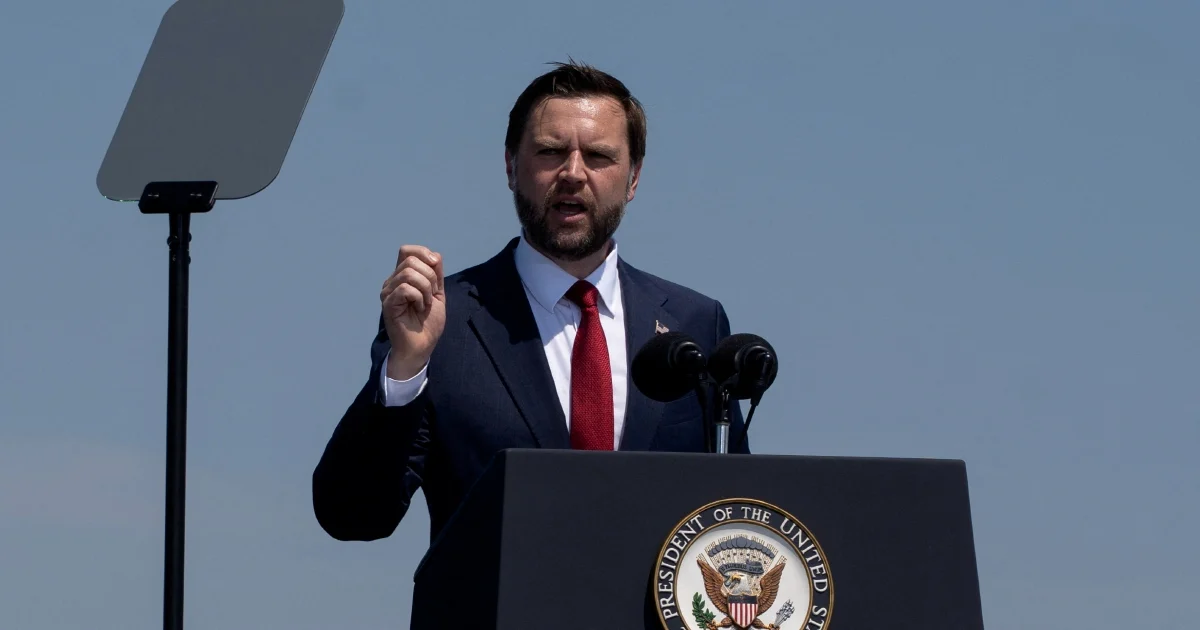
US Vice President JD Vance has delivered a sharp assessment of Britain's recent political trajectory, telling audiences in London that the country has been undermined by consistent leadership shortcomings spanning multiple administrations. His remarks signal a candid American perspective on the state of UK governance as the nation transitions to a new prime minister, and suggest the incoming Trump administration intends to speak plainly about challenges facing key allies.
Vance's critique reflects growing frustration among voters across the Atlantic with the revolving door of British leadership. The United Kingdom has endured unprecedented political turbulence over the past decade, with rapid changes in prime ministers, parliamentary deadlock, and shifting policy directions creating widespread public disillusionment. From the Brexit upheaval to the cost of living crisis and persistent economic headwinds, British citizens have seen their political establishment grapple with successive crises whilst failing to chart a clear course forward.
The vice president's comments carry significance beyond mere diplomatic discourse. They represent an early indication of how the new American administration views traditional allies and their performance in managing domestic affairs. Rather than offering reassuring platitudes, Vance chose directness—a style consistent with the Trump administration's approach to international relations. This candour may appeal to British voters tired of institutional self-protection and political messaging that obscures rather than clarifies national problems.
Vance specifically identified structural reform as essential to restoring confidence in British governance. His framing suggests that superficial leadership changes or minor policy adjustments will not suffice; instead, fundamental institutional and governance challenges must be addressed. This diagnosis aligns with concerns expressed by many British analysts and opposition figures, who have pointed to systemic issues ranging from parliamentary dysfunction to inadequate long-term economic planning.
The timing of Vance's remarks matters considerably. As a new prime minister prepares to take office with promises of change and renewal, the American vice president's emphasis on substantive structural reform sets an implicit benchmark for the incoming government's ambitions. It suggests that American observers—and by extension, the Trump administration—will be watching closely to see whether Britain's new leadership delivers transformative change or merely offers continuity with a fresh face.
For Malaysian and Southeast Asian observers, Vance's criticism underscores a broader reality about international political dynamics. Britain's influence in the region, particularly through institutions like the Commonwealth and trade relationships, depends significantly on domestic stability and effective governance. When major Western allies experience prolonged political dysfunction, it creates uncertainty for partners and competitors alike. Malaysia's own engagements with Britain—whether on trade, security, education, or diplomatic matters—are affected by Westminster's capacity to formulate and execute coherent long-term strategies.
Vance's hope that the incoming British prime minister will deliver meaningful change also reflects American expectations for renewed transatlantic partnership. The US-UK relationship remains central to Western security architecture and intelligence sharing. A rejuvenated British government with clear reform agenda could strengthen this partnership and provide more reliable cooperation on global issues ranging from Indo-Pacific security to counterterrorism. For Southeast Asia, a more effective British government matters because it shapes Britain's capacity to engage meaningfully in the region and maintain its position in regional institutional arrangements.
The structural reforms Vance referenced likely encompass multiple domains. Economic policy, regulatory frameworks, and institutional efficiency have all been identified as areas requiring overhaul to restore British competitiveness and public confidence. The new prime minister will face pressure from multiple directions—voters demanding tangible improvements in living standards, businesses seeking regulatory clarity, and international partners like the United States expecting strategic alignment and capable governance.
Britain's leadership failures, as characterised by Vance, also have practical consequences for the bilateral relationship. Trade negotiations, defence cooperation, and intelligence sharing all depend on sustained political commitment and institutional capacity. Previous British governments, preoccupied with domestic crises, have sometimes struggled to maintain focus on international relationships and long-term strategic commitments.
The American vice president's intervention also reflects a calculated diplomatic approach. By expressing measured optimism about the incoming British leader whilst clearly articulating disappointment with past governance, Vance offers both criticism and an opportunity for reset. This approach creates space for improved relations whilst signalling that American patience is not unlimited and that future engagement will depend on demonstrated performance.
For observers in Malaysia and across Southeast Asia, Vance's remarks reinforce an important lesson: governance quality directly impacts a nation's international standing and influence. Britain's domestic political challenges have reduced its capacity to project power and influence regionally, demonstrating that even long-established democracies with deep institutional traditions cannot take their international position for granted.
Looking ahead, the new British prime minister faces the dual challenge of addressing Vance's implicit critique whilst rebuilding confidence at home and abroad. Structural reform requires sustained political capital and the ability to build consensus across traditionally divided factions. Whether the incoming government possesses both the vision and political will to deliver transformative change will determine not only Britain's future trajectory but also its capacity to serve as an effective global partner in an increasingly complex international environment.

