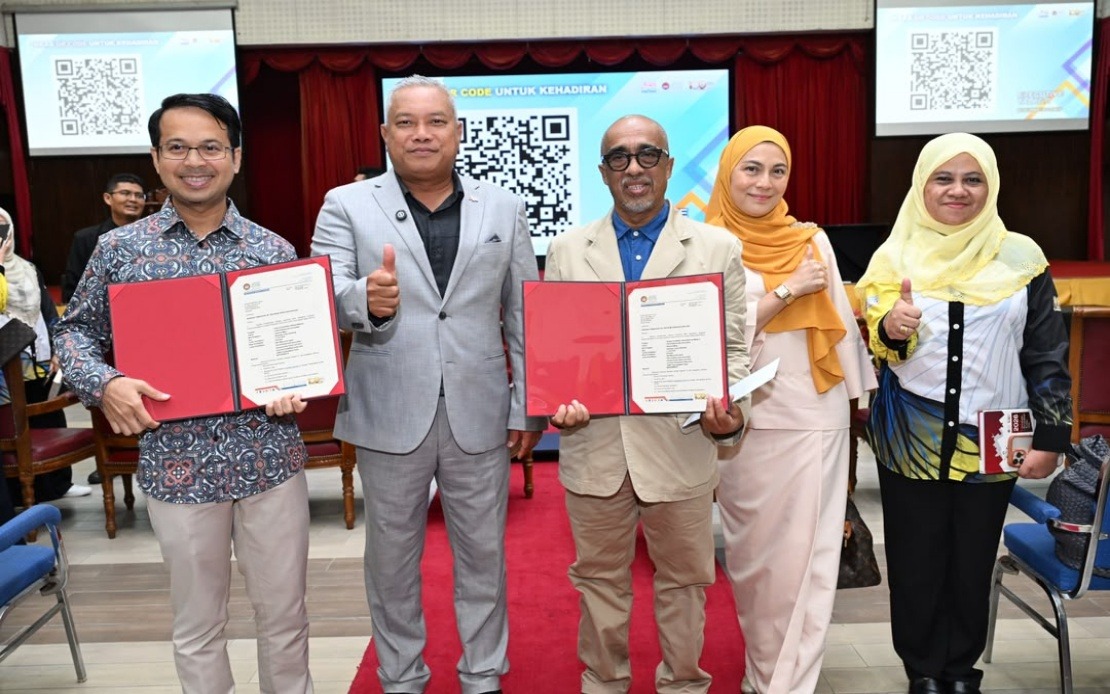
At 65, acclaimed Malaysian actor and filmmaker Mohd Sabri Yunus is finally realizing an ambition deferred across four decades. The prominent cultural figure has been offered a place in the Master of Education (Malay Literature) programme at Universiti Pendidikan Sultan Idris (UPSI) in Ipoh, gaining entry through an innovative accreditation route that values lived professional experience. Alongside him, television presenter and media personality Ahmad Fedtri Yahya, aged 45, has similarly been accepted into UPSI's Master of Education (Malay Language) programme using the same pathway, making both pioneers in these newly developed courses under the Faculty of Languages and Communication.
The route through which they gained admission—the Accreditation of Prior Experiential Learning for Award of Qualifications (APEL.Q)—represents a significant departure from conventional university entry requirements. Rather than demanding traditional academic prerequisites alone, this mechanism recognizes the substantial professional credentials and intellectual contributions that individuals have accumulated throughout their careers. For Sabri Yunus, whose influence spans acting, directing, and cultural commentary over several decades, and for Fedtri Yahya, whose work in broadcasting has shaped public discourse around language and media, this pathway opens tertiary education without requiring them to abandon their established professional trajectories.
Sabri Yunus's journey to this moment carries particular resonance for understanding Malaysia's cultural landscape. His two previous attempts to pursue university education, which coincided with his employment at Dewan Bahasa dan Pustaka (DBP) during the 1980s and 1990s, proved impossible to reconcile with full-time work commitments. Having joined DBP in 1982 as an illustrator, the institutional demands of formal higher education rendered simultaneous career progression unfeasible—a constraint that affected many talented Malaysians of his generation. Yet rather than viewing his decades outside academia as lost time, Sabri Yunus characterizes his extended professional life as a continuous learning experience, positioning every colleague and collaborator as an informal educator contributing to his intellectual development.
The research direction Sabri Yunus intends to pursue through his Master's programme reflects the depth of his engagement with Malaysian cultural traditions. He has expressed particular interest in conducting scholarly investigation into specific forms of pantun—the classical Malay poetic verse that remains central to national cultural identity yet increasingly faces marginalization among younger Malaysians. This focus suggests that his postgraduate work will not merely fulfill personal educational aspirations but contribute substantively to contemporary scholarship on the preservation and evolution of indigenous literary forms during a period of rapid technological and social change.
Fedtri Yahya's motivations for pursuing postgraduate study reveal complementary concerns about linguistic vitality in contemporary Malaysia. His selection of Malay Language as his Master's focus stems from a conviction that language usage patterns directly reflect—and influence—the intellectual and cultural sophistication of society itself. As someone whose professional identity involves addressing national audiences through media channels, Fedtri Yahya has evidently developed considered views about how digital communications and social media platforms are reshaping the way Malaysians, particularly younger demographics, express themselves and engage with their linguistic heritage. His transition into formal scholarship on this subject signals a desire to investigate these transformations through rigorous academic frameworks rather than merely observing them from a broadcasting perspective.
The concern both figures articulate about preserving Malay language standards, particularly among younger generations, reflects broader anxieties across Malaysian society regarding cultural continuity amid globalization. Social media, instant messaging applications, code-switching across languages, and the dominance of English in technological spheres have fundamentally altered how many Malaysians communicate. Young people navigate multiple linguistic registers—formal Malay in educational settings, colloquial Malay among peers, English in professional contexts, and hybrid digital languages online—in ways their predecessors did not. By choosing to investigate and teach these phenomena through the lens of formal education, both Fedtri Yahya and Sabri Yunus position themselves as scholarly interpreters of contemporary cultural dynamics rather than merely nostalgic advocates for linguistic tradition.
UPSI's adoption of the APEL.Q pathway and the specific decision to enroll these public figures demonstrates institutional recognition that valuable expertise and intellectual capacity exist outside conventional academic credentials. The university's Vice-Chancellor, Prof Datuk Dr Md Amin Md Taff, has emphasized that the presence of both individuals within the UPSI community creates unique pedagogical opportunities. Their extensive experience in arts, language, and cultural production can enrich learning environments populated by approximately 25,000 UPSI students, many of whom will themselves become educators shaping the nation's younger generation. This intergenerational knowledge transfer—experienced practitioners mentoring future teachers—extends educational value beyond formal coursework into the cultural realm of campus life and peer interaction.
The institutional context matters significantly here. UPSI, as Malaysia's sole specialized teacher-training university, occupies a strategic position in determining how language, literature, and culture are transmitted to students who will subsequently influence tens of thousands of schoolchildren annually. When the university welcomes established cultural figures as students and scholars, it signals institutional commitment to elevating these domains within Malaysia's educational hierarchy. Teacher-training universities often occupy a secondary tier within Malaysia's higher education prestige structure, with research-intensive and professionally-focused institutions garnering greater status. By attracting accomplished individuals from the broader cultural sector, UPSI potentially enhances the perceived value of education-oriented study and positions teacher preparation as a legitimate destination for intellectually serious practitioners.
The APEL.Q pathway itself merits examination as a policy innovation with potential implications beyond these two prominent cases. Malaysia's higher education system has traditionally emphasized entry through standardized examinations and formal academic credentials, reflecting global patterns in university admissions. Yet many talented individuals—practitioners, artists, entrepreneurs, cultural workers—have developed sophisticated knowledge and capabilities through non-traditional routes. The APEL.Q mechanism provides institutional recognition that such individuals can contribute meaningfully to academic communities while simultaneously benefiting from formal scholarly frameworks that might systematize and deepen their practical expertise. Should this pathway expand and gain broader acceptance across Malaysian universities, it could facilitate mid-career professional development and enable experienced practitioners to access postgraduate qualifications without necessarily abandoning established careers.
For Sabri Yunus and Fedtri Yahya personally, enrollment at UPSI represents validation that sustained cultural engagement and professional achievement constitute legitimate credentials for advanced study. Both individuals have already contributed substantially to Malaysia's cultural discourse through their respective work in film and television. Yet both appear to recognize that formalized scholarship—conducted within institutional frameworks, subject to peer review, and integrated into existing academic conversations—offers distinct advantages for advancing their intellectual ambitions. Sabri Yunus's research into pantun will benefit from access to UPSI's collections, faculty expertise, and scholarly networks. Fedtri Yahya's investigations into Malay language change will similarly gain from rigorous methodologies and engagement with linguistics literature.
The broader significance of these admissions extends to what they signal about Malaysia's evolving approach to cultural knowledge and institutional priorities. At a historical moment when digital disruption threatens traditional media industries and social transformations challenge conventional cultural transmission mechanisms, the enrollment of respected media personalities in postgraduate language and literature study suggests recognition among both educational institutions and accomplished practitioners that serious scholarly attention to these domains remains essential. The nation's capacity to maintain cultural coherence and linguistic vitality while navigating technological and demographic change may depend precisely on the kind of rigorous intellectual engagement that Sabri Yunus and Fedtri Yahya are now undertaking through UPSI. Their presence on campus represents not merely individual achievement but institutional and societal commitment to sustaining these crucial domains of knowledge and practice.

