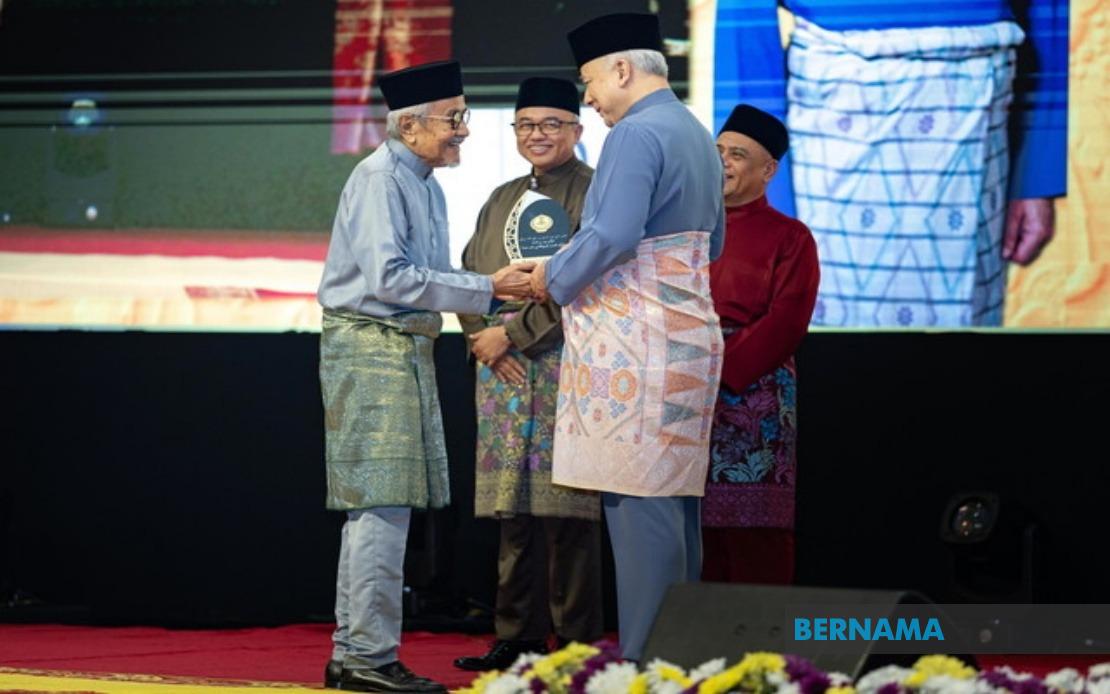
Datuk Rahim Razali, an 87-year-old filmmaker whose influence has shaped Malaysian entertainment and broadcasting for more than half a century, received the prestigious Tokoh Zaid Bin Thabit Media and Communications Practitioner Icon Award during Perak's state-level Maulidur Rasul celebration in Ipoh on August 25. The recognition underscores the enduring legacy of an industry veteran whose career has spanned multiple domains, from directing and acting to sports commentary and media entrepreneurship, marking a significant acknowledgment of his multifaceted contributions to Malaysian cultural output.
Razali, whose full name is Abdul Rahim Mohd Razali, hails from Batu Gajah in Perak and represents a generation of media professionals who built the Malaysian entertainment industry during its formative decades. His journey began in broadcasting when he worked as an assistant at RTM, the national radio and television broadcaster, at a time when Malaysia's media landscape was still developing its institutional capacity and creative infrastructure. This foundational experience in state broadcasting provided him with the technical knowledge and professional networks that would later prove instrumental when he ventured into independent production.
In 1981, Razali established Angkatan Seniman Abad XX Sdn Bhd, demonstrating entrepreneurial initiative at a period when private media production companies were relatively rare in Malaysia. This move reflected broader shifts in the Malaysian economy and cultural sector toward privatisation and independent content creation. His production company became prolific, generating substantial output for both television and cinema, establishing Razali as a significant figure in Malaysia's creative industries during the 1980s and beyond, a period that witnessed considerable growth in locally-produced entertainment content.
The breadth of Razali's cinematic output speaks to his productivity and versatility as a filmmaker. He has produced fifty dramas for RTM, demonstrating sustained engagement with television storytelling formats, while also creating fifteen feature films that reached commercial cinema audiences. Among his most notable works are the films Abang and Abang 92, titles that have become part of Malaysian popular culture's collective memory. The international recognition of his work through film festival circuits elevated his profile beyond domestic audiences, positioning Malaysian cinema on regional and global stages during critical periods of its development.
Particularly significant is the selection of eight of Razali's feature films for the Tokyo Film Festival, one of Asia's most prestigious cinematic venues. This achievement demonstrates that his work met international artistic standards and found resonance with festival selectors and audiences in Japan and across Asia. Such recognition validates the quality of Malaysian filmmaking on an international platform and suggests that Razali's thematic choices, directorial approach, and production values aligned with contemporary filmmaking sensibilities beyond Malaysia's borders, contributing to the region's cultural soft power during decades when Southeast Asian cinema was gradually gaining greater international visibility.
The award ceremony itself, presided over by Sultan Nazrin Shah, the Sultan of Perak, reflected the state government's commitment to recognising cultural and social contributions within its borders. Alongside the plaque and RM5,000 award presented to Razali, the ceremony acknowledged other exemplary figures and organisations within Perak's community, demonstrating a holistic approach to recognising diverse forms of social and cultural service. The Maulidur Rasul celebration framework provided an occasion to honour individuals whose work embodies values of service, excellence, and cultural stewardship within Malaysian society.
Among other awardees was Yang Walat, an 82-year-old single mother from Kuala Kurau who was recognised for her extraordinary family stewardship through raising fifteen children. Her selection as recipient of the Exemplary Family Icon Award (Anugerah Keluarga Amar Yassir) acknowledged her resilience and dedication, with recognition taking the form of RM10,000, an Umrah pilgrimage package, and a commemorative plaque. This award category reflects values embedded within Malaysian and Islamic cultural traditions regarding family, community support, and social responsibility, recognising that contributions to society extend beyond professional and artistic domains into personal and familial spheres.
The comprehensive nature of the awards ceremony, encompassing religious leadership, community organisation, and cultural practice, demonstrated how state-level recognition programmes can address multiple dimensions of social contribution. The Ibnu Abbas Preacher Icon Award went to Radhi Kamarul Hailan at age 56, while religious institutional roles were acknowledged through the Mosque Official Award presented to Saharuddin Hassim, 74, and Yahya Man, 83, who received the Tokoh Bilal award. Mohd Hanafiah Idris, 56, was recognised for his role as Imam, while Pertubuhan Wanita Prihatin Perak received the Non-Governmental Organisation Award, reflecting institutional recognition of civil society contributions.
For Malaysian media practitioners and cultural professionals, Razali's recognition carries particular significance as it validates long-term commitment to artistic and broadcasting excellence within a national context where media industries have undergone substantial transformation. The digitisation of media distribution, emergence of streaming platforms, and evolution of audience preferences over recent decades have substantially altered how films and television content are produced, distributed, and consumed. Yet the honour accorded to Razali reaffirms the value of the foundational work undertaken by earlier generations of filmmakers in establishing Malaysian cinema as a recognisable and respected cultural form.
Razali's career arc also illuminates the interconnections between state institutions, private enterprise, and cultural production in Malaysia's development narrative. His transition from RTM employment to independent production ownership mirrored broader economic liberalisation trends, while his international recognition through film festivals demonstrated Malaysia's capacity to produce work meeting global artistic standards. As the Malaysian media and entertainment sectors continue to evolve amid digital disruption and changing consumption patterns, figures like Razali represent institutional memory and professional standards that remain relevant to contemporary creators navigating an increasingly complex media ecosystem.
The recognition extended to Razali and his contemporaries at the Perak Maulidur Rasul ceremony underscores the state's commitment to acknowledging cultural stewardship and professional excellence. For younger Malaysian filmmakers and media professionals building careers in an environment vastly different from Razali's formative decades, his example demonstrates the durability of quality work and the importance of sustained engagement with both commercial and artistic dimensions of media production, principles that transcend technological change and market shifts.

