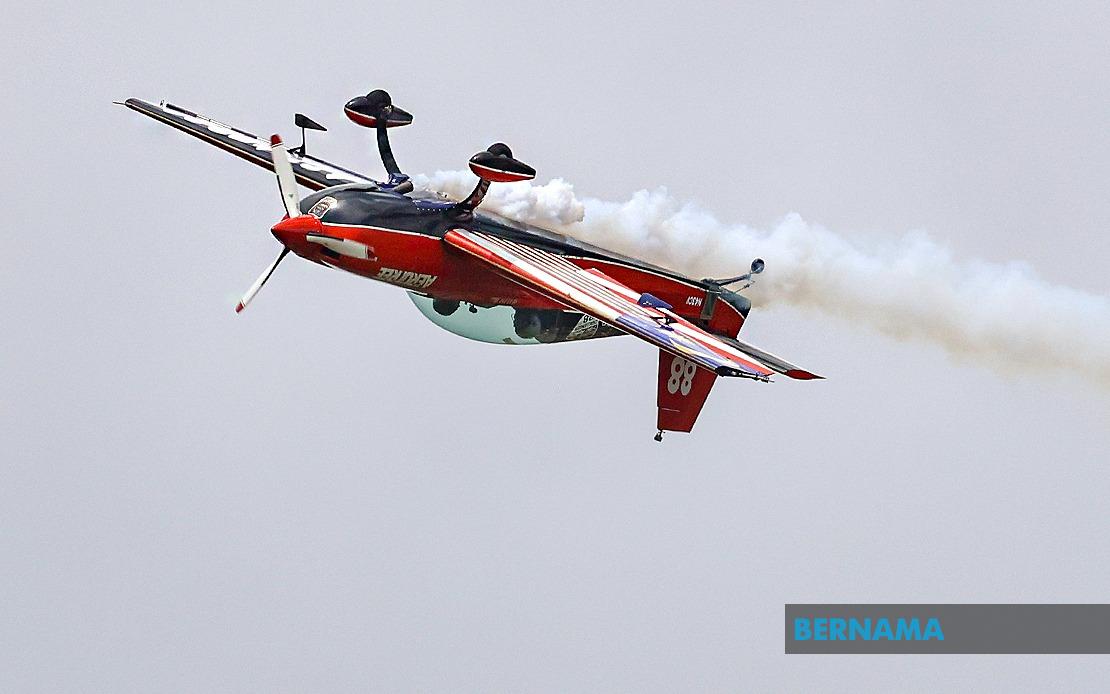
Major (Retired) Datuk Halim Othman, a 60-year-old former Royal Malaysian Air Force fighter pilot, brought nearly four decades of accumulated aviation knowledge to the inaugural 'Merdeka Sunset Show: Melukis Senja' air display held in Putrajaya on August 30 in conjunction with Malaysia's 69th National Day celebrations. The retired pilot's solo twilight aerobatic performance at 7 pm represented a significant milestone in the country's aerial entertainment landscape, combining precision flying manoeuvres with pyrotechnic displays set against the natural backdrop of the tropical sunset.
Halim's credentials extend well beyond standard military service. He became the first Malaysian to qualify for the Red Bull Air Race World Championship, a distinction that required mastery of high-performance aerobatic aircraft and exceptional spatial awareness. The rigour demanded by international air racing—where split-second decisions determine success or failure—forced him to develop the technical precision, physical courage, and intimate understanding of aircraft dynamics that characterised his performance. These hard-won skills formed the foundation upon which the Merdeka Sunset display was built, transforming what could have been merely a spectacular aerial stunt into a demonstration of carefully executed aeronautical science.
The concept behind 'Melukis Senja' (literally 'painting the sunset') represented a continuation of an earlier initiative introduced at Chenang during last year's Langkawi International Maritime and Aerospace Exhibition (LIMA). Rather than simply importing established international air show formats, Malaysian aviation enthusiasts sought to develop a distinctive visual experience tailored to the country's tropical geography and climatic conditions. Halim's participation elevated this artistic vision by combining traditional aerobatic skills with contemporary theatrical elements, creating a performance that spoke to both technical aviation audiences and the general Malaysian public gathered to celebrate National Day.
In discussing his approach to aerobatic flying, Halim emphasized that public performances rest upon foundations far deeper than visible acrobatic manoeuvres. The discipline required extends into meticulous training regimens, exhaustive study of aircraft systems and their operational limits, and a psychological readiness to manage extreme stress while maintaining absolute control. This philosophy reflects the modern understanding of aviation safety—that spectacular displays must never compromise the fundamental principle that every movement has been rehearsed, calculated, and proven safe through repetitive practice.
Halim's path through international air racing exposed him to competitive environments where Asian and Malaysian pilots remained relatively rare. He observed that during his participation in the Red Bull Air Race series, the majority of competing pilots came from non-Malaysian and non-Asian backgrounds. Rather than accepting this imbalance as inevitable, Halim reframed his participation as an opportunity to demonstrate Malaysian capability at elite international level. This perspective transformed his personal career achievements into a broader statement about national potential and capability—a message particularly resonant for younger Malaysians considering careers in high-skill technical fields.
His stated motivation to perform for the younger generation reflects a broader commitment to aviation development within Malaysia. Halim explicitly articulated his intention to use his prominence and skills to inspire the next cohort of Malaysian aviation professionals, positioning personal achievement as inseparable from national responsibility. This philosophy informed his broader professional endeavours, including his role as founder and president of Aerotree Defence and Services Sdn Bhd.
Halim's operational experience spans multiple aircraft platforms, testament to his adaptability across different flying regimes. His military service saw him graduate from MiG-29N, F/A-18D Hornet, and A-4 Skyhawk fighters through to the agile F-5E Tiger. Beyond military platforms, he accumulated significant hours in the Extra 300L aerobatic specialist aircraft, while also maintaining proficiency in civilian business jets including the Learjet 35A and King Air 350i. This breadth of experience—rarely found in a single pilot—provided him with insights into the distinctive handling characteristics, performance envelopes, and operational requirements of fundamentally different aircraft categories.
A particularly significant achievement occurred in 2014 when Halim captured the Challenger Cup championship in both Ascot, United Kingdom and Las Vegas, United States, whilst securing second place in the Challenger Cup Final held at the Red Bull Ring in Austria. These results placed him among the world's elite aerobatic competitors during a period when air racing represented one of aviation's most technically demanding disciplines. The combination of victory and competitive second-place finishes demonstrated not merely occasional success but sustained ability to perform at the highest international level.
Halim played an instrumental role in establishing Krisakti, Malaysia's first official aerobatic display team, which debuted at LIMA 2011. This initiative represented an important institutional development within Malaysian aviation, moving beyond individual pilot accomplishments toward building organized, repeatable capability in aerobatic display. The team provided a pipeline for training subsequent generations of aerobatic pilots while establishing Malaysia's presence within the international air show circuit.
Looking forward, Halim articulated ambitious plans to develop an expanded aerobatic team comprising six aircraft equipped with contemporary coloured smoke systems. These proposed formations would feature at future National Day celebrations and LIMA exhibitions, gradually building Malaysia's reputation within international aviation circles. The scale of this vision—moving from solo performances to multi-aircraft formations with integrated visual effects—indicated both confidence in available talent and commitment to sustainable development of aerobatic capability within the country.
Halim framed these initiatives within Aerotree's corporate social responsibility framework, explicitly connecting commercial enterprise with broader social obligations. This positioning suggests that private aviation companies can contribute meaningfully to national aerospace development and youth engagement without requiring direct government subsidy. By channelling aerospace expertise toward inspiring younger Malaysians and fostering tangible interest in aviation careers, Halim demonstrated how commercial success and national capability development need not represent competing priorities.
The Merdeka Sunset Show ultimately represented more than an entertaining aerial spectacle for National Day celebrations. It embodied a particular vision of Malaysian aviation—one where individual achievement, international competitiveness, institutional development, and youth inspiration coalesce within a coherent framework. Halim's four decades of experience provided the credibility and technical foundation necessary to execute this vision convincingly, while his explicit commitment to developing the next generation suggested that Malaysian aviation could build sustainable capability rather than relying upon isolated individual achievements. As Malaysia considers its position within the broader Southeast Asian and global aviation landscape, such initiatives may prove increasingly significant in developing indigenous expertise and inspiring younger citizens to pursue careers in high-skill technical domains.

