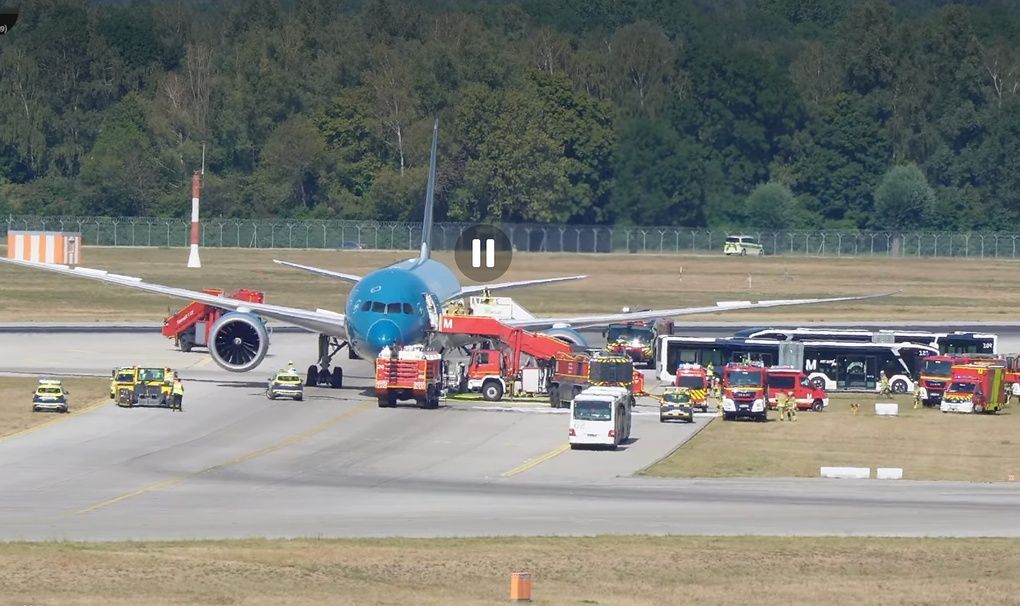
A Vietnam Airlines Boeing 787-9 headed for Hanoi was forced to abandon its departure from Munich on August 15 after encountering a technical malfunction during the critical takeoff phase. The wide-body aircraft had barely cleared the runway when the crew detected the problem and immediately initiated emergency procedures, banking back towards German airspace to execute a safe landing at Munich Airport approximately two hours after the initial departure attempt. All passengers and crew members on board remained unharmed during the incident, which has drawn attention to the rigorous safety protocols maintained by carriers operating long-haul European routes.
The exact sequence of events unfolded rapidly across multiple stages, each fraught with the potential for a far more serious outcome. Eyewitness footage captured near the Munich facility reveals the aircraft accelerating along the runway and rotating at an extremely late point, becoming airborne only near the runway's end with visible dust clouds trailing the fuselage. Aviation specialists report that the Boeing 787-9 experienced what is technically classified as a "late rotation, tailstrike and runway overrun," a combination of factors that created significant stress on the aircraft's structure and systems. The tail of the fuselage made contact with the runway surface during rotation, and the landing gear absorbed impact forces that extended beyond normal operational parameters.
Once airborne despite these complications, the flight crew implemented a holding pattern at approximately 9,000 feet, a tactical decision that served multiple purposes. This altitude and circling maneuver allowed the pilot and engineering team to assess the aircraft's condition, review available systems data, and coordinate with ground authorities regarding the extent of damage and whether continued flight to Hanoi remained feasible. Emergency response teams at Munich Airport were simultaneously placed on standby as precautionary measures, positioning fire and rescue personnel to respond should the landing require emergency interventions. The decision to burn fuel while holding also reduced the aircraft's weight, a standard procedure when unplanned landings must be executed and the extra fuel load could complicate emergency procedures or increase structural stress.
The return descent to Munich approximately two hours into the flight exposed another critical issue that confirmed the necessity of the emergency decision. Contact between the aircraft and the runway during the initial takeoff had damaged multiple tires on the landing gear, damage that created visible smoke and raised concerns about the structural integrity of wheels and related components. Had the aircraft continued toward Southeast Asia on this trajectory, potential tire failure during the long transatlantic flight phase could have created catastrophic conditions far from adequate emergency support infrastructure. The decision to return represented the safest course of action given the technical circumstances.
Vietnam Airlines confirmed that its flight operations team worked systematically through the incident, adhering to established procedures for technical emergencies and ensuring that the cabin crew maintained passenger coordination throughout the situation. The airline subsequently arranged accommodation for all affected passengers and coordinated alternative transportation solutions to ensure travelers could continue their journeys, either on rescheduled Vietnam Airlines flights or through partnership arrangements with other carriers. The company prioritized transparent communication with passengers regarding the nature of the incident and the timeline for resolution, releasing regular updates as technical inspections progressed.
The investigation into the root cause of the technical problem commenced immediately, with Vietnam Airlines cooperating fully with German aviation authorities and technical specialists responsible for airworthiness certification. Detailed engineering assessments would examine every system aboard the Boeing 787-9, from hydraulic components and flight control surfaces to engine performance data and electronic systems, to identify what triggered the malfunction during takeoff. This systematic approach aligns with international aviation safety standards that mandate comprehensive investigation of any incident involving structural contact with runways or systems-related departures from normal operations.
Boeing 787-9 Dreamliners have accumulated an extensive operational history across major international carriers since their introduction to commercial service, with tens of thousands of flight hours accumulated across diverse route networks and environmental conditions. The aircraft type has generally demonstrated strong safety performance in commercial service, though individual incidents continue to receive thorough investigation to identify any systemic issues or operator-specific factors that may have contributed. For Vietnam Airlines specifically, this aircraft represents a significant portion of long-haul capacity, particularly on premium European routes where the efficiency and passenger comfort features of the 787 provide competitive advantages.
Vietnam Airlines currently maintains scheduled services connecting Hanoi and Ho Chi Minh City with both Munich and Frankfurt, the primary European gateways for Southeast Asian travelers and cargo operations. The airline deploys a fleet consisting of both Boeing 787 wide-bodies and Airbus A350 aircraft on these routes, providing flexibility in capacity and scheduling while meeting the exacting standards demanded by European aviation authorities. The Munich-Hanoi route specifically serves substantial demand from both business and leisure travelers, making continuity of service essential for regional connectivity and the broader commercial relationship between Vietnam and Central Europe.
The incident underscores the critical importance of rigorous maintenance protocols, crew training standards, and the technological safeguards built into modern commercial aircraft. When technical issues emerge during the most demanding phases of flight, the combination of pilot expertise, aircraft design redundancy, and established emergency procedures works together to prevent minor technical problems from escalating into serious accidents. For passengers in Southeast Asia who regularly fly European routes via carriers like Vietnam Airlines, this incident paradoxically demonstrates why commercial aviation remains statistically one of the safest modes of long-distance transportation, with multiple independent safety systems and well-trained personnel positioned to intervene when conditions warrant.

