Vietnam's authorities have intensified their grip on historical discourse by detaining the publisher, author and promotional figures involved in releasing a biography of Ho Chi Minh, the nation's Communist Party founder. The coordinated enforcement action, announced in mid-July, reflects the Vietnamese leadership's determination to control narratives surrounding the country's revolutionary past and maintain strict ideological boundaries around how revered historical figures can be depicted.
The arrests centred on "Stories with Thanh -- A New Account of Light", authored by Nguyen Thanh Nam, a former telecommunications executive whose work examined Ho Chi Minh's formative years spent outside Vietnam while he pursued independence strategies for his homeland. The book was published in May by the Vietnam Writers' Association Publishing House before being withdrawn from circulation following pressure from state authorities. This retraction mechanism illustrates how Vietnamese publishers operate within a constrained environment where official censorship can occur both before and after release.
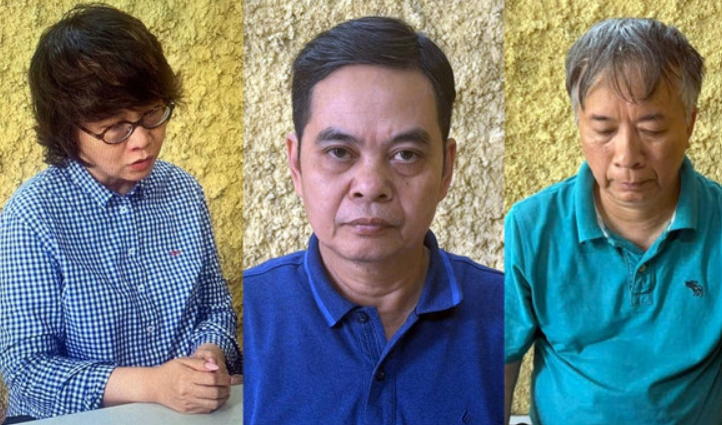
Law enforcement officials announced the detention of three senior figures from the publishing house: its director, editor-in-chief, and head of the editorial board. These individuals joined Nguyen Thanh Nam, who had been apprehended in early July, in facing charges related to producing and distributing materials alleged to oppose the Socialist Republic of Vietnam. The same legal framework was applied to an online influencer who used social media platforms to promote the book, demonstrating how state authorities view digital advocacy as equivalent to traditional publishing in their approach to content control.
According to police statements released on the day of the announcements, the detained publishers were charged with editing, revising and promoting a work that authorities characterised as distorting revolutionary history and contradicting party and state doctrine. This framing is significant for understanding how Vietnam's one-party system handles intellectual property and historical interpretation. The state does not simply prohibit certain books; it actively redefines what constitutes acceptable scholarship about foundational historical moments and figures. By criminalising the editorial process itself, authorities send a powerful message to other publishers about the risks of independent judgement.
The crackdown extended beyond individual actors to encompass the broader media ecosystem. Vietnam's culture ministry announced sanctions against 23 news outlets that had published articles praising the biography. These media organisations were required to acknowledge their editorial lapses and demonstrate their commitment to stricter source verification protocols. The framing of the sanction as a corrective measure in journalistic practice obscures a more fundamental reality: state authorities, not editorial standards alone, determine what constitutes legitimate coverage of sensitive historical topics.
The financial and personnel consequences for the targeted outlets were substantial. Nearly two dozen staff members across these organisations faced reassignment, suspension or dismissal for their involvement in publishing the favourable coverage. Meanwhile, the outlets collectively paid almost US$2,500 in fines. This dual punishment system—combining monetary penalties with employment consequences—creates multiple layers of deterrence for journalists and editors considering how to approach stories related to state-sensitive subjects.
The enforcement campaign orchestrated a public recantation, with Nguyen Thanh Nam delivering a nationally televised apology in which he acknowledged factual errors and false assertions within his work. This theatrical element of the crackdown serves purposes beyond legal proceedings. By broadcasting the author's contrition, state authorities demonstrate their power to recalibrate public discourse and establish what kinds of interpretations are permissible. The apology itself becomes a narrative tool, reinforcing official accounts and warning others about the personal costs of departing from approved historical frameworks.
For Southeast Asian observers, particularly those in Malaysia and other countries navigating questions about historical interpretation and state control over information, the Vietnamese case presents a cautionary model. It demonstrates how governments can weaponise criminal law to regulate intellectual output, even when the targeted work engages with historical rather than contemporaneous political matters. The charges against publishers, rather than merely banning the book, criminalise the professional decision-making process itself, raising questions about the viability of independent publishing in such environments.
Human rights monitoring organisations have documented Vietnam's consistent approach to suppressing dissent and critical voices. According to Human Rights Watch, more than 160 critics and activists currently remain incarcerated, reflecting a pattern of long-term detention rather than one-off punishments. The Ho Chi Minh book case fits into this broader architecture of control, where the state simultaneously manages multiple channels of expression—publishing, journalism, and digital advocacy—through a unified enforcement apparatus.
The Vietnamese leadership's approach to controlling historical narratives also carries implications for regional understanding of Cold War history and Asian political development. By restricting how Ho Chi Minh can be discussed domestically, authorities attempt to shape both internal consensus and international perceptions. For Malaysian policymakers and observers interested in understanding governance models within ASEAN, the Vietnamese case illuminates the mechanisms through which one-party states maintain ideological coherence and prevent alternative interpretations of foundational historical events from taking root in public discourse.

