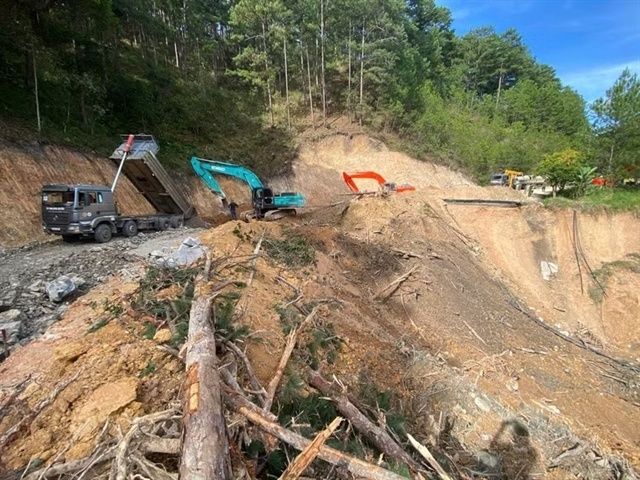
Vietnam's Ministry of Construction has activated an emergency response protocol after sustained heavy rainfall severely compromised a critical section of Ho Chi Minh Road passing through Tuyen Quang Province. The designation of natural disaster emergency status reflects the extent of infrastructure damage at kilometre marker 115+000, where the primary route intersects with National Highway 2C within the operational zone of Road Management Zone I. This decision prioritises the immediate safety of road users and establishes a legal framework for rapid remediation work.
The road damage stems from a relentless sequence of precipitation events that battered the region throughout June, according to meteorological assessments from Tuyen Quang Provincial Hydrometeorological Station and the National Centre for Hydrometeorological Forecasting. The concentrated monthly rainfall inflicted progressive deformation of the road surface and underlying infrastructure, creating conditions that posed escalating risks to vehicle transit and structural integrity. This pattern of cumulative weather impact underscores the vulnerability of transport corridors in Vietnam's northern provinces to seasonal flooding patterns.
Ho Chi Minh Road represents a vital economic artery for northern Vietnam, linking Hanoi with regions further north and connecting to wider Southeast Asian trade networks. Disruptions to this route have ripple effects across supply chains and commerce, making rapid restoration essential for regional economic continuity. The emergency designation accelerates approval processes and resource mobilisation that would otherwise require lengthy bureaucratic procedures, enabling authorities to address the damage while minimising extended closures or detours.
The Ministry of Construction has tasked the Department for Roads of Vietnam and Road Management Zone I with leading comprehensive damage assessment and identification of appropriate repair methodologies. These agencies are now authorised to issue an Emergency Construction Order, circumventing standard procurement procedures to expedite restoration work. This streamlined approach recognises that prolonged road closures or severe restrictions create cascading problems for commerce, commuter safety, and emergency services access throughout affected areas.
Parallel to repairs at the primary damage site, authorities must simultaneously manage flooding that has impacted a secondary section of Ho Chi Minh Road between kilometre markers 124+600 and 128, where the road overlaps with National Highway 2. This flooded segment presents additional congestion challenges and safety concerns that require immediate attention. The coordination required to address multiple affected areas simultaneously demonstrates the extensive scope of weather-related infrastructure damage across the region.
The accountability framework established by the Ministry of Construction assigns clear responsibility to senior officials, with the Director General of the Department for Roads of Vietnam and the Road Management Zone I Director answerable to the Minister of Construction for damage assessment and remediation progress. This hierarchical accountability structure ensures sustained focus on emergency response while maintaining oversight of expenditure and timelines. The officials must demonstrate both effective damage mitigation and traffic management capability at flooded sections.
Once emergency construction operations conclude, the Department for Roads of Vietnam must formally report completion status back to the Ministry of Construction. This reporting requirement becomes the evidentiary basis for considering termination of the emergency declaration, ensuring that infrastructure functionality has been substantially restored before normal operational protocols resume. The structured handover of emergency authority back to routine management prevents premature resolution declarations while maintaining appropriate oversight of resolution adequacy.
For Malaysian and Southeast Asian observers, Vietnam's response illuminates regional vulnerability to seasonal weather extremes and the necessity for robust emergency protocols governing critical infrastructure. Vietnam's institutional framework—establishing clear emergency declaration procedures, assigning specific agency responsibilities, and creating accountability mechanisms—offers comparative lessons for how rapidly developing nations manage infrastructure crises. The investment in meteorological monitoring and forecasting services that enabled early warning demonstrates the value of institutional capacity building.
The incident also highlights the interconnected nature of regional transport networks and cross-border supply chain dependencies. Disruptions to Ho Chi Minh Road affect not only Vietnamese commerce but potentially broader ASEAN logistics systems and trade corridors. This underscores why Southeast Asian nations benefit from coordinated infrastructure resilience strategies and advance warning systems that extend beyond individual borders, recognising that weather systems and commercial networks transcend political boundaries.
Longer-term implications extend to climate adaptation and infrastructure resilience planning across Southeast Asia. As weather patterns intensify and precipitation events grow more severe, road corridors require enhanced drainage design, better monitoring systems, and more flexible repair protocols. Vietnam's emergency response demonstrates both effective crisis management and the necessity for preventive infrastructure investments that reduce future vulnerability to similar events.
The restoration timeline for Ho Chi Minh Road remains unspecified, though emergency protocols typically prioritise completion within days rather than weeks. Full reopening under normal traffic conditions may require additional weeks of inspection and validation. Stakeholders including commercial operators, commuters, and regional traders will depend on regular official updates regarding repair progress and anticipated reopening dates.

