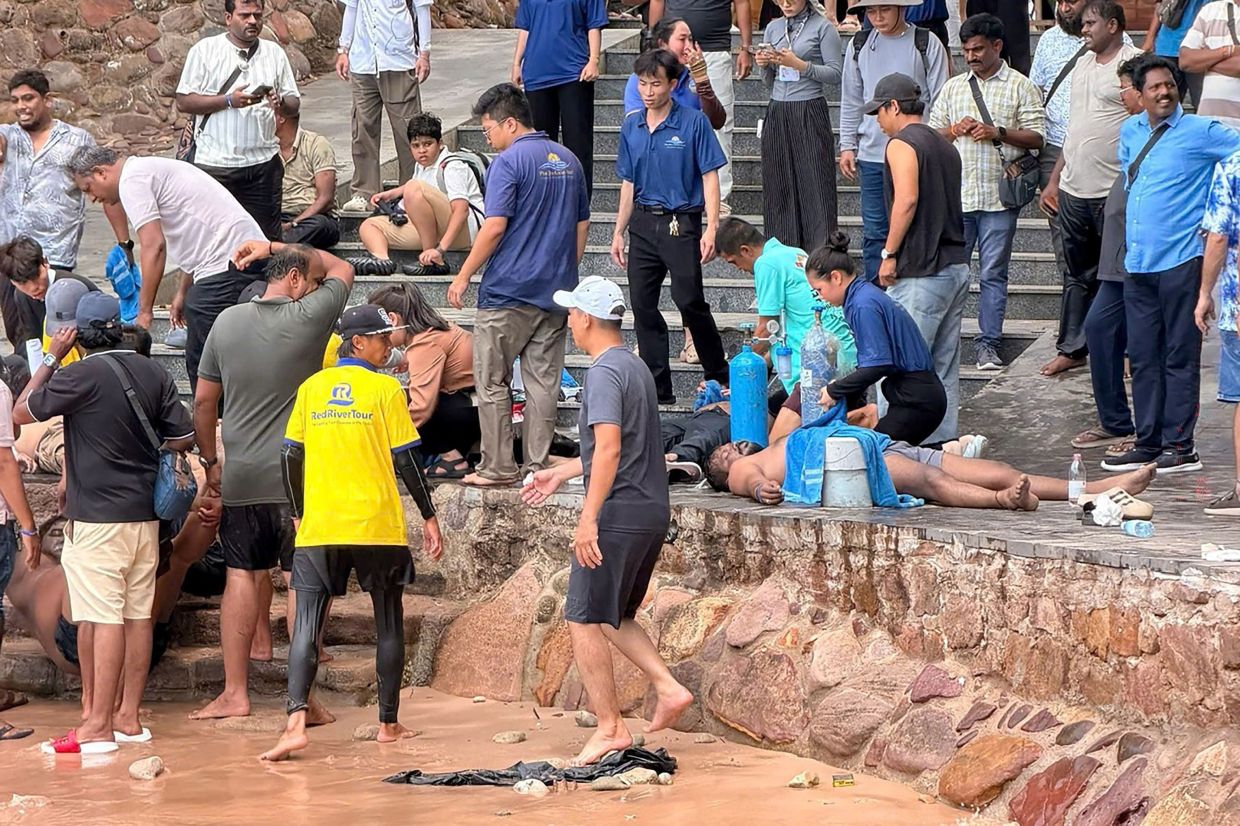
Vietnam's government has launched an emergency response following a devastating speedboat accident off Phu Quoc Island on July 11 that claimed the lives of 15 Indian tourists. Prime Minister Pham Minh Chinh issued directives on the same day, calling for swift action across multiple government agencies to investigate the incident, provide medical care for survivors, and prevent similar tragedies. The capsizing, which occurred near Hon May Rut Ngoai within the Phu Quoc Special Zone, has triggered a comprehensive government mobilization that signals the seriousness with which Vietnamese authorities are treating the disaster.
The speedboat was carrying a total of 36 people when it capsized—32 Indian tourists accompanied by four Vietnamese crew members and guides. Among the Indian nationals on board, the fatalities included 13 men and two women. Twenty-one people were successfully rescued from the water, though the exact conditions surrounding their extraction remain under investigation. The rapid mobilization of rescue efforts likely prevented a far larger loss of life, but the scale of the tragedy has nonetheless sent shockwaves through both Vietnam and India, two nations that have deepened diplomatic and tourism ties in recent years.
In his official dispatch, Prime Minister Chinh extended formal condolences to the families of those who perished and stressed the importance of providing comprehensive medical support to the injured survivors. The directive emphasized marshalling all available medical resources and medicines to treat those rescued from the water, recognizing that survivors of maritime accidents often face serious physical and psychological trauma. This initial humanitarian focus demonstrates the government's understanding that the immediate aftermath of such incidents requires swift, coordinated healthcare intervention to prevent secondary fatalities among the rescued.
An Giang Province, which administers Phu Quoc Island, has been assigned lead responsibility for coordinating the investigation and assessment phase. Provincial authorities have been tasked with working alongside relevant national agencies and security forces to determine the precise cause of the capsizing. This decentralized responsibility structure is typical of Vietnamese disaster response, wherein local governments take primary ownership while national agencies provide oversight and specialized expertise. The province faces considerable scrutiny, as it must now examine whether existing safety protocols, vessel maintenance standards, and operational procedures met legal requirements.
The Ministry of Public Security has been ordered to conduct a thorough investigation with particular emphasis on establishing legal accountability. The directive explicitly instructs the ministry to identify any violations of law by organizations or individuals involved in operating or maintaining the speedboat. This language suggests that Vietnamese authorities are considering multiple potential causes—mechanical failure, operator error, overcrowding, inadequate safety equipment, or negligence in vessel inspection. The emphasis on strict legal action signals that if human error or regulatory violations are discovered, prosecutions will follow.
Beyond the immediate investigation, the Ministry of Construction has been charged with a broader safety review across maritime and inland waterway operations in the Phu Quoc area and similar zones elsewhere in Vietnam. This represents a critical shift from reactive response to systemic assessment. The ministry must now inspect whether safety measures currently in place meet international standards and Vietnamese regulations, and whether training and certification requirements for speedboat operators are adequately enforced. Given Vietnam's growing tourism industry, particularly in beach and island destinations, this review could have implications for operations throughout the country's coastal regions.
The Ministry of Foreign Affairs has been tasked with managing diplomatic dimensions of the tragedy. Close coordination with the Indian Embassy in Vietnam is essential for addressing consular affairs, protecting the interests of Indian citizens, and managing broader diplomatic sensitivities. Such coordination extends beyond the immediate victims to include grieving families who may require assistance with repatriation of remains, compensation claims, and navigating Vietnamese bureaucratic processes during a time of emotional distress. The quality of Vietnam's response to these consular matters will significantly influence how the incident affects bilateral relations.
The Indian Embassy responded swiftly by releasing an official list of the 32 Indian citizens aboard the vessel and establishing two contact points in Ho Chi Minh City and Hanoi to provide assistance to affected nationals and their families. This coordinated response between the Vietnamese government and Indian diplomatic mission reflects established protocols for handling maritime disasters involving foreign nationals. For Indian families seeking information about loved ones, these contact points represent crucial access to official information and support services during the immediate crisis phase.
For Malaysian readers and Southeast Asian observers, this incident underscores the broader challenges facing the region's rapidly expanding tourism sector. As middle-class populations across Asia grow and travel becomes more accessible, tourism to beach and island destinations has surged. However, regulatory frameworks governing maritime safety, vessel maintenance, and operator licensing have not always kept pace with demand. Vietnam's response—establishing clear lines of accountability and initiating systemic safety reviews—reflects lessons learned from previous maritime incidents across Southeast Asia. The effectiveness of Vietnam's investigation and any subsequent regulatory improvements could serve as a regional benchmark for how governments balance tourism promotion with passenger safety.
The incident also highlights vulnerabilities in the tourism supply chain that extend beyond government oversight. Private tour operators, boat owners, and guide services often operate in gray areas of regulation, particularly in developing tourism zones. The investigation will likely reveal whether the Phu Quoc speedboat accident resulted from isolated negligence or reflected systemic gaps in how Vietnamese authorities oversee private maritime tourism operators. If the latter proves true, other Southeast Asian nations with similar tourism infrastructure may face comparable risks, suggesting that regional cooperation on maritime safety standards could yield significant public health benefits.
As families of the deceased and survivors grapple with the immediate aftermath, Vietnam's government response demonstrates both the capacity and commitment to address maritime disasters comprehensively. However, the ultimate measure of success will be whether the investigation produces concrete findings, whether those findings lead to meaningful regulatory changes, and whether such changes demonstrably reduce risks for future tourists. For the Indian nationals who lost loved ones and the survivors who experienced this trauma, the thoroughness and transparency of Vietnam's investigation process will significantly influence their perceptions of Vietnam as a tourism destination and their confidence in Southeast Asian maritime safety more broadly.

