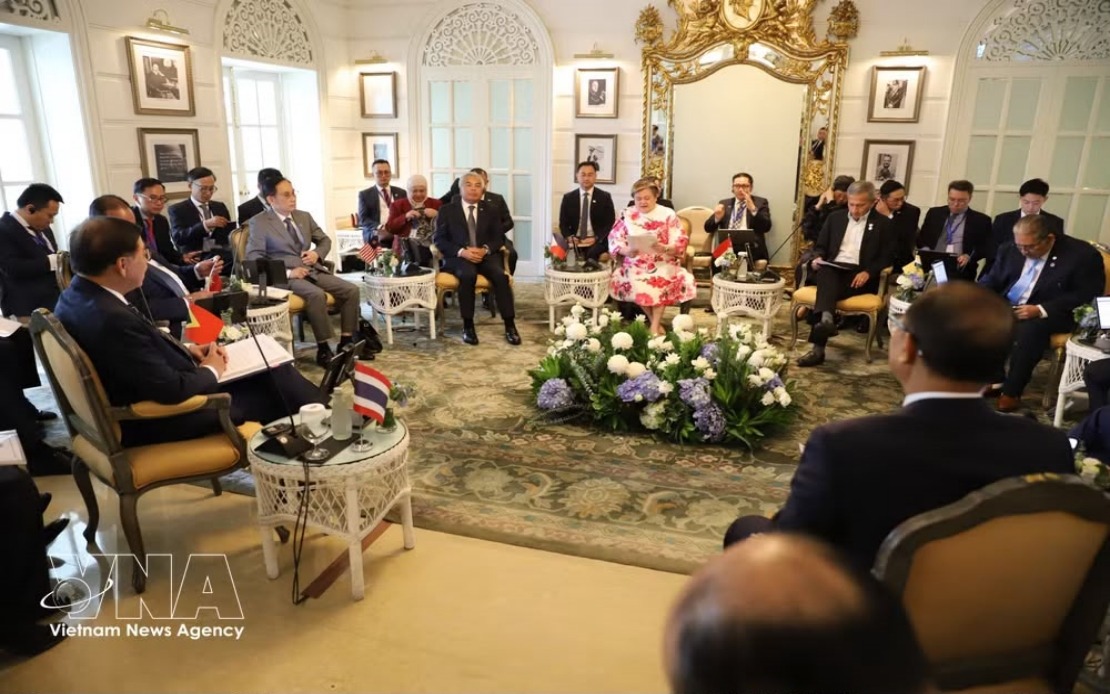
Vietnam has signalled its readiness to deepen cooperation with ASEAN partners in facilitating Myanmar's recovery and stability, marking a significant diplomatic engagement at a high-level regional meeting in Bangkok. Vietnamese Foreign Minister Le Hoai Trung delivered the commitment during an informal gathering of ASEAN foreign ministers and their Myanmar counterpart on July 12, underscoring Hanoi's consistent stance that Myanmar remains a full and valued member of the regional bloc despite the political turmoil that has gripped the country since 2021.
The meeting, chaired by Philippine Foreign Secretary Maria Theresa P. Lazaro whose nation assumes the ASEAN Chairmanship in 2026, represents a watershed moment for regional diplomacy. It constituted the first in-person assembly bringing together multiple ASEAN foreign ministers with Myanmar's administration in several years, signalling the bloc's determination to maintain constructive engagement with Naypyidaw despite the complexity of the political situation. The gathering also reflected ASEAN's broader strategic objective of preventing external powers from filling any vacuum created by Myanmar's internal challenges.
Minister Trung acknowledged tangible steps undertaken by Myanmar's current administration to restore institutional functioning and restore public confidence. He specifically cited improvements in political stabilisation efforts, economic revitalisation initiatives, governance reforms, and intensified campaigns targeting transnational organised crime including narcotics smuggling and cyber-enabled offences. Recognition of these domestic efforts provides diplomatic cover for continued ASEAN engagement while validating the junta's claims of constructive progress, a delicate balance the region must maintain to preserve its influence.
The Five-Point Consensus, adopted by ASEAN in 2021 as a framework for dialogue with Myanmar, has become the cornerstone of the bloc's approach to the crisis. Rather than imposing conditions or sanctions, ASEAN sought to establish a pathway for dialogue centred on humanitarian access, ceasefire negotiations, and gradual democratic transition. Vietnamese support for this framework signals consistency among major ASEAN powers in maintaining this patient, dialogue-based strategy rather than pursuing more confrontational positions.
Trung articulated Vietnam's expectation that Myanmar will sustain momentum on multiple fronts simultaneously: advancing peace initiatives, pursuing national reconciliation efforts, ensuring public security, and improving living standards for ordinary citizens. For readers across Southeast Asia, this represents a recognition that Myanmar's recovery cannot be compartmentalised but requires holistic attention to security, development, and social cohesion. The appeal for continued progress acknowledges the scale of challenges facing a nation experiencing simultaneous military conflict, economic dislocation, and humanitarian displacement.
Beyond rhetorical support, Vietnam committed to concrete cooperation across multiple domains. The country pledged to collaborate with the current ASEAN Chair and fellow member states on economic rehabilitation projects, social problem resolution, and coordinated responses to transnational crime that respects ASEAN's fundamental commitment to non-interference while promoting regional welfare. This approach positions Vietnam as a bridge-builder within ASEAN, willing to engage constructively with Myanmar's administration while maintaining the bloc's collective standards.
The substantive implementation of the Five-Point Consensus requires moving beyond general principles toward actionable cooperation mechanisms. Minister Trung emphasised the necessity for ASEAN to undertake tangible, practical initiatives prioritising sustained direct engagement and regular dialogue channels with Myanmar. This signals recognition that sporadic high-level meetings and public statements have proven insufficient; institutionalised communication mechanisms and regular contact between ASEAN representatives and Myanmar authorities are essential for monitoring developments and facilitating measurable advancement toward consensus objectives.
Myanmar's Foreign Minister Tin Maung Swe briefed the assembled ministers on his administration's recent policy announcements, including a 100-day action plan and specific measures targeting peace consolidation, societal reconciliation, and stability restoration. The provision of such briefings during multilateral forums legitimises the junta's governance narrative internationally while affording ASEAN officials direct access to official explanations of policy direction. The emphasis on maintaining engagement with "relevant parties" acknowledges the complex reality that Myanmar's administration must navigate competing armed factions, ethnic minority concerns, and civilian resistance movements simultaneously.
The foreign ministers engaged in frank yet constructive dialogue reflecting ASEAN's diplomatic style of avoiding public confrontation while maintaining private channels for sensitive discussions. This measured approach contrasts sharply with international criticism of Myanmar's human rights record and military governance, demonstrating ASEAN's preference for patient engagement over punitive measures. For Malaysia and other Southeast Asian nations, this reinforces ASEAN's collective commitment to regional stability and non-interference, even when member states face serious internal challenges.
Placed within the broader context of the 48th ASEAN Summit held in Cebu, Philippines, the Bangkok meeting demonstrates coordinated regional leadership commitment to supporting Myanmar through ongoing dialogue. ASEAN's direction to continue discussing coordination and support mechanisms reflects recognition that Myanmar's trajectory significantly influences broader regional stability, economic integration, and the credibility of ASEAN's institutional frameworks. The implicit acknowledgement is that ASEAN's effectiveness as a regional organisation depends upon successfully managing Myanmar's crisis through consensus and dialogue rather than fragmentation or external intervention.
For regional observers, Vietnam's positioning as an active supporter of ASEAN-Myanmar cooperation reflects Hanoi's broader geopolitical interests in maintaining Southeast Asian stability and cohesion. Vietnam's own complicated relationship with Myanmar's ethnic tensions and drug trafficking issues affecting the region means that genuine cooperation on transnational crime and border security serves Vietnamese national interests while advancing ASEAN's collective agenda. This convergence of interests demonstrates how regional cooperation mechanisms can address both bloc-level objectives and individual member state concerns simultaneously.
The meeting's significance extends beyond Myanmar itself, serving as a barometer for ASEAN's institutional resilience and collective commitment to member state inclusion. By maintaining regular high-level engagement despite Myanmar's political convulsion, ASEAN demonstrates to its members and international observers that the organisation can weather internal crises without fragmenting or succumbing to external pressure for exclusion. Vietnam's affirmation of continued cooperation signals confidence in ASEAN's long-term viability and commitment to finding Myanmar-owned solutions rather than imposing external prescriptions.

