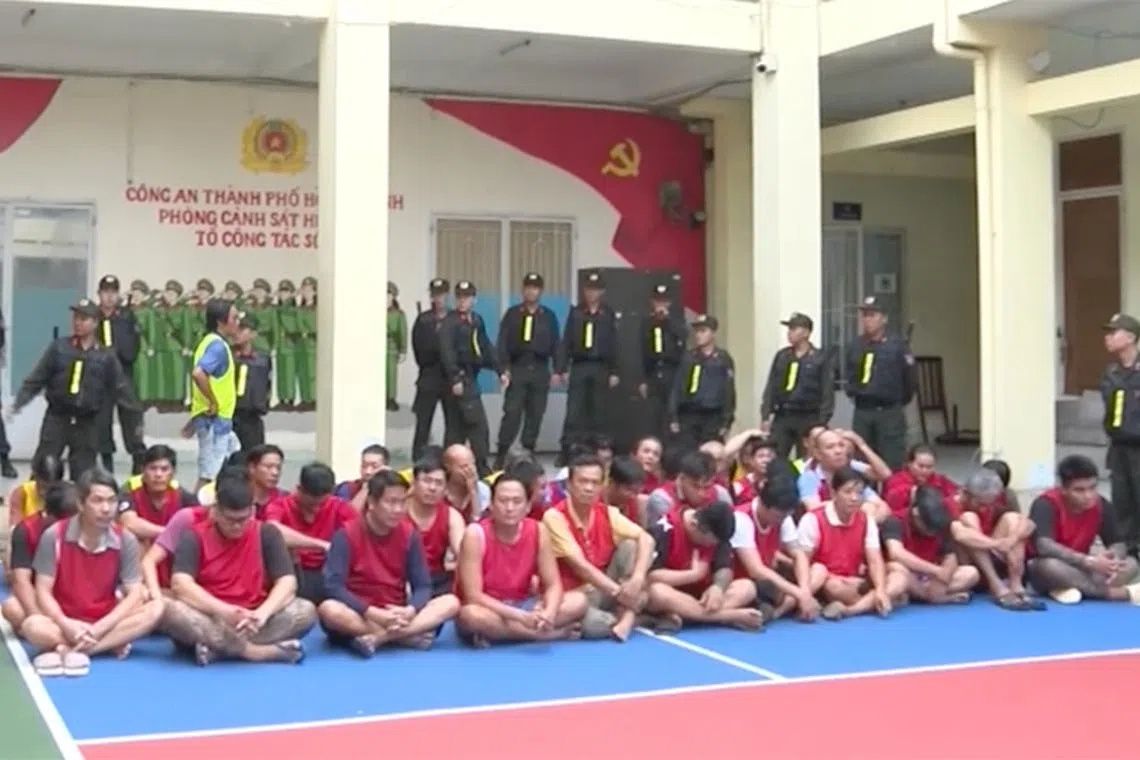
Vietnamese police have dealt a significant blow to underground gambling networks by breaking up two massive betting rings accused of handling US$133 million in illicit wagers connected to the 2026 FIFA World Cup. The operations, which authorities described as possessing an "exceptionally large scale" with sophisticated hierarchical structures, led to the arrest of 85 suspects in raids conducted during late June. The crackdown underscores Hanoi's intensifying campaign to suppress illegal gambling, which flourishes across the country despite being officially banned throughout Vietnam.
The two syndicates had processed an estimated US$133 million in illegal transactions since October 2025, according to statements from Ho Chi Minh City police. These were not casual, loosely-organized betting operations but rather highly structured criminal enterprises with what police characterized as "a high level of hierarchy and tight control." This organizational sophistication allowed the networks to operate at scale, potentially serving tens of thousands of gamblers across Vietnam and the broader Southeast Asian region. The elaborate setup suggests these were professional criminal organizations rather than small-time operators, with clear chains of command and documented profit distribution mechanisms.
Investigations revealed that the ring leaders had established connections with suppliers based in Cambodia, obtaining what they called "master-level betting accounts" from individuals operating across the border. These accounts served as the foundation for the entire operation. Rather than keeping the accounts for their own use, the syndicate leaders subdivided these master accounts into numerous secondary accounts designated for agents and individual members. This tiered system allowed them to distribute betting opportunities to a sprawling network of gamblers while maintaining plausible deniability and obscuring the true scale of operations from authorities. The Cambodia connection highlights how cross-border criminal networks exploit regional differences in gambling regulation to feed illegal operations throughout Southeast Asia.
The World Cup provides a particularly lucrative opportunity for illegal betting operators throughout Asia. The combination of massive global interest in football, high-stakes matches, and unpredictable outcomes creates an environment where illegal gambling businesses thrive. Recognizing this vulnerability, Vietnam's public security ministry launched an aggressive enforcement campaign specifically timed to the tournament. Police were mobilized across the country with explicit instructions to identify and dismantle gambling operations taking advantage of World Cup fever.
The scope of Vietnam's enforcement efforts extends well beyond these two headline-grabbing syndicates. Over the first twenty days of World Cup matches, authorities dismantled seventy-three separate gambling operations nationwide, apprehending 346 individuals suspected of involvement in illegal wagering and football-related betting. These figures demonstrate that the underground gambling ecosystem in Vietnam is extraordinarily broad and deeply rooted across the country. Colonel Bui Tuan Anh from the public security ministry stated that transaction values across all cases discovered during this enforcement phase totaled thousands of billions of dong, equivalent to hundreds of millions of dollars collectively. This suggests the two major rings that made international headlines represent only a portion of the larger clandestine gambling infrastructure.
Online gambling operations occupy a particularly difficult enforcement challenge for Vietnamese authorities. The communist state maintains an absolute prohibition on gambling activities, yet the borderless nature of internet betting allows operators to conduct transactions across vast distances with relative anonymity. Traditional law enforcement tools designed for physical investigations become far less effective when dealing with digital networks that can relocate operations instantly or employ sophisticated technological countermeasures. The fact that organized syndicates continue establishing major operations despite regular police crackdowns suggests that profit incentives substantially outweigh perceived risks for criminal entrepreneurs in this space.
The 2026 FIFA World Cup, hosted jointly by Canada, Mexico, and the United States, will conclude with the final match scheduled for July 19, 2026. This extended tournament period creates an extended window of opportunity for illegal gambling operators. With matches distributed across multiple time zones and stretching over several weeks, the total wagering activity during this World Cup will likely exceed that of previous tournaments. For Vietnamese and Southeast Asian illegal gambling networks, the tournament represents one of the year's peak earning periods, providing incentive to organize larger, more sophisticated operations.
Vietnamese authorities recognize that their enforcement efforts, while impressive in scale, represent an ongoing struggle rather than a permanent solution. The recurring need for periodic "crackdowns" during major sporting events indicates that the underground gambling economy continuously regenerates despite government interventions. Criminal organizations appear willing to accept periodic arrests and asset seizures as an operational cost, viewing the profits from illegal betting as justifying the regulatory risks. This cyclical pattern raises questions about the long-term effectiveness of enforcement-focused approaches alone in combating deeply entrenched black-market gambling activities.
For Malaysia and other Southeast Asian nations, Vietnam's experiences offer important lessons regarding underground gambling networks. The existence of cross-border criminal connections, particularly with Cambodia, demonstrates that gambling syndicates operate regionally rather than within national boundaries. The sophistication of these operations, involving technological infrastructure for account management and distribution systems spanning multiple countries, underscores how organized these criminal enterprises have become. Malaysian authorities, similarly confronting illegal gambling operations, may find that regional cooperation becomes increasingly necessary to effectively disrupt these transnational networks.
The substantial sums involved—US$133 million from just two rings—illustrate the tremendous wealth concentrated within illegal gambling markets. This financial scale explains why criminal organizations continue investing in these operations and why law enforcement struggles to achieve permanent disruption. The money generated through illegal betting potentially funds other criminal activities or flows to corrupt officials who facilitate continued operations. Understanding gambling enforcement as part of a broader anticrime strategy, rather than as an isolated issue, provides better context for assessing the Vietnamese police operations and their likely long-term impact.

