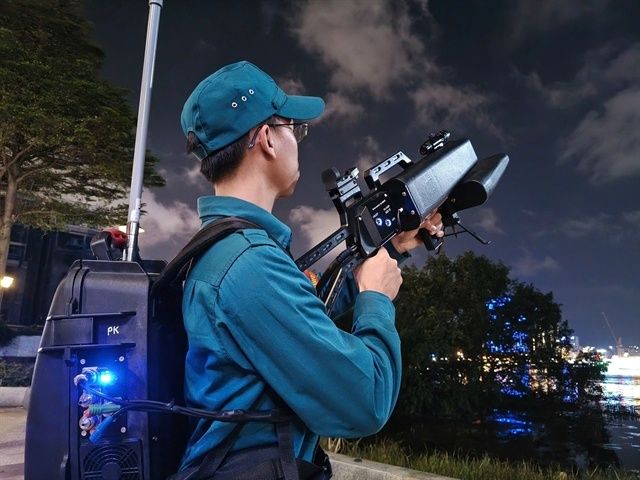
Vietnam's authorities are escalating their crackdown on unauthorised drone operations near airports, warning the public of mounting safety risks and substantial economic consequences. The Immigration Department under the Ministry of Public Security has raised alarm over the proliferation of illegal drone flights in restricted airspace, which have forced emergency procedures, disrupted passenger travel and inflicted significant financial losses on the aviation sector across the country.
The scale of the problem has grown markedly in recent years. Government records show that Vietnam documented 34 separate incursions involving drones or other unauthorised aircraft entering airport restricted zones during 2025. The pace has accelerated sharply into 2026, with 17 additional incidents recorded in just the first six months of the year. Each violation triggers immediate emergency responses from air traffic controllers, who must halt departures, suspend arrivals or redirect planes to alternative airports to prevent potential collisions. These reactive measures, while necessary for safety, create cascading operational and commercial disruptions.
The financial damage inflicted by these incidents has proven substantial. Vietnam Airlines alone reported losses of approximately VNĐ5.6 billion (US$215,000) from drone-related disruptions between February 17 and 24, affecting the travel arrangements of roughly 9,200 passengers through cancelled services and schedule changes. Danang International Airport, one of the country's major aviation hubs, separately quantified direct losses exceeding VNĐ10 billion ($384,000) from such incidents. These figures represent only the immediate, measurable costs; airports and analysts emphasize that indirect expenses to cargo operators, ground service providers, hotels and affected travellers extend the overall economic burden considerably.
Beyond the commercial dimension, officials have highlighted the existential safety threat posed by drone strikes during critical flight phases. A collision between an aircraft and a drone during takeoff or landing—when planes operate at low altitudes with reduced manoeuvrability—could prove catastrophic, potentially killing passengers and crew. The lightweight construction and unpredictable flight paths of many drones make them particularly hazardous; unlike traditional foreign object debris, drones may cause structural damage or engine failure even in a glancing impact.
Vietnam's regulatory framework governing drone operations is comprehensive, though enforcement remains challenging. All drone owners must register their equipment with authorities and obtain specific flight permits before operation. Importantly, registration alone does not grant flight privileges; permits must explicitly authorize the time window, geographic area, altitude limits and operational scope for each intended mission. The framework reflects international best practices adopted by aviation authorities worldwide to balance emerging technology with air safety imperatives.
Violators face a graduated enforcement system calibrated to violation severity. Minor infractions incur administrative penalties including fines, confiscation of the drone equipment and suspension of future flight authorizations under a government decree enacted in 2025. Conduct that directly obstructs air traffic or seriously endangers aviation safety escalates to criminal prosecution. Sentences in such cases can include financial penalties, court-ordered non-custodial reform terms, or imprisonment lasting from several months to 15 years depending on circumstances.
Particularly significant is that Vietnamese law does not require an actual collision or accident to establish criminal liability. Creating a genuine collision risk—flying a drone into an aircraft's takeoff, approach or landing corridor—constitutes a prosecutable offense in itself. Conviction on such charges carries fines ranging from VNĐ10 million to VNĐ50 million ($384-$1,920), possible non-custodial reform sentences of up to two years, or imprisonment from three months to two years. Additionally, courts may ban convicted individuals from employment in certain professions or roles for one to five years post-conviction, further restricting their opportunities.
For Malaysia and the broader Southeast Asian region, Vietnam's experience offers instructive lessons as drone technology proliferates and recreational use expands across the area. The rising incident rate suggests that education and deterrence must increase in parallel with drone adoption. Most operators likely underestimate risks or remain unaware of regulations; simultaneous investment in public awareness campaigns and consistent enforcement appears essential to preventing similar escalation elsewhere in the region. Thailand, the Philippines and Indonesia face comparable challenges, and Vietnam's regulatory approach—combining clear rules, graduated penalties and explicit prosecution standards—provides a regional model worth studying.
The Vietnamese government has appealed to drone operators to strictly observe permit conditions and to the general public to report suspicious drone activity near airports to police, military or airport authorities. Officials characterize aviation safety as a shared societal responsibility requiring vigilance across multiple stakeholder groups. The statement underscores that individual irresponsible choices ripple through the broader system, affecting thousands of passengers daily, critical supply chains dependent on air cargo, and ultimately national security interests in airspace control.
As the aviation sector in Vietnam and Southeast Asia continues expanding—with projections suggesting doubling of passenger traffic over the next decade—the stakes of maintaining rigorous airspace security will only intensify. The precedent being set in Vietnam through tough enforcement and clear communication suggests that regulatory authorities across the region cannot rely on compliance through goodwill alone. The financial losses now being incurred, while measured in millions of dollars annually, could escalate substantially if a catastrophic incident occurs. Vietnam's visible campaign against drone violations reflects a deliberate policy choice to establish and defend airspace boundaries before technological proliferation and operator complacency create irreversible consequences.

