The Ministry of Education's Vocational Colleges (KV) have received more than 67,000 applications nationwide ahead of tonight's midnight deadline, vastly outstripping the 19,567 placement slots available across the system. Deputy Education Minister Wong Kah Woh indicated during an event in Taiping that the total is likely to surpass 68,000 once the application window closes, demonstrating an unmistakable surge in student interest towards practical, skills-focused education pathways that sit outside the traditional academic track.
This substantial oversubscription—with applications outnumbering places by more than three to one—represents a significant validation of the Malaysian government's strategic pivot towards technical and vocational education and training (TVET). The MADANI administration has identified TVET as a cornerstone of its broader economic strategy, seeking to address skills gaps in key industries and provide young Malaysians with employment-ready qualifications in a rapidly evolving labour market. The surge in applications suggests these policy efforts are resonating with students and families increasingly seeking alternatives to the conventional academic route.
The employment outcomes for vocational college graduates provide compelling evidence for the relevance of these programmes. Wong highlighted that KV graduates achieved a remarkable 99.95 per cent employability rate in 2023, a near-universal figure that underscores the market-readiness of the qualifications conferred. Beyond this standout year, the colleges have consistently recorded employability rates spanning 98 to 99 per cent over recent years, establishing a track record that few educational pathways in Malaysia can match. These figures suggest that vocational graduates are not merely finding any employment but are securing roles aligned with their training.
The strength of these employment metrics reflects a deliberate structural alignment between curriculum design and industry requirements. Wong emphasised that the MOE has worked systematically with private sector partners to ensure that the fields offered at vocational colleges and the competencies students acquire directly correspond to current and projected labour market demands. This partnership approach marks a departure from traditional education models where curriculum sometimes lags behind industry evolution, creating graduates with misaligned skill sets.
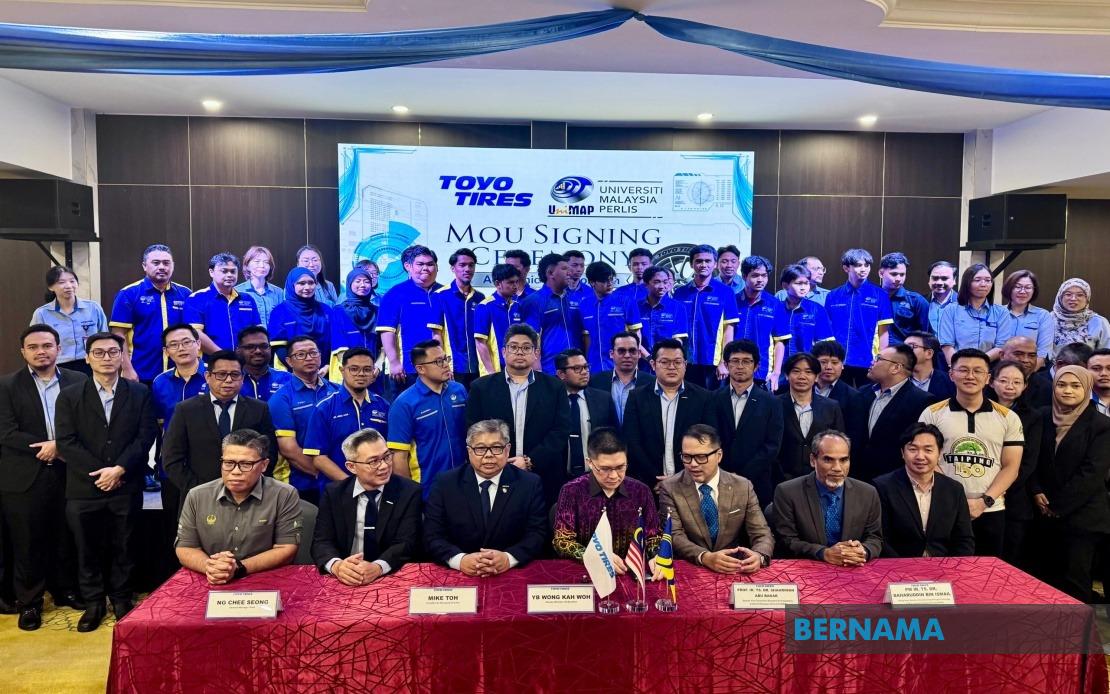
The signing of a Memorandum of Understanding between Toyo Tyre Malaysia Sdn Bhd and Universiti Malaysia Perlis (UniMAP) during the Taiping event exemplified this industry-education collaboration. Such partnerships facilitate knowledge transfer, provide workplace exposure opportunities, and enable educational institutions to anticipate future skills requirements. For students, these connections create clearer pathways from classroom to employment, reducing the transition friction that often plagues education-to-work progression.
From a regional perspective, Malaysia's strengthening vocational education ecosystem positions the country competitively within Southeast Asia. As the region grapples with skills shortages in manufacturing, automotive, aerospace, and emerging technology sectors, nations with robust TVET pipelines will likely capture greater shares of regional and global investment. The surge in KV applications suggests Malaysia is building human capital resilience that could underpin industrial competitiveness over coming decades.
The scale of unmet demand—with over 47,000 applicants unable to secure places despite strong interest—raises important questions about capacity expansion. While the current figures demonstrate the appeal of vocational education, they simultaneously highlight a resource constraint. Policymakers will need to evaluate whether expanding KV capacity is feasible and whether alternative TVET providers, including community colleges and private institutions, can absorb excess demand without compromising quality.
For Malaysian families and students, the high employability rates transform vocational education from a secondary option into a genuinely compelling pathway. In an era where university degree holders often face underemployment or credential inflation, the prospect of obtaining a qualification with near-certain employment outcomes represents substantial economic value. This realisation appears to be spreading through Malaysian society, evidenced by the application surge.
The success of KV also carries implications for income distribution and social mobility. Vocational pathways typically require shorter and less expensive study periods than university degrees, enabling students from lower-income backgrounds to acquire employment-ready skills more quickly. As these applications demonstrate, families clearly recognise vocational education as a viable route to economic advancement that does not necessitate the financial burden and time investment of tertiary academic study.
Looking forward, the government's TVET ambitions will depend on sustaining both the quality that has underpinned high employability rates and the institutional capacity to accommodate growing student numbers. The challenge now extends beyond generating interest—already amply demonstrated—to ensuring that expanded provision maintains the employment outcomes that have made vocational education genuinely attractive to Malaysian learners and employers alike.

