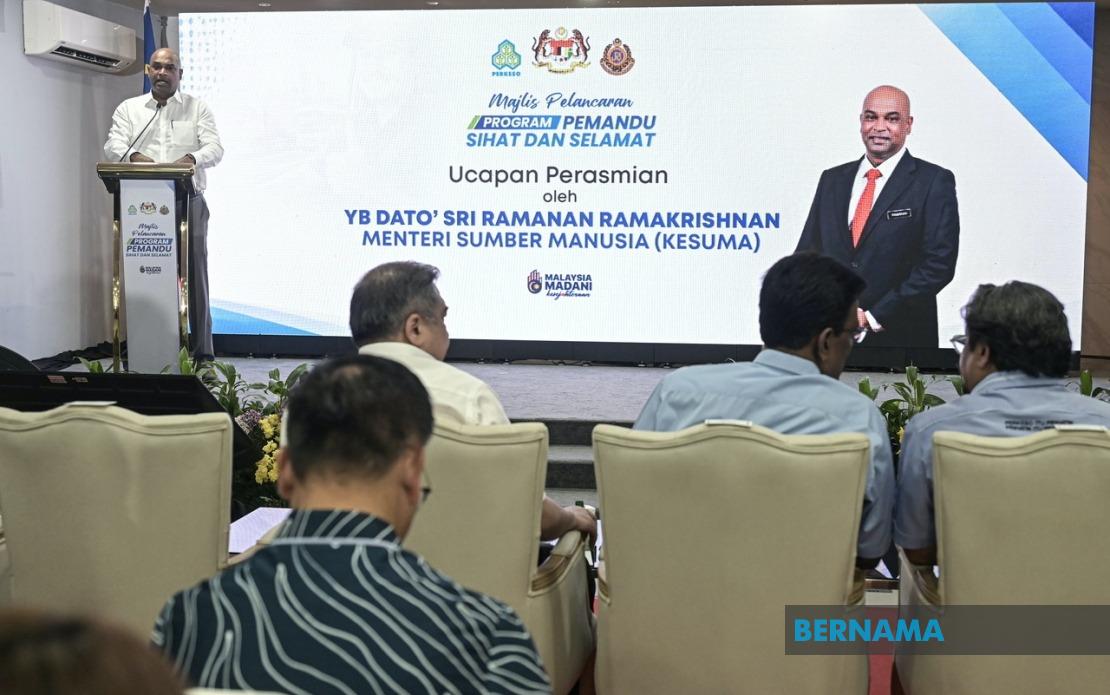
Professional drivers in Malaysia face a new requirement as they renew their vocational licences: undergoing comprehensive health screening at designated clinics nationwide. The Healthy and Safe Driver Programme (PSS), launched by Human Resources Minister Datuk Seri R. Ramanan on June 30, represents a significant shift in how the government addresses road safety by prioritising the wellbeing of drivers whose livelihoods depend on spending hours behind the wheel. Currently available at 500 panel clinics across the country, the initiative marks a collaborative effort between the Ministry of Human Resources and the Ministry of Transport to tackle what has become an increasingly urgent public health and safety concern.
The comprehensive health assessment under the PSS goes well beyond basic fitness checks. Drivers undergoing screening will receive physical examinations and undergo vision and hearing tests—critical sensory assessments for anyone operating heavy vehicles or passenger transport. The programme specifically screens for sleep disorders such as obstructive sleep apnea, a condition that has received growing attention from researchers as a significant risk factor in road accidents but remains poorly understood among the general driving population. Additionally, the screening evaluates key bodily systems including cardiovascular, respiratory, and neurological function, ensuring that drivers have the physiological capacity to handle the demands of professional driving.
For certain drivers, the screening protocol includes glycated haemoglobin (HbA1c) blood tests, which measure average blood sugar levels over several months. This addition reflects growing evidence linking diabetes and metabolic disorders to increased accident risk, either directly through physiological impairment or indirectly through medication side effects that may affect alertness and reaction time. The breadth of this health assessment framework demonstrates that Malaysian authorities are taking a preventative, evidence-based approach to reducing occupational road injuries rather than simply relying on punitive measures or refresher training.
Minister Ramanan emphasised that the screening initiative exists not to burden drivers with additional bureaucratic hurdles but to identify health issues early before they escalate into serious medical emergencies or tragic road incidents. This framing is important for public acceptance, particularly among the working-class drivers who form the backbone of Malaysia's logistics and transport industries. Early detection of conditions like uncontrolled hypertension, undiagnosed sleep apnea, or deteriorating vision creates an opportunity for drivers to seek treatment and make lifestyle adjustments, potentially extending their careers and protecting both themselves and other road users.
The financial structure of the PSS demonstrates government commitment to making health screening accessible. Drivers contribute only RM30 per screening, a modest amount that reflects the programme's focus on removing cost as a barrier to participation. The MADANI Government, through the Social Security Organisation (Socso), subsidises the remaining RM55 of the examination cost. This represents an investment in occupational health that acknowledges the economic value of keeping professional drivers healthy and working, while simultaneously reducing the public health burden of preventable accidents and injuries. For Malaysian drivers earning modest incomes, this subsidy makes the difference between viewing health screening as an optional expense and seeing it as accessible care.
Currently operating through 500 panel clinics, the PSS has ambitious expansion plans. The Ministry of Human Resources aims to scale the programme to 3,000 panel clinics nationwide, a six-fold increase that would dramatically improve accessibility for drivers across urban and rural areas alike. This expansion timeline will be crucial for the initiative's success, as geographic barriers to screening could otherwise undermine the programme's effectiveness in regions outside major cities where transport companies and independent drivers operate.
The urgency behind this new requirement becomes clear when examining recent road safety statistics. In 2025 alone, 115 workers were killed in road accidents, a troubling increase from 94 deaths the previous year—a 22 percent spike that signals deteriorating road safety conditions despite technological advances in vehicle safety features. These fatalities span multiple categories of workers including lorry drivers, bus operators, van drivers, car drivers, and motorcyclists, though the data reveals stark disparities in risk by profession.
Lorry drivers face the most severe occupational hazard on Malaysian roads, accounting for 62 of the 115 worker deaths in 2025, representing 21 percent of total work-related road fatalities. This concentration of risk among heavy vehicle operators reflects the demanding nature of long-haul driving, exposure to fatigue-related accidents, vehicle maintenance issues, and road conditions. The prevalence of sleep apnea and other sleep disorders among this population, combined with irregular working hours and pressure to meet delivery schedules, creates a perfect storm for accidents that the PSS directly addresses.
For Malaysian readers and policymakers, this initiative carries implications beyond immediate road safety. The introduction of mandatory health screening for vocational drivers sets a precedent that could expand to other occupational groups, particularly those in safety-sensitive roles. Regional peers including Singapore and Thailand have implemented similar programmes, and Malaysia's adoption positions the country within regional best practices for occupational health and safety. Insurance companies may eventually adjust premiums based on PSS compliance, creating additional financial incentives for participation.
The programme also reflects broader recognition that occupational health is not merely an individual responsibility but a shared concern involving employers, government, and workers themselves. By integrating health screening into the licence renewal process rather than leaving it voluntary, Malaysia removes the burden of decision-making from individual drivers who might otherwise prioritise short-term earnings over health maintenance. This paternalistic approach, while potentially controversial among those who value personal autonomy, aligns with evidence-based harm reduction principles.
For the transport and logistics sectors, implementation of the PSS may create short-term disruptions as drivers navigate clinic appointments and potential health-related licence suspensions. However, the long-term benefits—reduced accident rates, fewer workers' compensation claims, improved fleet safety records, and enhanced insurance profiles—should outweigh these costs. Companies operating professionally managed fleets will likely integrate PSS screening into their pre-employment and periodic health evaluation processes.
The success of the Healthy and Safe Driver Programme will ultimately depend on effective communication, equitable clinic distribution, and genuine commitment from drivers to address identified health issues. As the programme expands from 500 to 3,000 clinics, maintaining quality standards and ensuring that health recommendations are actually implemented will prove as important as the screening process itself. For Malaysia's professional drivers and the public they serve, this initiative represents a meaningful, if incremental, step toward safer roads.

