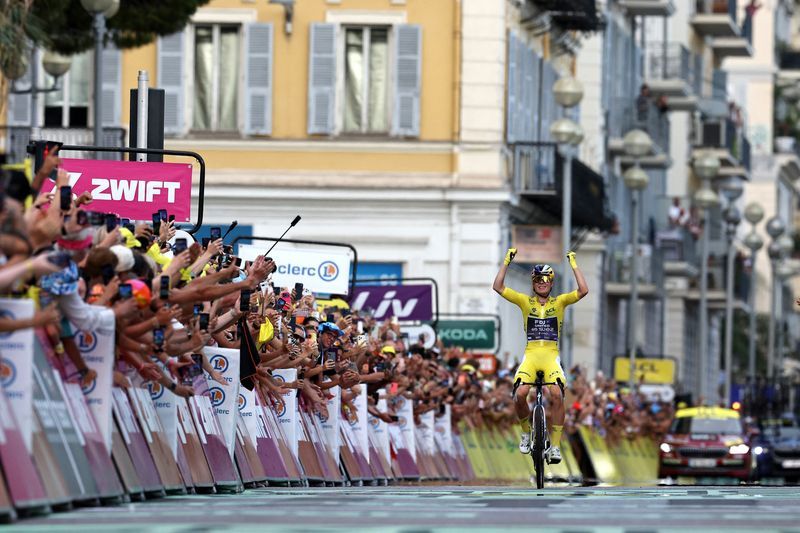
Demi Vollering of the Netherlands has secured her second Tour de France Femmes championship, delivering a masterclass performance on Sunday's concluding stage to reclaim cycling's premier women's race. The 29-year-old rider from team FDJ-Suez crossed the finish line near Nice having seized control of the race through a decisive attack on the Col d'Eze, the final major climbing challenge of the 99.2-kilometre stage, to underline her superiority over her rivals and claim the sport's most coveted title.
Vollering's victory represents another significant chapter in an already exceptional cycling career. The Dutch champion previously triumphed at the Tour de France Femmes in 2023, while her palmares also include the 2026 Giro d'Italia Women and back-to-back victories in La Vuelta Femenina during 2024 and 2025. Her consistent success across cycling's grand tours places her among the most accomplished female cyclists of the contemporary era, a status reflected in widespread recognition of her technical prowess and competitive mentality.
Entering the final stage, Vollering held a slender advantage of eight seconds over Poland's Katarzyna Niewiadoma-Phinney, having seized the race lead the previous day. The narrow margin meant the conclusion remained theoretically competitive, yet Vollering's performance throughout the three-week event had established her as the dominant force. On Sunday, she neutralised any remaining uncertainty by launching her attack precisely when it mattered most, overpowering the 31-year-old Niewiadoma-Phinney on the steep gradients of the Col d'Eze to forge ahead and complete the stage in isolated fashion.
The significance of clinching victory while wearing the race leader's yellow jersey held particular meaning for Vollering. In her post-race reflections, she acknowledged the emotional weight of crossing the finish line in possession of cycling's most iconic garment, describing it as a realisation of a long-held ambition. Her comments revealed the mental fortitude required to maintain composure and execute tactical perfection under the pressure of defending a position, while simultaneously honouring the collective effort of her support team.
Vollering's remarks underscored the collaborative nature of professional cycling, emphasising her appreciation for the dedication of her team members, including teammate Celia Gery who had endured a difficult preceding night. This perspective reflects a broader philosophy held by elite cyclists who recognise that grand tour victories emerge through the coordinated efforts of entire squads rather than individual achievement alone. Her determination to attack and establish superiority was framed not as personal ambition but as vindication of her team's collective labour and shared commitment to excellence.
The victory secured by Vollering gave her a commanding margin in the final general classification, finishing one minute and eighteen seconds ahead of Niewiadoma-Phinney. Italy's Elisa Longo Borghini rounded out the podium in third position, reflecting the depth of talent competing in women's professional cycling. Spain's Paula Blasi secured the stage runner-up spot, crossing the line one minute and four seconds behind Vollering, with Niewiadoma-Phinney completing the top three stage finishers.
Sunday's triumph marked Vollering's third stage victory at this year's edition of the Tour de France Femmes and her sixth stage win across all editions of the women's Tour competed to date. These statistics demonstrate not merely her capacity to excel on particular climbing terrain but her versatility across different stage profiles and racing circumstances. Her ability to impose authority on multiple occasions throughout the three-week event reinforced her status as the race's preeminent competitor.
The conclusion of the women's Tour de France Femmes occurs against the backdrop of continued momentum in professional women's cycling, though disparities remain in media coverage, sponsorship investment, and prize purses relative to the men's competition. Vollering's successive grand tour victories across different races underscore the exceptional quality of female cyclists operating at the sport's pinnacle, yet broader structural inequalities persist in how cycling's governing bodies and commercial stakeholders allocate resources between men's and women's professional racing.
For Malaysian cycling enthusiasts and Southeast Asian fans of the sport, Vollering's dominance offers inspiration and demonstrates the calibre of excellence achievable through sustained dedication to athletic development. While the region has produced several accomplished cyclists competing internationally, riders like Vollering exemplify the global standard required to achieve victories at cycling's most prestigious events. Her triumph serves as a benchmark for emerging cyclists in Malaysia and the region aspiring to international competitiveness.
Vollering's championship adds another chapter to a summer of high-profile cycling competition, following Slovenia's Tadej Pogacar's record-equalling fifth Tour de France title claimed in July, representing his third consecutive victory in the men's race. Pogacar's sustained dominance in the sport's signature event parallels the consistency demonstrated by Vollering in women's cycling, though the disparity in public attention and sponsorship investment between the two athletes underscores persistent gender-based inequities within professional cycling.
Looking forward, Vollering's demonstrated ability to win major tours across multiple grand tours positions her to potentially add further titles across cycling's calendar of prestigious stage races. Her technical capabilities, particularly on mountain terrain, combined with her tactical intelligence and mental resilience, suggest continued competitiveness across future seasons. For women's professional cycling, her sustained excellence contributes to elevating the profile and prestige of the sport at the elite level.

