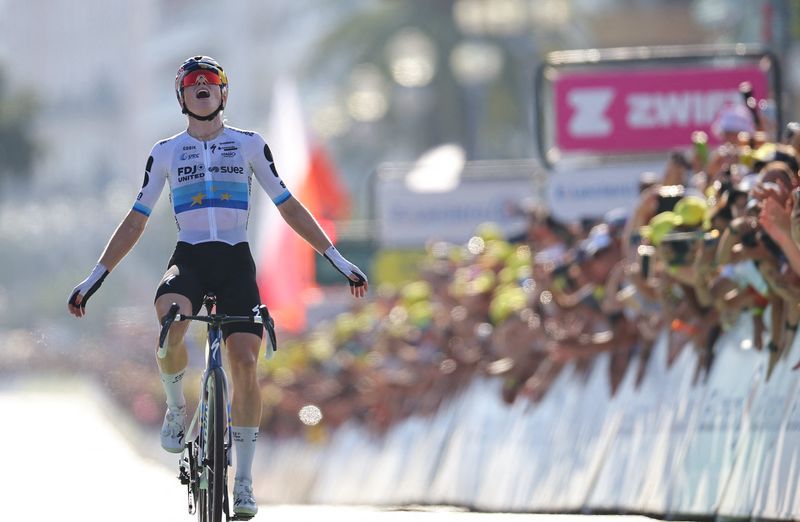
The penultimate stage of the Tour de France Femmes delivered high drama on Saturday when Dutch cyclist Demi Vollering seized control of the race with a powerful mountain stage performance, wresting the yellow jersey from overnight leader Kasia Niewiadoma-Phinney and positioning herself as the favourite heading into Sunday's final day of racing around Nice. Vollering's FDJ United-Suez team executed a tactical masterclass on the gruelling 171.9-kilometre mountain route from Sisteron, with the Dutch climber launching her decisive attack on the steep Chemin de l'Arieta climb six kilometres from the finish line, ultimately crossing the line ahead of Italy's Elisa Longo Borghini and a struggling Niewiadoma-Phinney.
The stage unfolded under unusual circumstances following the pre-race withdrawal of defending champion Pauline Ferrand-Prevot from Visma-Lease a Bike, who cited illness as her reason for not starting. Her absence marked a significant development in what had been a fiercely competitive edition of women's professional cycling's marquee stage race, removing one of the strongest contenders from contention and reshaping the tactical landscape for the remaining competitors.
Vollering's comeback reflected the unpredictable nature of multi-day stage racing, where momentum can shift dramatically within the span of twenty-four hours. Just one day earlier, on Mont Ventoux, the Dutch rider had surrendered over a minute to Niewiadoma-Phinney, appearing to have ceded control of the overall classification. However, she regrouped mentally and physically, working with her team to identify opportunities on Saturday's mountain terrain where her climbing prowess could be deployed most effectively.
The decisive moment arrived when Vollering accelerated clear on the Chemin de l'Arieta climb, her superior strength on the steepest gradients allowing her to distance both Niewiadoma-Phinney and Longo Borghini simultaneously. From that point, the outcome became inevitable, as Vollering managed her advantage down the technical descent into Nice to claim victory and the associated time bonus seconds that expanded her advantage in the general classification.
Vollering's victory represented her fifth spell wearing the yellow jersey throughout the 2026 edition, making her the fifth different rider to have held the race lead—a statistic that underscored the competitive depth and unpredictability that has characterised this year's women's tour. Her comments after the stage reflected both her pragmatic understanding of stage racing dynamics and her determination to capitalise on her newfound advantage. "In a stage race, you live day-by-day. So you can be disappointed tonight, but then the next morning you need to put on a new mask and you go again," Vollering explained to reporters, adding that everything remained possible on Sunday's finale despite her eight-second advantage.
Longo Borghini's second-place finish capped an impressive performance on the mountain stage, the UAE Team ADQ rider ultimately prevailing in a closely contested sprint against Niewiadoma-Phinney to secure the final podium place. For Niewiadoma-Phinney, relinquishing the yellow jersey proved a bitter pill to swallow, particularly given her allegations regarding the conduct of FDJ United-Suez during the stage. The Polish-Canadian cyclist complained bitterly about what she characterised as blocking tactics employed by FDJ teammate Celia Gery, accusing the French team of forcing her into barriers and disrupting her momentum at a critical juncture on the climb.
Niewiadoma-Phinney's frustration appeared rooted in genuine tactical grievance rather than mere post-race frustration. She suggested that such defensive tactics, while perhaps technically legal within the rules of professional cycling, violated the spirit of fair competition. "I feel like if they want to compete, they should compete fair play and not block me the barriers because it's so childish. Honestly I lost a lot of respect for them because of that," she stated, articulating a broader concern about the increasingly physical and occasionally unsporting nature of modern women's professional cycling.
The eight-second margin separating Vollering and Niewiadoma-Phinney entering Sunday's finale provides a genuine contest without being insurmountable. In professional cycling, time gaps of this magnitude on the final day can evaporate through various mechanisms—mechanical issues, crashes, brilliant tactical positioning, or simply superior execution. Vollering herself acknowledged the inherent uncertainty, noting that "everything can happen on the last day," even as she expressed satisfaction at approaching the finale in the psychological advantage of wearing yellow.
For Malaysian and Southeast Asian cycling enthusiasts, this edition of the Tour de France Femmes has demonstrated the sport's growing competitiveness and the global reach of women's professional cycling, with international representation across the top ranks of the classification. The race has showcased the technical demands of mountain stage racing and the psychological resilience required to perform at the elite level, where marginal advantages in fitness, tactics, and mental fortitude often determine success.
The drama surrounding Ferrand-Prevot's withdrawal and the subsequent controversy over race tactics highlight ongoing discussions within professional cycling about competitive conduct and sportsmanship. As women's cycling continues its upward trajectory in terms of prize money, sponsorship, and media coverage, such incidents prompt reflection on the standards and expectations governing professional conduct. The upcoming final stage will ultimately determine whether Vollering's current advantage proves decisive or whether Niewiadoma-Phinney or another contender can force a dramatic reversal on the final day of racing.

