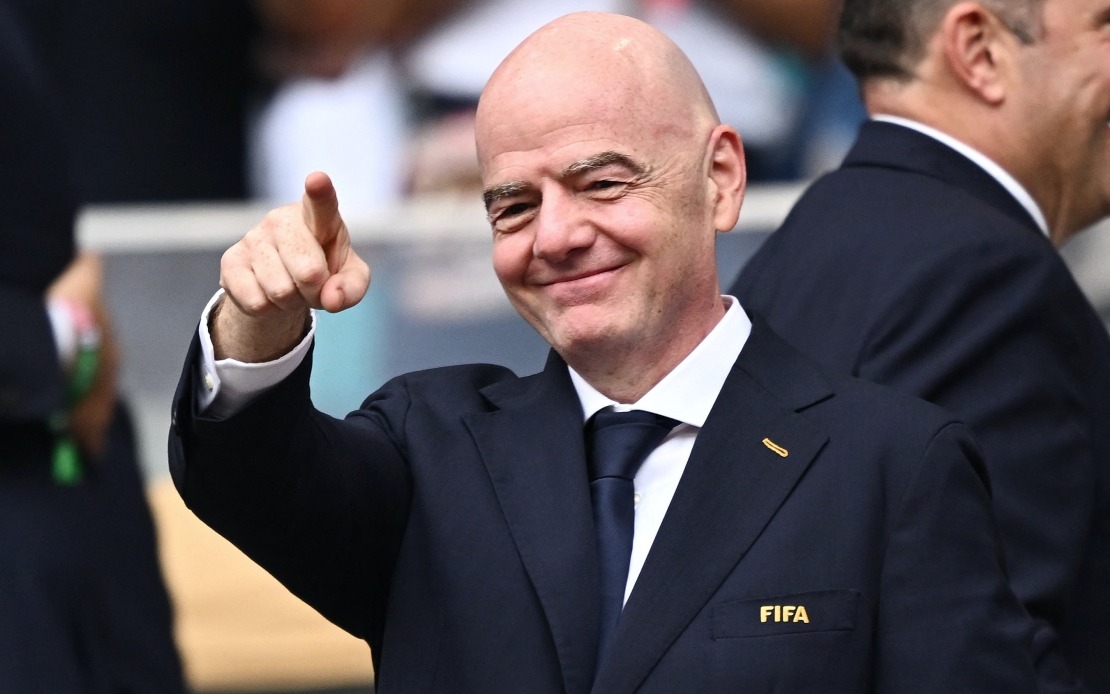
The Football Association of Wales has pulled its backing for FIFA president Gianni Infantino's bid to retain office, marking a significant erosion of support for the embattled leader of world football. The FAW's decision, announced on Monday, stems directly from Infantino's failed initiative to sell stakes in the World Cup to private investors, a proposal that triggered widespread condemnation across the sport's global governance structures and prompted the FIFA president to shelve the plan just days earlier.
Infantino's decade in charge of FIFA has increasingly come under fire, with his leadership now the subject of intense scrutiny from multiple confederations. The withdrawal of Welsh support represents a symbolic but meaningful loss, particularly given that the FAW had previously indicated willingness to support his re-election campaign. The reversal underscores how comprehensively the FIFA Forward Enterprise (FFE) proposal damaged Infantino's political standing among national football associations around the world.
In a carefully worded statement, the FAW outlined the specific grounds for its decision, pointing to persistent shortcomings in governance, decision-making processes, leadership quality, institutional values, stakeholder relations, and communication strategies. The Welsh body concluded that Infantino had fundamentally forfeited the trust necessary to oversee international football, stating that his failure to prioritise the sport's genuine interests represented an unacceptable breach of his fiduciary responsibilities to the global footballing community.
The English Football Association has similarly distanced itself from the FIFA president, having formally communicated to FIFA that it no longer supports Infantino's continuation in office. On Saturday, the English FA released a statement affirming its alignment with UEFA's position that confidence in Infantino had been irreparably damaged by the FFE venture. This dual withdrawal of support from the two oldest and most influential football associations in the world sends a powerful message about the severity of the leadership crisis at FIFA.
European football's governing body, UEFA, issued its own statement rejecting the privatisation scheme and pointedly indicated that all options remain under consideration going forward. This carefully calibrated language left the door open for confederation action to remove Infantino through a formal mechanism, potentially triggering an Extraordinary FIFA Congress convened following a vote of no confidence. Such a process would require signatures from merely 43 of FIFA's 211 member associations to initiate, though political strategists recognise that removing an incumbent would demand demonstrable support from a clear majority of the broader membership.
CONCACAF, the confederation representing North America, Central America and the Caribbean, joined the chorus of dissent over the weekend by demanding a comprehensive review of Infantino's leadership record. Combined with UEFA's member associations, these two confederations encompass 96 national football bodies, representing formidable political weight within FIFA's governance structure. Reports suggest that CONCACAF's president Victor Montagliani, who currently serves as a FIFA vice-president, is contemplating a presidential challenge should a vacancy open.
Despite this mounting pressure from developed football nations, Infantino retains meaningful support in other regions. Several African and Asian associations, including those from Morocco, Egypt and Qatar, have issued statements affirming their continued backing for the FIFA president. This geographic split in support reflects broader political divisions within world football and raises questions about whether sufficient consensus exists to orchestrate Infantino's removal through formal constitutional mechanisms.
The FFE proposal that triggered this cascade of events represented Infantino's attempt to modernise FIFA's financial model by attracting private investment into World Cup operations. The scheme faced rejection from three major confederations and drew criticism from football stakeholders who viewed it as fundamentally incompatible with the sport's ethos and governance principles. The rapid abandonment of the initiative, while stemming further damage, could not salvage the reputational harm already inflicted on Infantino's standing.
For Malaysian and Southeast Asian readers, these developments carry significance beyond continental football politics. The crisis at FIFA exemplifies broader questions about institutional leadership, governance accountability, and the ability of member organisations to constrain executive overreach. As Asia's football bodies navigate their own development challenges and governance improvements, the international debate about FIFA's direction offers cautionary lessons about the concentration of power and the importance of transparent decision-making processes.
The timing of Infantino's difficulties comes as FIFA prepares for its next presidential election, with the selection process now occurring under a cloud of governance concerns. Whether the current wave of opposition crystallises into formal action through a no-confidence vote remains uncertain, dependent on whether dissident associations can build sufficient consensus among FIFA's broader membership to justify an extraordinary congress. The coming months will reveal whether the vocal criticism from established football powers can translate into sufficient votes to fundamentally reshape FIFA's leadership.

