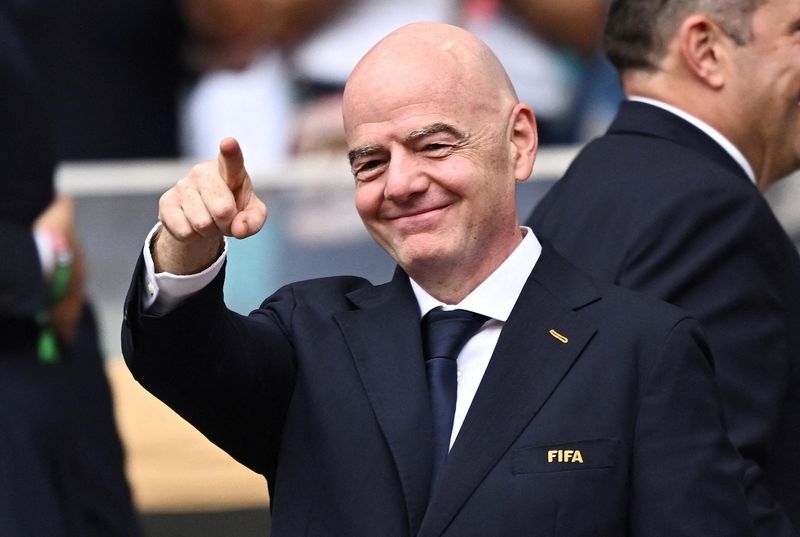
The Football Association of Wales has formally withdrawn its backing for FIFA President Gianni Infantino's bid to secure another term leading the world's football governing body, marking the first national federation to take such action. The dramatic reversal comes in the wake of FIFA's failed attempt to unlock billions of dollars from private investors through a controversial stake sale in commercial rights, a plan that unravelled spectacularly after intense pushback from stakeholders across the international football community.
FIFA's ambitious scheme aimed to generate up to $4.2 billion by inviting private equity investors to acquire approximately 20% ownership in a newly established entity responsible for overseeing major competitions, notably the World Cup. The proposal represented an unprecedented move to commercialise the sport's most prestigious tournament, effectively bringing outside capital into the heart of international football's decision-making infrastructure. However, the initiative faced formidable resistance from regional confederations and national associations who viewed the arrangement with alarm, ultimately forcing FIFA to abandon the plan on Friday.
The Welsh FA's statement articulated deep concerns about governance standards under Infantino's leadership. The federation cited systemic failures across multiple dimensions—governance, procedural integrity, leadership competence, adherence to stated values, management of stakeholder relationships, transparency in communications, and overall decision-making judgment. This comprehensive critique suggests the stake sale proposal merely crystallised growing frustrations rather than representing an isolated misstep. The statement emphasised that Infantino has squandered the confidence necessary to lead global football, and that his failure to prioritise the sport's fundamental interests constitutes an unacceptable breach of trust.
The timing of Wales's withdrawal proves particularly significant given the political dynamics within FIFA's governance structure. Infantino, who assumed the presidency in 2016 following Sepp Blatter's departure amid corruption scandals, has maintained his position through two unopposed re-election cycles. His upcoming campaign for a fourth consecutive term covering 2027 to 2031 had appeared virtually assured until the commercial rights debacle exposed underlying fractures within the FIFA membership. What proponents had framed as innovative financial restructuring now appears to have catalysed a reckoning with the president's broader leadership approach.
The collapse triggered swift and damaging reversals from major confederations. Both UEFA, European football's governing body, and CONCACAF, representing the North American and Caribbean region, announced on Saturday that they had lost confidence in Infantino's stewardship. UEFA led the resistance to the original proposal, ultimately welcoming its abandonment. The confederation has moreover signalled its willingness to escalate the dispute, with reports suggesting legal action may be contemplated against FIFA, though UEFA refrained from confirming such intentions publicly. Instead, the body issued a document preservation order—a formal step preventing the destruction of emails, files, and data pending investigation—a measure typically preceding legal proceedings.
For Southeast Asian observers, this crisis within FIFA carries particular relevance given the region's growing prominence in international football. The governance failures now under examination affect not only European and North American football but the entire global ecosystem, including developing footballing nations in Asia. Malaysia, Vietnam, Thailand, and Indonesia, among others, have legitimate interests in FIFA's transparency and accountability. The instability at FIFA's top level during a crucial period before the 2026 World Cup expansion could ripple through qualification processes and tournament logistics that directly impact Asian federations.
Infantino's March Congress scheduled for Morocco now looms as a potential turning point. What had been anticipated as a routine re-election affirmation appears increasingly contested. The failed privatisation scheme has exposed genuine dissatisfaction among FIFA's membership that extends beyond a single controversial proposal. Multiple federation leaders now question whether Infantino possesses the judgment and stakeholder management capabilities required to navigate football's complex international governance. The convergence of criticism from Wales, UEFA, and CONCACAF suggests momentum building against the president's continuation in office.
The contrast between Infantino's previously unchallenged position and his current precarious standing illuminates how rapidly FIFA's internal politics can shift when major stakeholders perceive misaligned interests. The president's attempts to secure FIFA's financial future through private equity investment, however well-intentioned strategically, collided with federation leaders' conviction that certain decisions exceed any individual's authority. The episode demonstrates that Infantino cannot assume the passive acceptance that characterised his earlier tenure, when opposition remained fragmented and disorganised.
The financial ambitions underlying the failed scheme also warrant examination. The proposed $4.2 billion injection would have substantially enhanced FIFA's resources, potentially funding expanded women's football development, infrastructure improvements in emerging markets, and administrative modernisation. Yet the means of acquisition—inviting outside investors into governance—proved unacceptable to constituencies whose interests might be subordinated to investor returns. This reflects fundamental tensions within modern football governance between commercialisation pressures and traditional federation autonomy, tensions that Infantino's leadership has failed to mediate effectively.
Moving forward, Infantino faces the prospect of either withdrawing gracefully from the re-election race or proceeding to Morocco to contest a candidacy now shadowed by serious credibility questions. Additional federations may follow Wales's lead, further diminishing his political capital. The outcome will shape FIFA's direction through what promises to be a consequential period for global football, with implications extending across Asia's rapidly developing football sector.

