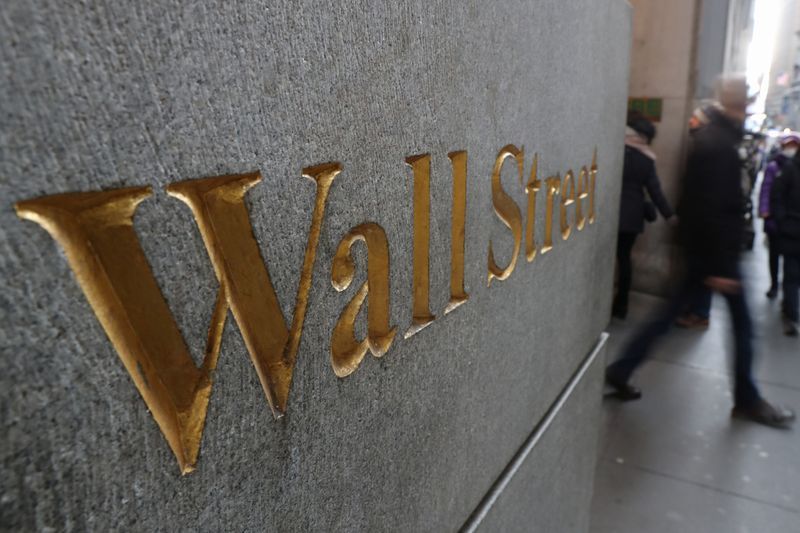
Wall Street opened August in dominant form as the Dow Jones Industrial Average closed at an all-time high, buoyed by signals that U.S.-Iran tensions were cooling and crude oil prices were retreating. The benchmark Dow climbed 693.38 points, or 1.32%, to settle at 53,178.41, whilst the broader S&P 500 gained 1.48% to 7,600.50 and the tech-heavy Nasdaq Composite surged 2.13% to 25,913.90. The rally reflected a confluence of factors that temporarily relieved market anxieties that have plagued investors throughout July: geopolitical risk, artificial intelligence sector volatility, and uncertainty surrounding Federal Reserve policy direction.
The principal catalyst for the market's upward momentum came from a perceived thawing of U.S.-Iran relations. U.S. President Donald Trump announced on Sunday that negotiations aimed at reopening the Strait of Hormuz would commence Monday, a statement that immediately rippled through commodity markets. Crude oil prices contracted approximately 5% on this development, though the announcement proved controversial—Iran subsequently disputed that formal talks had actually been scheduled, injecting some ambiguity into the narrative. Nevertheless, the mere prospect of de-escalation was sufficient to ease the oil market's jittery disposition and restore investor confidence in near-term stability.
The decline in petroleum prices proved particularly significant for financial markets because elevated crude costs had persistently weighed on sentiment throughout the preceding month. Energy sector stocks, which benefit directly from higher oil prices, underperformed on the session, declining 1.2% as the weakest-performing sector among the eleven major categories in the S&P 500. Conversely, the energy market's weakness reflected broader economic logic: lower oil prices translate to reduced inflation pressures, potentially mitigating the case for aggressive Federal Reserve interest rate increases that would suppress equity valuations. Treasury yields moved lower in tandem with crude prices, providing additional support for equities, whose attractiveness improves as bond yields decline.
Art Hogan, chief market strategist at B. Riley Wealth in Boston, encapsulated the market's singular preoccupation: investors scrutinise two variables obsessively each trading session—crude oil prices and the yield on ten-year Treasury notes. When both fall, market participants grow confident; when either climbs, sentiment deteriorates markedly. This year, macroeconomic turbulence has frequently overshadowed the earnings season, typically an opportunity for equity markets to focus on corporate fundamentals rather than broader geopolitical anxieties. This quarter proved the exception, as international crises and monetary policy uncertainty collided with the period when companies disclose quarterly results.
Corporate earnings themselves demonstrated considerable strength, however, providing fundamental support for equity gains beyond the mere absence of bad news. Through Friday, 304 companies within the S&P 500 had reported quarterly results, posting a collective earnings growth rate of 29.3% whilst 85.2% of reporters topped analyst expectations. This performance substantially outpaced typical seasonal patterns and suggested that American businesses were navigating the current environment more successfully than some pessimists had anticipated. Communication services stocks, encompassing Meta Platforms and Alphabet, performed especially impressively, collectively advancing 4.3% and becoming the best-performing sector for the session.
Among individual stocks, mega-cap technology companies captured particular attention. Amazon's share price climbed 4.6% following the release of solid earnings results last week, driving the e-commerce and cloud computing giant's market capitalisation beyond $3 trillion for the first time in corporate history. SpaceX, the aerospace manufacturer controlled by Elon Musk, jumped 5.6% ahead of its scheduled Tuesday report on first-quarter results since its June initial public offering. The stock had traded below its $135 issue price for nearly three weeks following its mid-June debut, so the rally represented a partial recovery from that post-listing weakness.
The technology sector more broadly benefited from positive sentiment surrounding artificial intelligence applications. Advanced Micro Devices, Western Digital, and SanDisk—all companies with substantial exposure to AI infrastructure and data management—were scheduled to report earnings during the week, creating anticipation that their results might validate the elevated valuations the sector commands. Malaysia's substantial participation in global semiconductor supply chains means that developments in U.S. chip company valuations carry particular relevance for regional investors and policymakers monitoring the health of electronics manufacturing exports.
Pharmaceutical stocks drew attention following preliminary reports of merger discussions between Bristol Myers Squibb and AstraZeneca, a transaction that could create one of the world's largest pharmaceutical enterprises with combined market value approaching $400 billion. Such consolidation reflects ongoing industry pressures to achieve scale and innovation capacity, though regulatory scrutiny of mega-mergers remains a significant variable. Conversely, Marriott International slumped 7% after the hospitality operator guided third-quarter profit below Wall Street expectations, highlighting that earnings season contains disappointments alongside achievements.
The Federal Reserve's policy trajectory remained a critical undercurrent throughout the session. New York Federal Reserve President John Williams articulated optimism that inflation pressures would gradually moderate, lending credibility to expectations that the central bank might eventually pause rate increases. However, an earlier report that Fed Chair Kevin Warsh had proposed reducing the frequency of policy-setting meetings injected some uncertainty into the market's perception of the institution's communication practices and decision-making transparency. CME FedWatch data showed that markets were pricing a 64.5% probability of at least a 25 basis-point rate increase at the Fed's September meeting, suggesting investors remain prepared for additional tightening.
The coming week promised important labour market indicators that would help clarify the inflation trajectory and justify or challenge the Fed's policy assumptions. The government's monthly jobs report, scheduled for Friday, would represent the week's culminating economic release and could substantially influence expectations for September's policy decision. For Southeast Asian economies like Malaysia, which depend on U.S. demand and face currency implications from Fed actions, such American employment data carries significant implications for regional growth prospects.
Breadth-of-market indicators reflected broad-based buying enthusiasm rather than concentration within a narrow group of mega-cap stocks. Advancing issues outnumbered declining issues by a 2.62-to-1 ratio on the New York Stock Exchange and a 3.01-to-1 ratio on the Nasdaq, suggesting that gains were distributed across numerous holdings. The S&P 500 registered 15 new 52-week highs against only one new low, whilst the Nasdaq Composite posted 121 new highs balanced against 96 new lows, indicating healthy participation in the rally. Trading volume of 19.36 billion shares exceeded the 20-day average of 17.66 billion shares, demonstrating that market participants acted with conviction rather than indifference.
The rally's sustenance will ultimately depend on whether Iran tensions genuinely de-escalate, corporate earnings continue meeting elevated expectations, and the Federal Reserve proves less aggressive than some investors feared. July's volatility created a market hungry for reassurance, and August's opening provided it—at least temporarily.

