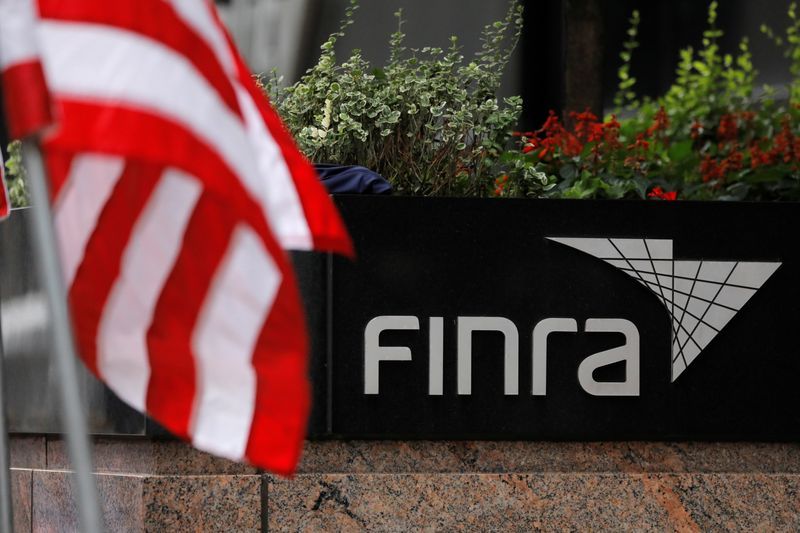
Steven Price has departed the U.S. Financial Industry Regulatory Authority (FINRA), the Wall Street self-regulatory organization, to assume the role of chief compliance officer at Finalis, a San Francisco-based fintech firm focused on dealmaking infrastructure. The move reflects a broader shift in the financial services industry, where traditional regulatory bodies are losing seasoned talent to technology-driven startups challenging the established order on Wall Street.
During his six-year tenure at FINRA, Price occupied one of the most consequential enforcement positions in American finance. As senior vice president of market investigations, he oversaw a sprawling portfolio of inquiries targeting potential breaches of securities law, including high-profile matters such as insider trading schemes and market manipulation. His supervision extended across thousands of active investigations, positioning him as a central figure in FINRA's efforts to police the broker-dealer ecosystem that underpins US capital markets.
Beyond traditional enforcement work, Price was instrumental in modernizing FINRA's approach to detecting misconduct. He spearheaded the National Cause Program, a strategic initiative designed to harness artificial intelligence for compliance purposes. Under his leadership, the program developed the watchdog's first AI-driven analytical system, which consolidates complaints, tips, and referrals from across the financial services industry into a centralized platform capable of identifying patterns and flagging potential violations more efficiently than legacy manual processes. This experience with cutting-edge compliance technology appears to have prepared him well for his new role.
Finalis, founded in 2020 by Federico Baradello, a former mergers and acquisitions lawyer at prestigious firm Kirkland & Ellis, has carved out a niche by providing boutique investment banks and dealmakers with essential compliance infrastructure and regulatory licensing. The company has already facilitated approximately $34 billion in transaction volume, establishing itself as a meaningful player in the financial services ecosystem despite its relatively recent founding.
The broader context of Price's move illuminates fundamental transformations underway across Wall Street. The rise of fintech platforms and advances in artificial intelligence are fragmenting the traditional investment banking model. Established frameworks that once required armies of junior analysts, compliance officers, and back-office staff to execute transactions are being disaggregated and partially automated. This technological shift has emboldened experienced bankers at major institutions to launch independent boutiques capable of competing for deals once reserved for megafirms. These smaller operations gain competitive advantage by deploying AI tools to handle analytical work and administrative processing, thereby reducing operational overhead and improving turnaround times.
Finalis occupies a critical position within this ecosystem as an enabler of boutique dealmaking. Rather than competing directly for client relationships, the company provides the regulatory scaffolding that independent dealmakers require to operate legally and compliantly. By offering licensing support and compliance infrastructure, Finalis removes friction from the boutique formation process, effectively democratizing access to dealmaking capabilities that were previously concentrated among large institutions.
Price's decision to join Finalis signals confidence in this business model while highlighting the appeal of fintech to seasoned regulatory professionals. In an interview, he emphasized that the opportunity to apply lessons learned from his time restructuring and modernizing FINRA's investigative apparatus to a private fintech operation carried significant professional allure. He specifically cited the ability to accelerate decision-making processes and connect relevant information to stakeholders more efficiently—principles directly applicable to deal execution and compliance verification.
The migration of regulatory expertise from government watchdogs to private enterprises reflects a pronounced trend in financial services. As technology companies reshape market structure and operating models, regulators struggle to retain talent capable of understanding and evaluating novel business practices. Accomplished professionals who have spent years mastering compliance frameworks and investigative methodologies find themselves targeted by private firms seeking to embed regulatory sophistication into their business operations. From a strategic standpoint, hiring former regulators provides legitimacy, reduces legal and compliance risks, and facilitates navigation of an evolving regulatory landscape.
For Malaysian and Southeast Asian readers, this development carries implications for how financial markets operate regionally. Many Asian markets are simultaneously experiencing fintech proliferation and regulatory modernization. The emergence of compliance-focused infrastructure providers, supported by individuals with deep regulatory experience, suggests a potential model for how developing financial hubs might foster innovation while maintaining market integrity. Jurisdictions like Singapore and Malaysia, which aspire to position themselves as regional financial centres, face the challenge of preventing talent drain to more established markets while simultaneously enabling innovation that might otherwise migrate entirely to Silicon Valley or New York.
FINRA, as an organization, has not publicly commented on Price's departure, suggesting the agency considers high-level exits relatively routine occurrences. However, the loss of someone who directed thousands of investigations and pioneered the organization's AI capabilities represents substantive departures of institutional knowledge. As fintech companies and boutique dealmakers expand market share, the regulatory agency responsible for overseeing broker-dealers faces the complex task of adapting its supervisory approach to a more fragmented industry populated by smaller, more specialized players.
The evolution embodied by Price's move exemplifies how regulatory frameworks and market structure coevolve. Rather than resisting technological disruption, established regulators are increasingly staffed by veterans who spent formative years at innovation-focused firms, while those same firms recruit former regulators to ensure operational compliance. This circulation of talent between public and private sectors reflects a mature financial industry grappling with genuine structural change.

