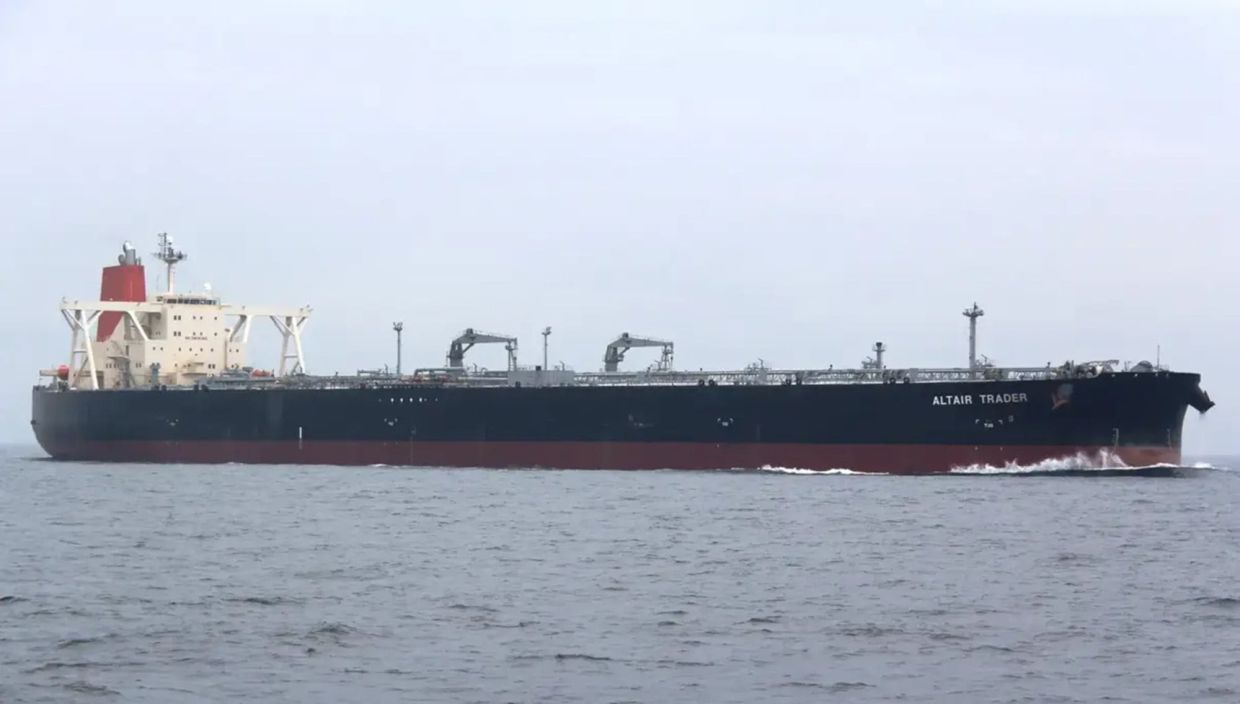
Washington has intensified its financial war against Iran by targeting a network of Asian shipping companies, designating eight firms based in mainland China and Hong Kong for their alleged role in transporting sanctioned Iranian crude and petrochemical products. The action, announced by the State Department and Treasury Department on Wednesday, represents a significant escalation in the use of secondary sanctions—economic penalties targeting third parties that conduct business with designated entities—and reflects the deepening friction between the United States and China over trade relationships with Tehran.
The sanctions freeze any assets the targeted companies hold within the US financial system and generally prohibit American individuals and businesses from engaging in transactions with them. Beyond this direct impact, foreign financial institutions and other companies could face significant sanctions exposure if they maintain commercial dealings with the designated firms. This extraterritorial reach, known colloquially as "long-arm jurisdiction," extends American regulatory power across global financial networks and represents a key tool in Washington's sanctions arsenal.
According to Treasury Department findings, six of the eight identified vessels specifically transported Iranian crude to China, with some carrying millions of barrels during 2026 alone. The sanctioned companies include Qi Hang Ship Management Limited, based in mainland China, which operates the Marshall Islands-flagged Well Sail; five Hong Kong-registered entities including Confident Apex Limited, Billion Nexus International, Nevada Spirit Company, Marinova Freight, and Vast Mighty Limited; and two Marshall Islands-based firms managing the Nireta and Yehope tankers. The detailed vessel listings underscore the sophistication of Iran's shadow fleet operations—a network of aging tankers operating with murky ownership structures and frequently changing vessel names and flags of convenience to evade detection.
US officials characterise these sanctions as complementary to Washington's naval enforcement operations along Iran's coastline and through the Strait of Hormuz, one of the world's most critical energy chokepoints through which approximately one-third of seaborne oil passes. State Department spokesman Tommy Pigott explicitly linked the economic measures to the military blockade, describing the action as supporting the US Navy's enforcement efforts and framing maritime freedom as a "global interest" rather than merely an American strategic concern. This framing attempts to position US sanctions policy within an international rules-based framework rather than as unilateral coercion.
Treasury Secretary Scott Bessent characterised Iran's economic situation as increasingly desperate, with the national currency facing severe devaluation and inflation reaching triple digits. Within this context, Bessent portrayed the sanctions regime as necessary to prevent Iran from "holding global commerce hostage" and financing what Washington designates as terrorism operations conducted by the Islamic Revolutionary Guard Corps. This economic argument suggests that the US administration views financial pressure not merely as punishment but as a mechanism to force behavioural change by constraining the resources available to Iranian security agencies.
The action extends beyond vessel operators to target two Iranian firms accused of operating coercive maritime insurance schemes. The Persian Gulf Marine Insurance Company and Hormuz Safe Marine Services Authority allegedly force commercial vessels transiting the Strait of Hormuz to purchase insurance policies ostensibly protecting against risks including seizures—risks that the US Treasury argues are "overwhelmingly created by Iran itself." Hormuz Safe, developed by Iran's Ministry of Economy, reportedly accepts cryptocurrency including bitcoin alongside traditional payments, generating revenue directly for the IRGC while providing the Iranian government with a revenue stream and enforcement mechanism over international shipping.
China has swiftly rejected these sanctions, with Liu Pengyu, spokesman for the Chinese embassy in Washington, issuing a strongly worded statement characterising the action as abusive unilateral sanctions and an attempt to obstruct legitimate commerce. Beijing's position emphasises that Sino-Iranian economic cooperation is "open, transparent, lawful and legitimate," presenting American sanctions as violations of international law and illegitimate assertions of American regulatory authority. China has historically maintained that UN-approved multilateral sanctions are binding, but unilateral measures fall outside the bounds of legitimate international practice, particularly when applied extraterritorially to Chinese companies.
This sanctions episode reflects a fundamental strategic disagreement between Washington and Beijing regarding Iran policy. The United States views sanctions as a lever to constrain Iranian regional activities and prevent resource flows to armed groups, while China regards its economic engagement with Iran as commercially rational and strategically important for maintaining influence in the Middle East. For Malaysian readers and regional observers, this tension illustrates how great power competition increasingly plays out through control of global shipping networks and energy supplies rather than through traditional military confrontation.
The targeting of Hong Kong-based firms carries particular significance given the territory's status as a global financial hub and its complex position within the Chinese political system. The concentration of sanctioned firms in Hong Kong reflects the territory's traditional role as an intermediary for commerce between mainland China and the outside world, as well as its sophisticated shipping and financial services infrastructure. However, the sanctions also demonstrate that US regulators increasingly view Hong Kong's autonomy from mainland China as limited, treating Hong Kong-registered entities as functionally subject to Beijing's direction and therefore appropriate targets for secondary sanctions.
For Southeast Asia, particularly Malaysia as a major shipping and trading nation, these sanctions create practical complications. Malaysian maritime operators, port authorities, and financial institutions must navigate the complex technical and legal requirements of distinguishing sanctioned vessels from legitimate shipping while remaining aware of potential sanctions exposure. The expansion of sanctions targeting to shipping companies rather than exclusively to state entities means that private sector operators now bear significant compliance and reputational risks when engaging with Iranian trade flows, a reality that has gradually chilled commercial engagement with Iran across the region despite the absence of formal Malaysian government sanctions.
The currency and economic statistics cited by US Treasury officials—triple-digit inflation and currency collapse—accurately reflect Iran's severe macroeconomic crisis, which makes access to international shipping capacity and energy export revenue genuinely critical to regime survival. Sanctions therefore directly affect not only the Iranian government's international behaviour but also the welfare of ordinary Iranians dependent on imports and government services. This humanitarian dimension remains deeply contested, with US policymakers arguing that financial pressure incentivises policy change while critics contend that sanctions cause disproportionate harm to civilian populations without altering state behaviour.
Looking forward, the cumulative effect of shipping-focused sanctions may create new vulnerabilities for Iran's energy export sector while driving further technological innovation in sanctions evasion. The shadow fleet itself represents an adaptation to earlier sanctions rounds, and continued pressure may accelerate the development of more sophisticated concealment mechanisms. For Malaysian and regional policymakers, the episode underscores the increasing integration of maritime commerce, financial regulation, and great power strategic competition, requiring sophisticated institutional capacity to manage compliance with international sanctions while protecting legitimate commercial interests.
The long-term trajectory of these sanctions remains uncertain. Washington has indicated the measures will remain in place until Iran ceases what it characterises as destabilising regional behaviour, an undefined endpoint that effectively makes sanctions potentially permanent. China's clear rejection and commitment to defending sanctioned companies' interests suggests that the sanctions may further strain Sino-American relations without necessarily constraining Iran's energy exports, particularly if Beijing continues facilitating commercial relationships that the US opposes. For the international shipping industry and energy markets, this dynamic will likely persist as a source of friction and uncertainty affecting routing decisions, insurance costs, and energy prices across the Indo-Pacific region.

