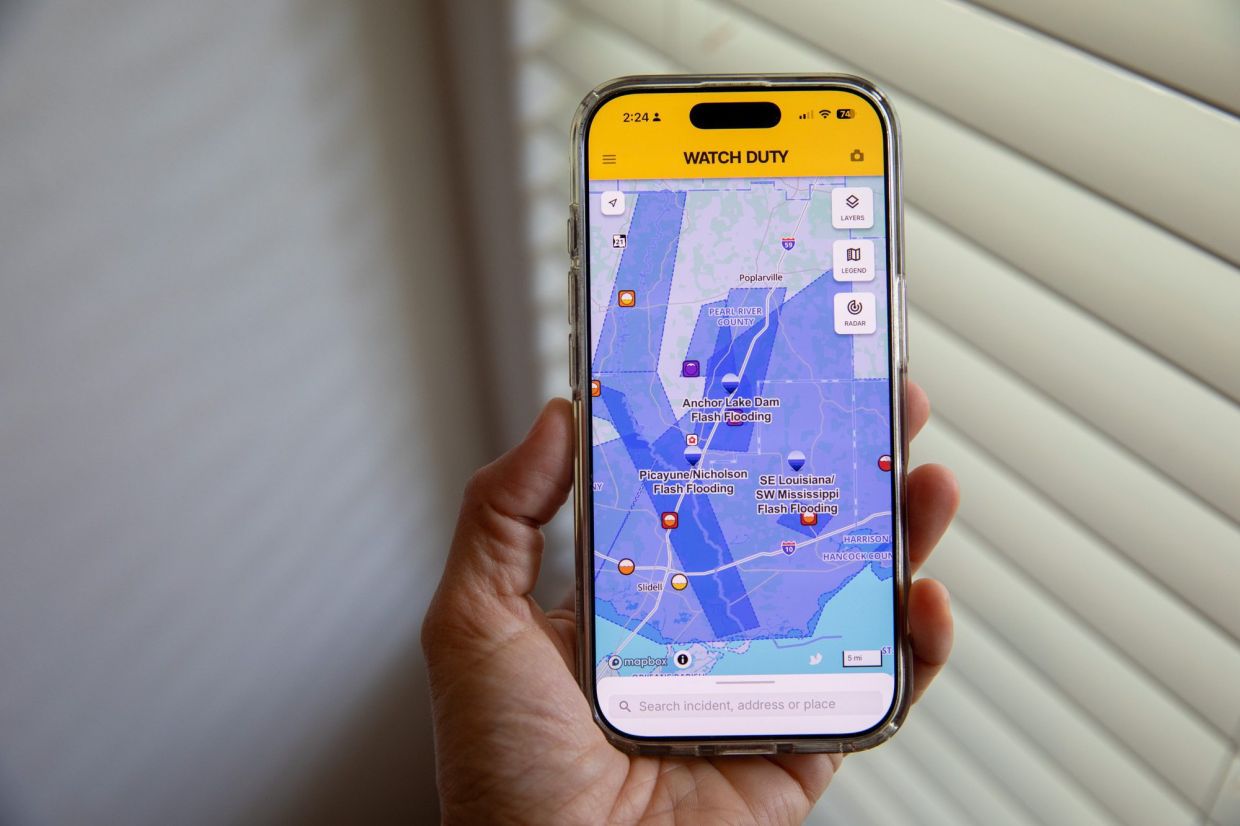
When fire threatened his Altadena, California home on January 7, 2025, Matt Blea faced the agonising calculus that many disaster-affected residents confront: whether to stay or flee immediately. A recommendation from a mountain rescue friend to download Watch Duty, a free crowdsourced emergency tracking application, proved decisive. Through the app, Blea monitored the fire's advancing perimeter, tracked official evacuation orders, and followed emergency response updates in real time. The information convinced him to evacuate with his family that evening—a decision that likely saved their lives as the Eaton Fire subsequently destroyed their home. His experience reflects a broader pattern emerging across disaster-prone regions: millions of people are circumventing traditional government alert systems by turning to technology platforms designed by volunteers and nonprofit operators.
During the devastating Los Angeles County fires that week, Watch Duty became an indispensable information channel for more than 2.5 million users seeking clarity amid confusion. Behind this digital infrastructure stood approximately two dozen paid staff members and over 100 volunteers who methodically monitored emergency radio frequencies, aircraft communications, and official agency broadcasts. David Hertz, a Malibu resident who serves as captain of his community's fire brigade, observed that the service was particularly crucial in areas where residents received inadequate or tardy warnings about the Eaton and Palisades fires that ultimately claimed 31 lives. For Hertz, Watch Duty represented something more ambitious than a mere app: it functioned as what he termed "a democratisation of data that empowers people" to make informed decisions when institutional systems falter.
The genesis of Watch Duty traces to John Mills, the platform's chief executive and co-founder, who experienced the absence of timely official alerts when fire threatened his Northern California property in 2021. Rather than accept this vulnerability, Mills recognised that crucial information often exists within emergency systems but remains trapped behind bureaucratic barriers and communication bottlenecks. He observed volunteer radio operators during fires were already monitoring scanner traffic and sharing updates through social media—a grassroots effort that helped residents but suffered from the platform's inherent weakness: life-or-death warnings competed against misinformation and unrelated content for visibility. Mills, leveraging his background as a software engineer and entrepreneur, assembled fellow engineers and volunteers to construct a dedicated platform that would aggregate, verify, and disseminate emergency information through a single trustworthy channel.
Establishing Watch Duty as a nonprofit rather than a commercial venture proved strategically significant in building credibility with emergency management agencies and the public alike. The organisation now serves over 20 million users and received nearly $6 million in grants and donations during 2025. Currently, approximately 300 volunteer "reporters" function as the app's nervous system, collating and validating information from radio scanners, satellite imagery, cameras, user-generated content, and official announcements. This information is distributed across five languages through interactive maps, text feeds, and push notifications engineered to alert users even when their phones are in silent mode. According to Pete Curran, Watch Duty's meteorologist and a retired firefighter, the consolidated approach eliminates the fragmentation that characterises current emergency communications: users no longer navigate between weather services, emergency management websites, and county portals. Instead, information arrives in accessible language through a single interface designed specifically for crisis situations.
Watch Duty's operational advantage partly derives from structural clarity: its volunteer reporters possess one singular responsibility—monitoring and listening—rather than the divided attention that affects traditional emergency managers simultaneously coordinating incident response. This specialisation allows the platform to frequently disseminate information faster than the government agencies themselves, particularly because reporters need not navigate bureaucratic approval chains before updating the public. The nonprofit recognised that this capability, proven effective for wildfire tracking, could address another escalating climate-related disaster: flooding. In June, Watch Duty commenced flood monitoring operations, expanding precisely as peak flash flood season intensified across the United States.
This expansion responds to a documented communication failure that claimed hundreds of lives. Less than a year prior, catastrophic flooding across Texas killed more than 130 people, with subsequent investigations revealing that residents and visitors in the Hill Country region received inadequate warning about approaching danger. John Mills characterised the continued inadequacy of emergency communications across disasters as deeply troubling: "This is painful that this keeps happening. We're not spreading enough information fast enough on as many channels as humanly possible." The underlying challenge extends beyond individual agency failures. While the United States maintains multiple alert mechanisms—text messaging, radio broadcasts, and other channels—the process for issuing specific warnings and evacuation orders remains compromised by bureaucratic complexity and the difficult human judgments required during unfolding crises.
The flood monitoring capability draws data from established federal sources including the National Weather Service, the National Oceanic and Atmospheric Administration, and the US Geological Survey. Users can access National Weather Service flood warnings and watches, monitor river gauge levels in real time, and receive notices regarding potential dam or levee failures. Importantly, the platform enables users to understand their personal flood risk during calmer periods, allowing them to identify whether their residence lies within FEMA-designated flood zones and to customise notifications based on specific river gauge thresholds relevant to their locations. This preventive information architecture represents a meaningful distinction from reactive alerts issued only after danger materialises. Dr Lori Moore-Merrell, former US Fire Administrator under President Joe Biden and current Watch Duty board member, emphasises that extreme precipitation patterns increasingly occur in regions historically unaccustomed to such events: "We are seeing crazy rainfall in places that it's not normal for them. Maybe it's never happened before, but it's happening now, so you need to be aware."
Yet even as Watch Duty's user base expands dramatically, informed observers caution that a digital application cannot unilaterally resolve the multifaceted challenges inherent in emergency communication. Chad Berginnis, executive director of the Association of State Floodplain Managers, notes that warnings constitute merely the first step: "A warning is only as good as the knowledge to do something about it." His organisation advocates that residents understand evacuation routes beforehand and practice emergency procedures rather than developing plans only when disaster looms. The Texas flooding revealed that this knowledge gap—people uncertain about what actions to take when warned—functioned as catastrophically as the absence of warnings themselves. Berginnis underscores that comprehensive emergency preparedness demands redundancy across multiple systems and channels, recognising that no single technological solution suffices.
Underlying these operational challenges exists a more fundamental infrastructure vulnerability. The national systems for monitoring weather and issuing public alerts face erosion from previous and proposed funding reductions affecting federal agencies and local emergency warning systems. Berginnis articulates this concern directly: maintaining functional "eyes and ears" monitoring atmospheric and hydrological conditions requires sustained financial commitment. As emergency management infrastructure confronts potential budgetary constraints, the reliance on volunteer-powered platforms like Watch Duty intensifies, while simultaneously highlighting the fragility of systems dependent on unpaid labour and philanthropic support.
John Mills remains explicit that Watch Duty functions as a complement to, rather than replacement for, traditional emergency infrastructure. "We need National Weather Service, we need fire service, we need all this infrastructure to operate," he stated, emphasising that users should maintain registration with local alerting systems regardless of Watch Duty adoption. Nevertheless, the app's rapid growth and heavy usage patterns during crises reveal a pronounced gap between the alert capacity of government agencies and public demand for immediate, accessible emergency information. The platform's expansion to flood monitoring simultaneously demonstrates both the potential for innovative information platforms and the sobering reality that such solutions remain constrained by technological accessibility limitations—users must possess smartphones, cellular coverage, and awareness of the application's existence.
This ecosystem of emergency communication reveals broader tensions within disaster preparedness frameworks. While technological solutions like Watch Duty address information accessibility gaps, they simultaneously expose the inadequacy of foundational infrastructure, the prevalence of communication bottlenecks within traditional government systems, and the structural dependence on volunteer effort. For Southeast Asian regions increasingly vulnerable to monsoon flooding, cyclones, and wildfire smoke transboundary flows, Watch Duty's expansion model offers both inspiration and cautionary lessons. The platform demonstrates how technology can democratise emergency information, yet its success simultaneously underscores how reliance on nonprofit volunteers masks systemic failures in government warning capacity—failures that technological innovation alone cannot remedy. As climate hazards intensify and disaster frequency accelerates, the question increasingly confronting governments and communities is not whether platforms like Watch Duty represent adequate solutions, but rather whether their existence should substitute for genuinely resourced, professionally staffed government emergency communication systems capable of reaching all residents, including those without smartphone access.

