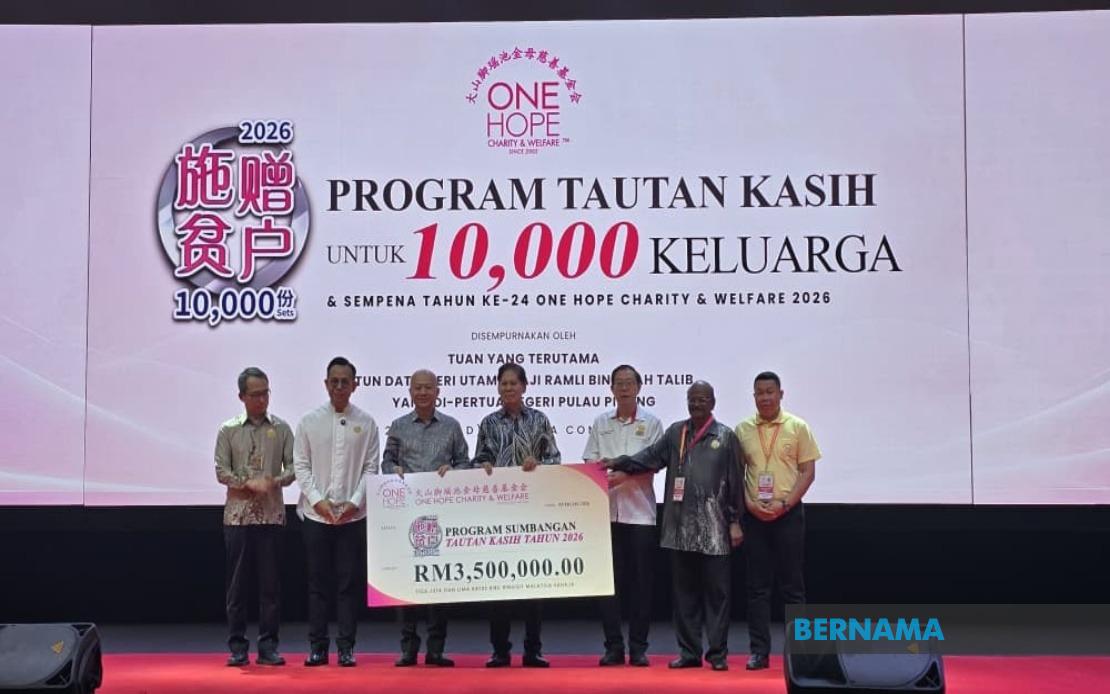
Minister of Entrepreneur Development and Cooperatives Steven Sim Chee Keong has emphasised that Malaysia's welfare infrastructure requires ongoing reinforcement to ensure citizens experiencing hardship receive adequate assistance and protection. Speaking at a Butterworth event attended by Penang Governor Tun Ramli Ngah Talib and his wife Toh Puan Raja Noora Ashikin Raja Abdullah, Sim stressed that robust social safety nets are fundamental to a nation's overall development and stability.
The minister articulated a vision in which economic progress and national prosperity must be intrinsically linked to meaningful investments in citizen welfare. He acknowledged that life circumstances vary considerably across the population, with some individuals and families navigating substantially greater challenges than others. Rather than viewing welfare as a peripheral concern, Sim positioned it as central to governance, arguing that when Penang residents encounter economic difficulty, joblessness, or personal misfortune, the state must respond through comprehensive policy frameworks designed to alleviate their circumstances.
Sim highlighted the critical role that welfare programmes play in fostering social cohesion across Malaysia's multicultural landscape. He contended that targeted assistance schemes contribute to building a more compassionate society while simultaneously strengthening interpersonal bonds among citizens of different ethnic backgrounds and religious communities. This framing situates welfare not merely as poverty management but as an essential mechanism for maintaining social harmony and preventing the grievances that can emerge when segments of the population feel abandoned during periods of vulnerability.
The minister pointed to One Hope Charity as a compelling model of how private-sector philanthropic initiative can complement government welfare provision. According to Sim, the organisation has successfully mobilised a broad network of commercial enterprises and individual donors to channel resources toward disadvantaged populations regardless of their racial identity, religious affiliation, or political orientation. This characterisation emphasises that effective welfare transcends partisan divides and responds instead to universal human need.
One Hope Charity's trajectory illustrates the potential for grassroots initiatives to achieve substantial scale. Beginning as a modest community effort in Bukit Mertajam, the organisation has expanded into one of Penang's and Malaysia's most prominent welfare entities. The charity now distributes approximately RM20 million in assistance annually to beneficiaries throughout the state, a figure that underscores the magnitude of demand for supplementary welfare services beyond what government programmes alone provide.
Charity founder and chairman Datuk Chua Sui Hau reported that more than 10,000 families benefited from One Hope's assistance during the current year. Each recipient household received a package worth approximately RM320, combining essential goods and daily necessities with RM200 in cash, permitting families to address their most pressing individual requirements. This mixed-assistance approach recognises that vulnerable populations have diverse needs and benefit from flexible support mechanisms rather than rigid, one-size-fits-all allocations.
The organisation's broader financial commitment extends considerably beyond annual aid distribution. Between 2021 and 2025, One Hope Charity channelled more than RM100 million toward multiple welfare objectives, including patient medical treatment support, hospital funding, medical equipment procurement, and implementation of diverse community welfare schemes. This substantial investment demonstrates how sustained philanthropic engagement can address structural health and welfare gaps that underserved populations experience.
Looking forward, One Hope Charity is positioning itself for expanded impact as it approaches its 25th anniversary in 2026. The organisation is planning welfare initiatives valued at approximately RM30 million, with particular emphasis on enlarging its Medical Assistance Programme to reach more patients requiring financial support for treatment. These expansion plans suggest confidence in philanthropic funding streams and recognition that demand for such services continues growing.
For Malaysian policymakers and observers, One Hope Charity's operations highlight both the importance and the limitations of relying primarily on private-sector welfare provision. While the organisation's efficiency and reach are commendable, the scale of assistance it provides—substantial as it is—also indicates that welfare needs substantially exceed current charitable capacity. This reality reinforces Sim's argument that government welfare policies must expand concurrently with private initiatives rather than substituting for them.
The emphasis on strengthening welfare policies carries particular relevance for Southeast Asian economies experiencing rapid development alongside persistent inequality. Malaysia, like its regional neighbours, confronts the challenge of ensuring that economic growth benefits reach vulnerable populations and that social cohesion is maintained even as structural economic changes displace workers and strain traditional support systems. Welfare policy strengthening represents one mechanism for managing these transitions more equitably.
Sim's remarks also implicitly acknowledge that Malaysia's existing welfare apparatus, while functional, contains gaps and limitations. Whether through inadequate benefit levels, restrictive eligibility criteria, or insufficient awareness among eligible populations, government welfare alone demonstrably cannot address the full spectrum of citizen vulnerability. Organisations like One Hope Charity partially compensate, yet their existence should not absolve governments of responsibility for comprehensive, adequately-funded welfare systems.
The conversation around welfare strengthening moreover intersects with Malaysian debates about the appropriate balance between market-driven development and social protection. As Malaysia pursues its development agenda, questions about how to protect workers and families from economic disruption, how to provide healthcare and education access regardless of income, and how to maintain social stability amid inequality remain central. Welfare policy is fundamentally a choice about national priorities and values.

