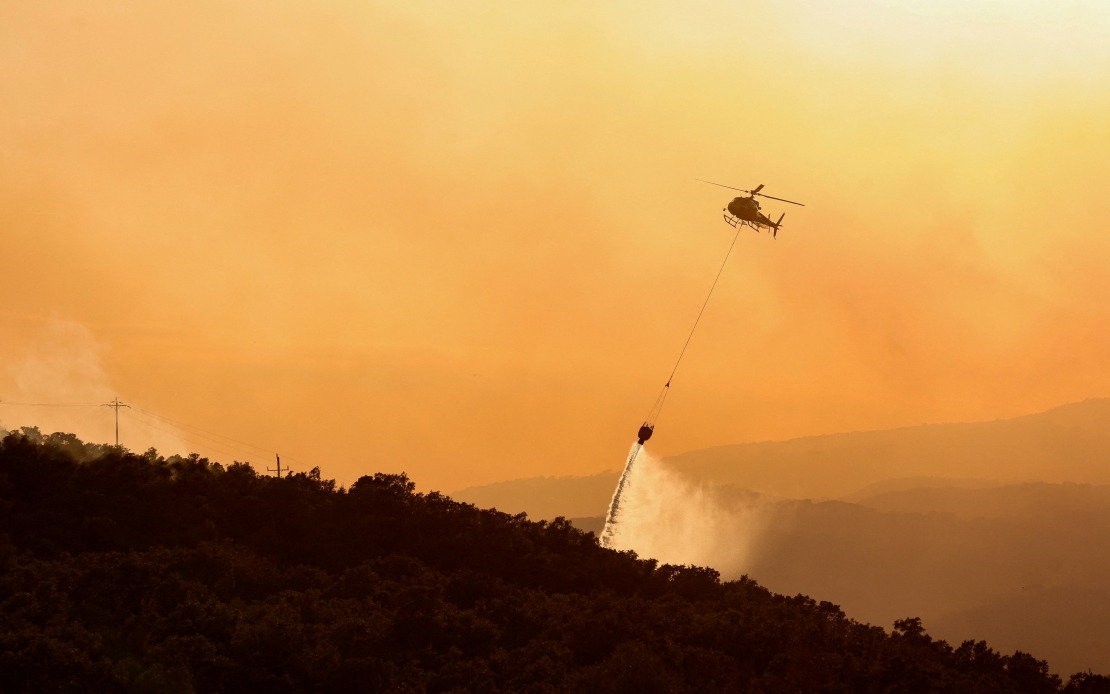
As the United States marked its 250th anniversary with Independence Day celebrations, much of the western region faced an unprecedented crisis: communities were forced to abandon their traditional Fourth of July fireworks displays due to the combined threat of raging wildfires and exceptional drought conditions. The cancellations underscored how climate-driven environmental emergencies are reshaping American holiday traditions and public safety priorities, even as the nation commemorated a landmark milestone.
The scale of the wildfire threat became apparent through federal monitoring systems. A national incident report released on Friday documented 41 large fires actively burning across the country that remained uncontained, placing the nation at its second-highest wildfire preparedness alert level. This dire situation prompted dozens of local governments to make difficult decisions, weighing cultural celebration against community safety. The restrictions were not confined to a single state but spread across multiple jurisdictions, reflecting the breadth of the environmental crisis affecting the entire western region.
Utah emerged as one of the most severely impacted areas. Governor Spencer Cox declared a temporary statewide restriction on fireworks, allowing local governments to designate only limited zones where fireworks could still be used through July 5. The decision reflected extraordinary conditions: state drought data revealed that 94 percent of Utah was experiencing severe or extreme drought simultaneously. According to Jamie Barnes, Utah's State Forester, the wildfire situation had become "unlike anything we've seen in recent memory", with fires spreading at rates that exceeded historical patterns. The scale of destruction was particularly alarming when measured cumulatively: Utah had already burned more land in the current year than during the entire preceding four-year period combined.
Colorado experienced similarly catastrophic wildfire activity. The Colorado Division of Fire Prevention and Control reported more than a dozen active wildfires burning throughout the state during the week leading up to July Fourth. This widespread activity prompted major population centres and counties to cancel their celebrations, including the mountain resort town of Vail, the city of Durango, and Pueblo. Vail's situation highlighted the recurring nature of these crises: the community had been forced to cancel its fireworks display six times since 1998, with the most recent cancellation occurring in 2021. Officials emphasized that the 2024 wildfire activity demonstrated an unusually dispersed pattern of fire outbreaks rather than concentrated incidents in specific regions.
Colorado Springs, the state's second-largest metropolitan area, took the additional step of cancelling all its Fourth of July fireworks presentations for the week, citing extreme fire danger that mirrored conditions preceding the devastating 2012 wildfire that destroyed more than 300 homes. The city's fire department determined that current risk levels justified such precautionary measures. Colorado Springs Mayor Yemi Mobolade acknowledged the disappointment in a formal statement, recognizing that the decision was particularly difficult given the nation's bicentennial celebration year. The cancellation represented a significant sacrifice of local tradition to protect community welfare.
The restrictions extended beyond these two states into neighbouring regions. Wyoming, Nebraska, and New Mexico all implemented comparable fireworks limitations, motivated by either drought vulnerability or active wildfire danger. Despite these widespread cancellations, most professional fireworks displays operated by commercial entities proceeded as scheduled, suggesting that regulatory frameworks distinguished between residential and professional pyrotechnic use. The selective approach reflected a balance between allowing certain celebrations while preventing community members from independently creating additional fire hazards.
Meteorological conditions heightened the danger considerably. The national incident report for Friday warned that strong winds combined with very low humidity would significantly elevate fire risk across the southwestern region in the immediate aftermath of July Fourth. Meanwhile, much of the eastern and central United States grappled with dangerously elevated temperatures, with the National Weather Service documenting heat indexes exceeding 46 degrees Celsius in certain locations. This combination of extreme heat, drought, and wind created a highly combustible environment across expansive geographical areas.
Scientific research illuminated the connection between fireworks and wildfire initiation. Philip Higuera, a fire ecology specialist at the University of Montana, explained to regional media that Fourth of July celebrations directly contribute to increased wildfire occurrence through the large number of ignition sources introduced to the landscape in a single 24-hour period. Peer-reviewed research conducted by Lauren Lowman, an associate professor at Wake Forest University, established that approximately half of all land burned in the western United States since the year 2001 had been consumed during or immediately following heat wave periods. This research suggested that the temporal clustering of conditions—heat, low humidity, and wind—created particularly dangerous windows for fire spread.
Historical data quantified the fireworks-fire relationship more precisely. Analysis of fire records spanning from 1992 through 2020 documented approximately 15,000 wildfires recorded on July 4 alone throughout the United States during that 28-year period. More recent data from 2023 indicated that fireworks ignited an estimated 32,000 fires nationwide that single year. These statistics demonstrated that Fourth of July celebrations represent a concentrated period of fire risk, with human-caused ignitions significantly amplifying natural fire danger during an already volatile season.
For Malaysian and Southeast Asian readers, these developments hold relevance beyond their immediate American context. The crisis illustrates how climate change increasingly disrupts established social practices and cultural celebrations, a pattern that developing nations across the region may anticipate facing with greater frequency. The coordinated government response—from gubernatorial declarations to municipal fireworks cancellations—demonstrates institutional coordination required when environmental emergencies conflict with public expectations. Additionally, the scientific documentation of heat waves triggering accelerated wildfire spread reflects broader climate science applicable to tropical and subtropical regions, where changing precipitation patterns and temperature extremes may similarly affect fire seasons and public safety protocols.
The 2024 Fourth of July cancellations represented a watershed moment in American public life, where environmental realities compelled communities to reassess long-standing traditions. The decisions reflected prioritization of collective safety over ceremonial continuity, a calculation that may increasingly characterize how societies worldwide adapt to climate-altered landscapes. The cancellations also highlighted existing disparities: affluent professional fireworks operations continued while residential celebrations were restricted, potentially creating unequal experiences of the national celebration across different communities. As the United States navigates its third century, such environmental constraints on traditional celebrations may become regularised features of summer planning rather than exceptional circumstances.

