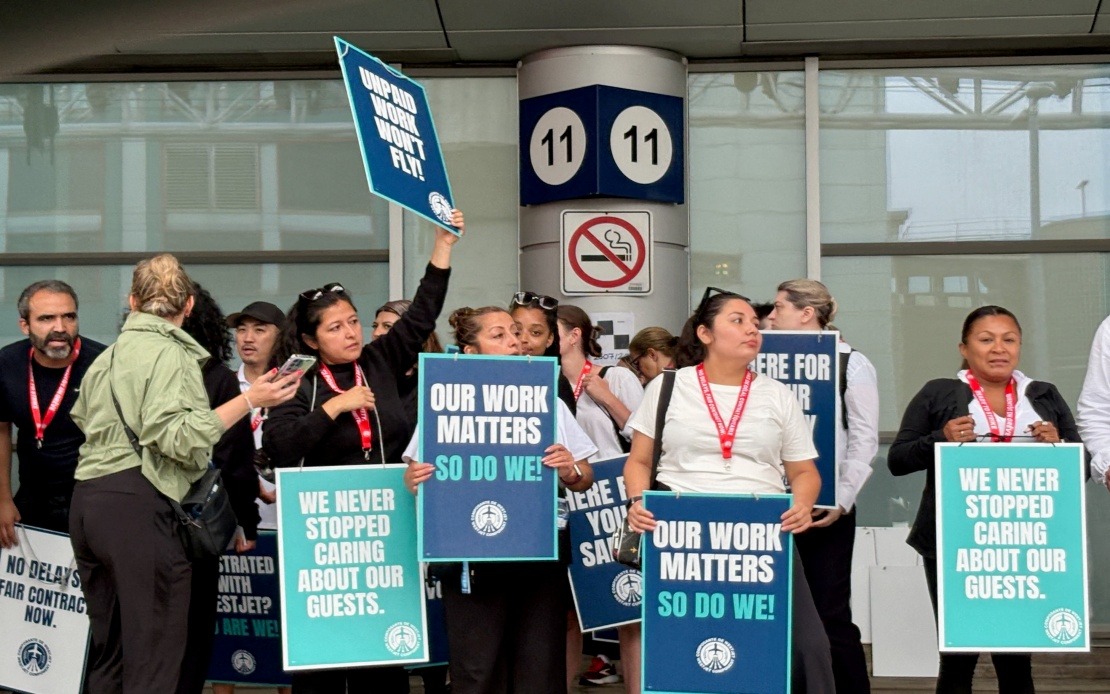
The second-largest airline in Canada came to a standstill on Sunday as more than 4,000 flight attendants initiated a strike that paralysed operations across the carrier's network. WestJet, which operates approximately 600 flights daily, saw its entire schedule disrupted, stranding an estimated 250,000 passengers whose travel plans were upended by the labour action. The timing proved particularly damaging, as the strike coincided with a civic holiday on Monday—one of the busiest travel periods in Canada's annual calendar—amplifying the disruption's impact on holidaymakers, business travellers, and the broader tourism sector.
The financial consequences for WestJet are substantial. The airline faces millions of dollars in losses stemming from operational shutdowns, refunds, and compensation obligations. Beyond the carrier's balance sheet, however, lies a broader issue reshaping labour dynamics within the North American aviation industry. The strike centres on a fundamental disagreement over how airlines should compensate workers for duties performed outside scheduled flight time—specifically the ground preparation before departure and post-arrival responsibilities that flight attendants undertake each day.
Compensation for ground work has emerged as a defining labour issue in recent years. Delta Air Lines became the first major carrier to address this demand, introducing payment for ground work in 2022. Air Canada, Canada's largest airline, subsequently negotiated a new contract in February that includes significant compensation for pre-flight duties. Under Air Canada's agreement, flight attendants receive remuneration equivalent to up to 70 per cent of their standard hourly rate for the hour immediately preceding takeoff. These precedents have emboldened workers across the industry to demand similar recognition and payment for their labour.
WestJet's flight attendants, represented by the Canadian Union of Public Employees, have endured nearly eleven months of contract negotiations without reaching agreement. Alia Hussain, a union representative, articulated the frustration underlying the strike in a statement directed at the airline's management. She emphasised that the union would not have resorted to industrial action had WestJet taken their concerns seriously throughout the prolonged bargaining process. This characterisation reflects a widening gap between labour expectations and employer positions, with the union viewing management's approach as dismissive of legitimate demands that competitors have already accepted.
The current pay structure for WestJet flight attendants ranges from $28.88 to $53.61 per credit hour, a figure that establishes the baseline for negotiations. However, attendants argue that their actual working hours extend considerably beyond these credited periods. The distinction between credited flight time and total time spent working—a critical point in the dispute—highlights how traditional airline compensation structures may not adequately reflect the full scope of employee responsibilities. This mismatch has become a focal point for labour movements globally, as workers increasingly demand that all job-related activities receive proportional compensation.
Federal government involvement underscores the dispute's significance within Canada's political landscape. Patty Hajdu, the country's Minister of Jobs, expressed public disappointment that both parties had failed to reach a negotiated settlement. Her statement reflects the federal government's interest in maintaining industrial stability and supporting the broader travel and tourism sectors, which depend on airline operations. Government intervention, whether rhetorical or substantive, often influences labour negotiations by signalling public concern and potentially encouraging parties toward compromise.
WestJet's response emphasised operational disruption rather than engaging substantively with the underlying compensation demands. Chief Executive Officer Alexis von Hoensbroech acknowledged the strike's impact and pledged refunds to affected passengers, positioning the airline as responsive to customer concerns. However, this approach—focusing on passenger refunds rather than meaningful wage negotiations—may entrench positions further. The CEO's statement expressed disappointment at the situation without addressing the attendants' core grievance regarding ground work compensation, suggesting the airline viewed the strike as an operational problem rather than a signal of legitimate labour concerns.
The implications for Southeast Asian and Malaysian aviation are noteworthy, though different employment frameworks apply. While Malaysian airlines operate under distinct regulatory and labour relations contexts, the global aviation industry closely monitors precedents established by major carriers. WestJet's dispute and the successful outcomes achieved at Delta and Air Canada demonstrate that flight attendants worldwide are increasingly organised and willing to pursue industrial action for compensation improvements. Malaysian carriers and regional airlines must consider how emerging international standards around ground work compensation might eventually influence domestic labour negotiations.
The broader context reveals an industry experiencing fundamental shifts in labour relations. Traditional compensation models based purely on flight hours increasingly face challenge from workers arguing that extensive ground duties—including safety briefings, equipment checks, cabin preparation, and passenger assistance—constitute integral working time. Airlines like Air Canada have recognised that accommodating these demands provides competitive advantages in labour relations while remaining financially sustainable. WestJet's resistance to similar concessions positions it as an outlier within the North American market, potentially disadvantaging the carrier's recruitment and retention efforts.
Industrial peace remains uncertain as WestJet and union representatives continue negotiations during the strike. The airline's refund commitments, while commercially necessary, represent immediate costs that may eventually encourage settlement discussions. Passengers facing cancellations represent a political constituency whose complaints amplify pressure on both management and labour organisations. The strike's duration will ultimately depend on whether either party shifts its negotiating position—whether WestJet recognises ground work compensation as non-negotiable or whether the union moderates its demands.
The WestJet strike demonstrates that aviation labour disputes no longer centre exclusively on traditional wage increases but increasingly involve recognition of previously undercompensated work categories. As global air travel continues recovering from pandemic-era disruptions, airlines face mounting pressure to align compensation practices with industry standards. For WestJet and similar carriers, the choice between accommodating reasonable demands and prolonging industrial action carries significant financial and reputational consequences. The precedents established in this dispute will likely shape aviation labour relations throughout the continent for years ahead.

