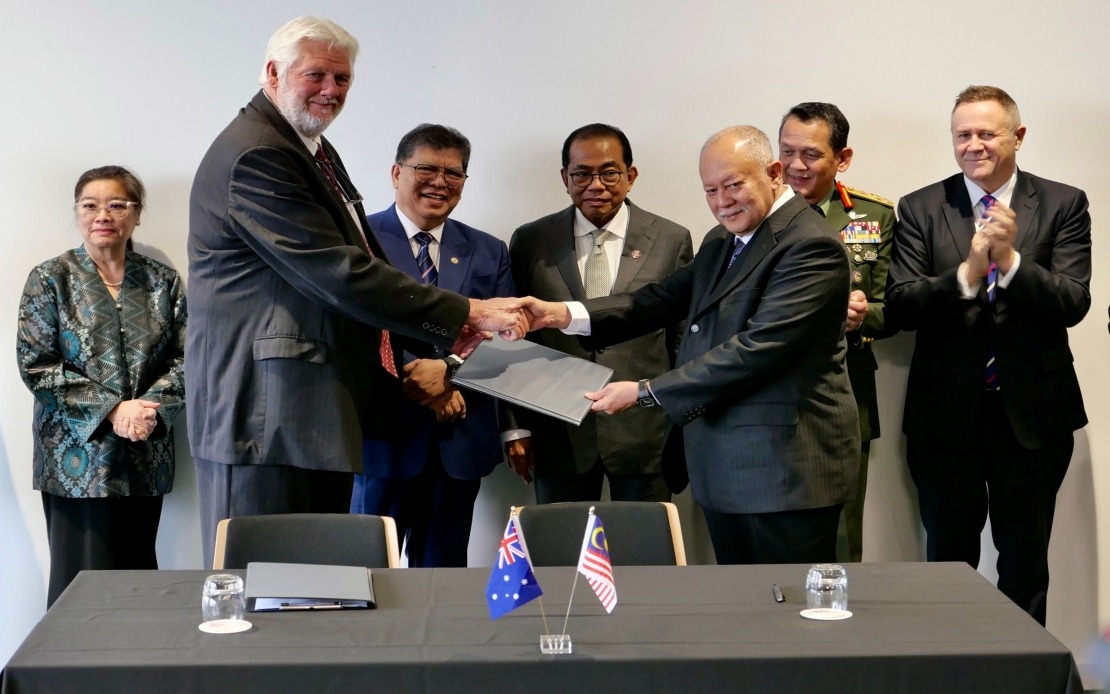
Malaysia is moving decisively to develop homegrown expertise in rocket and missile technology through a landmark collaboration between local defence manufacturer Weststar Defence Industries Sdn Bhd and Australian firm Rocket Technologies International Pty Ltd. Defence Minister Datuk Seri Mohamed Khaled Nordin characterised the partnership as a watershed moment for the country's defence sovereignty, signalling a broader commitment to reducing reliance on foreign weapons systems and building a self-sufficient defence industrial base. The agreement, formalised during a working visit to Australia, reflects Malaysia's strategic ambition to position itself as a credible player in advanced defence manufacturing within the region.
At the heart of this collaboration lies a commitment to establish manufacturing infrastructure on Malaysian soil, with rocket production scheduled to commence within a 24-month window before transitioning into missile system fabrication. This phased approach suggests a carefully calibrated investment strategy designed to build technical capacity incrementally while managing implementation risks. The decision to anchor production facilities domestically rather than outsource manufacturing represents a significant shift in Malaysia's defence procurement philosophy, prioritising long-term technological self-reliance over short-term cost considerations. Such infrastructure development typically generates substantial spillover effects throughout the supply chain, as component suppliers, engineering contractors, and logistics providers establish themselves to support the primary manufacturing operation.
The partnership directly supports Malaysia's National Defence Industry Policy (DIPN), a framework specifically designed to nurture domestic expertise in defence systems development and production. Rather than treating defence manufacturing as a peripheral industrial concern, the DIPN positions it as strategically integral to national resilience and economic diversification. By aligning the Weststar-RTI arrangement with this overarching policy architecture, Malaysian authorities have demonstrated a commitment to embedding this partnership within a coherent, long-term industrial vision. This consistency between bilateral commercial activity and national strategic objectives enhances the likelihood of sustained political support and resource allocation across successive government administrations.
Weststar's integration into Rocket Technologies International's global supply chain carries implications that extend far beyond bilateral commerce. The arrangement positions Malaysian companies—both Weststar itself and its network of suppliers and partners—to participate in an established international defence ecosystem. Access to global supply chains typically facilitates technology transfer, knowledge sharing, and exposure to international best practices in manufacturing standards and quality assurance. For Malaysian firms and technicians, such exposure accelerates capability development and shortens the learning curve associated with manufacturing sophisticated defence systems. The commercial opportunities embedded in this arrangement could catalyse the emergence of a competitive domestic defence industrial cluster centred around advanced manufacturing competencies.
The visit to Australia's Institute for Space, Defence and Advanced Technologies at the University of Southern Queensland underscored an important dimension of Malaysia's defence modernisation strategy: the deliberate integration of academic institutions into defence system development. Malaysia's delegation, comprising senior military leadership including Royal Malaysian Air Force chief General Tan Sri Muhamad Norazlan Aris and National Aerospace Industry Corporation Malaysia chief executive officer Prof Shamsul Kamar Abu Samah, examined collaborative models where universities and private firms jointly advance technologies in composite materials and hypersonic systems. This academy-industry nexus represents a template increasingly adopted across advanced defence-producing nations, bridging the gap between theoretical research and practical manufacturing application. Malaysia's decision to study and replicate such models suggests a recognition that sovereign capability in advanced defence technology requires institutional coordination extending beyond traditional defence ministry structures.
Diplomatic engagement accompanying the commercial arrangement underscored the geopolitical dimensions of Malaysia's defence industrialisation. Meetings between Defence Minister Mohamed Khaled Nordin and Australian Deputy Prime Minister and Defence Minister Richard Marles occurred within a broader strategic context: both nations seek to deepen defence partnerships amid shifting regional power dynamics and maritime security challenges. For Malaysia, strengthening ties with Australia—a technologically advanced, stable Western democracy—offers a counterbalance to dependence on any single major power for defence capability. Such partnerships also signal to other regional powers Malaysia's commitment to maintaining technological sophistication and military readiness, contributing to a regional security balance increasingly contested by rising military capabilities in the broader Indo-Pacific.
Parliamentary-level engagement during the visit, including meetings between Dewan Rakyat Speaker Tan Sri Johari Abdul and Australian parliamentarians, reflects recognition that defence industrial development requires sustained bipartisan and cross-institutional support. Parliamentary engagement typically precedes and facilitates defence-related expenditures and legislative measures, ensuring that elected representatives understand and endorse strategic defence initiatives. This multi-layered diplomatic engagement—spanning executive, military, academic, and parliamentary channels—suggests a comprehensive approach to consolidating Australia-Malaysia defence relations beyond transactional military sales and into deeper institutional and technological partnership.
The financial dimension of Weststar's investment in domestic manufacturing infrastructure remains consequential for Malaysia's economic development agenda. Defence manufacturing typically generates capital investment, employment in skilled technical roles, and tax revenue. More significantly, the competitive pressures inherent in advanced defence manufacturing drive innovation and technical excellence with applicability beyond the defence sector. Aerospace manufacturing techniques, composite materials development, and precision engineering capabilities cultivated through defence production frequently find civilian applications, creating positive externalities for the broader manufacturing base. Malaysia's experience as a location for electronics and aerospace assembly positions it to leverage such technology transfer dynamics effectively.
Looking forward, the success of this partnership will depend on sustained domestic investment, technical talent development, and institutional stability. Malaysia's National Defence University and other centres of excellence will need adequate resourcing to produce engineers and technicians qualified to operate advanced manufacturing systems. Additionally, maintaining consistent policy environments and regulatory frameworks across multiple government administrations will prove essential for international partners considering long-term commitments to Malaysian defence manufacturing. The arrangement with Rocket Technologies International thus represents not merely a commercial transaction but a test case for Malaysia's capacity to execute complex, capital-intensive defence industrial initiatives requiring coordination across government agencies, private enterprise, and educational institutions. Success could catalyse additional international partnerships and establish Malaysia as a credible centre for advanced defence manufacturing within Southeast Asia.

