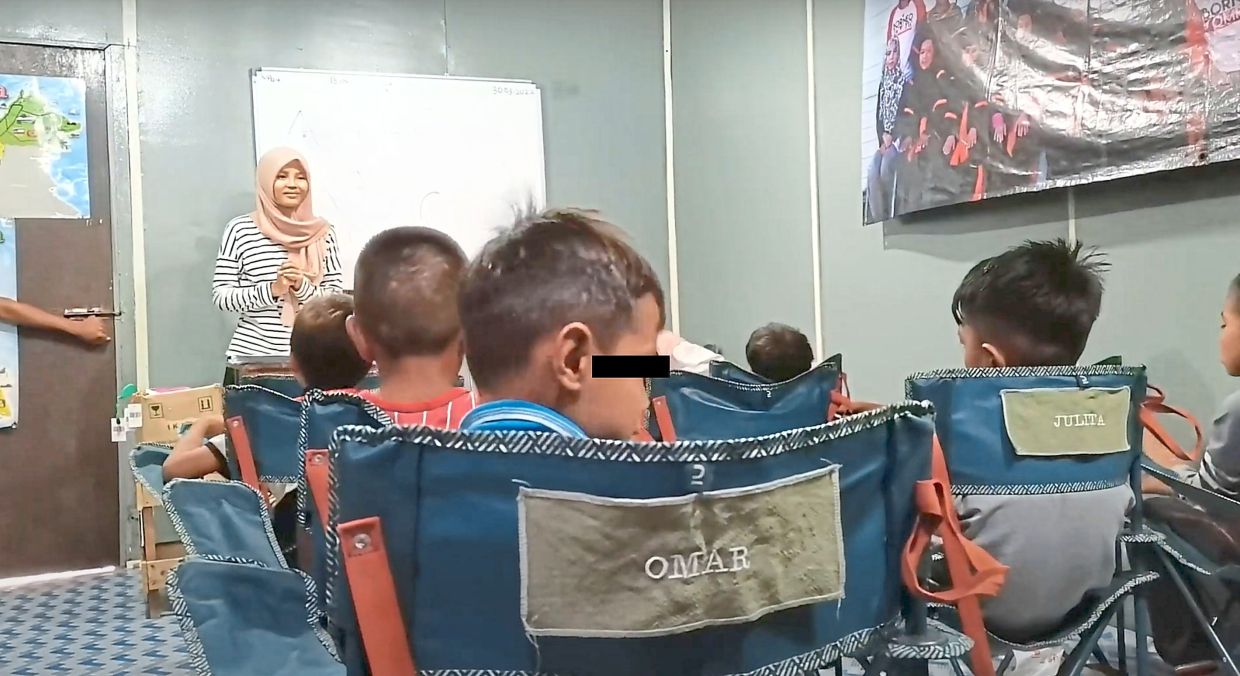
The Court of Appeal's recent rulings in two separate citizenship cases have thrust a constitutional contradiction into sharp focus: children born and raised in Malaysia, with deep roots in Malaysian soil, remain stateless because their parents were not married at the time of their birth. Both cases involved young people with confirmed biological links to Malaysian fathers, yet the court determined that because the marriages never occurred, the children's legal nationality must follow their mothers instead—mothers who had departed Malaysia when the children were very young, leaving them with no genuine connection to Indonesia or the Philippines respectively.
This outcome exposes a tension between modern reality and constitutional architecture designed for a different era. The Federal Constitution's provisions governing citizenship were drafted decades ago, at a time when questions of paternity could not be definitively answered without marriage as a proxy. Today, DNA testing provides scientific certainty about biological relationships, yet the law has not evolved accordingly. Constitutional provisions treat unmarried fathers differently from married ones, automatically assigning citizenship through the mother in cases of children born outside wedlock. This framework assumes that the mother's nationality is the appropriate default, regardless of where the child actually lives or who raised them.
The implications for the affected children are profound and deeply troubling. Both young people grew up in Malaysian schools, formed friendships within Malaysian communities, and developed their sense of home entirely within Malaysia's borders. They possess no functional ties to their mothers' countries of origin and no support systems there. Yet the constitutional interpretation applied by the Court of Appeal effectively renders them stateless—or more precisely, nationals of countries where they have never lived and have no family. This raises a fundamental question about whether constitutional provisions should continue to bind the legal identity of children to circumstances entirely beyond their control, particularly when those circumstances have been scientifically proven to be irrelevant to biological parenthood.
Child rights advocates and civil society organizations have responded with concern about how this ruling prioritizes formal legal status over substantive justice. Development of Human Resources for Rural Areas (DHRRA), among other groups, has highlighted that Malaysia occupies an exceptionally restrictive position globally—falling among only two countries where unmarried fathers cannot automatically confer citizenship to their children. This international context matters because it demonstrates that most democracies have already grappled with this precise issue and moved toward solutions that acknowledge both paternal rights and children's welfare. The legal principle of "the best interests of the child," foundational to modern family law across much of the world, appears secondary to formal compliance with constitutional language in Malaysia's current framework.
The historical roots of such citizenship restrictions run deep, rooted in assumptions about legitimacy and marital status that once carried enormous social weight. For centuries, societies imposed different legal standings on children born outside marriage, affecting everything from inheritance rights to family names to legal recognition itself. However, the global trajectory over recent decades has shifted markedly. Nations have increasingly recognized that penalizing children for their parents' marital circumstances serves no coherent social purpose and causes demonstrable harm. Children cannot choose the circumstances of their conception or birth, yet they carry lifelong consequences from laws that treat these accidents of circumstance as morally relevant to their fundamental legal identity.
This injustice becomes sharper when examined through the lens of how law typically functions. Legal systems punish wrongdoing by adults: the person who drives too fast receives a traffic fine, the tax evader faces penalties, the business fraudster gets sanctioned. The burden of legal consequence falls on the person who made the choice. But in these citizenship cases, the child bears the permanent cost of a decision made by adults before their birth—a decision in which they had no involvement whatsoever. The marriage or non-marriage of parents is an adult choice; citizenship is not. A child cannot opt into or out of Malaysian nationality; it either is granted or denied to them by law.
The distinction between these two legal concepts matters considerably. Marriage serves to formalize a voluntary relationship between consenting adults and carries social and legal recognition for that union. Citizenship, by contrast, determines a child's fundamental legal identity and their relationship to state, community, and opportunity. Conflating the two effectively transforms citizenship into a moral judgement on adult relationships, when it should instead answer a simpler, more humane question: Does this child belong here? The constitutional framework currently treats them as inseparable, yet they serve entirely different purposes and should operate according to different principles.
The practical consequences of statelessness extend far beyond abstract legal status. Children and adults without recognized nationality face concrete barriers to education, healthcare access, and formal employment. They struggle to open bank accounts, obtain driving licenses, or secure stable housing. Many remain perpetually trapped on society's margins, unable to participate fully in civic and economic life, their potential constrained by bureaucratic circumstances of birth. For Malaysia, a nation aspiring to developed-nation status and emphasizing human capital development, perpetuating such barriers seems fundamentally at odds with national interest and basic fairness.
This constitutional problem is neither new nor isolated. Similar issues have surfaced repeatedly throughout Malaysia's post-independence history, manifesting in different forms—from children born to undocumented migrants to those in remote indigenous communities where birth registration proves difficult, to foundlings and abandoned infants. The specific circumstances vary, but the common thread remains constant: children end up in legal limbo through mechanisms entirely beyond their control, denied the basic right to belong somewhere. Each case represents not merely an individual hardship but a systemic failure to align law with contemporary reality and human dignity.
Yet constitutional change need not seem impossibly remote. In 2024, Parliament amended the Constitution specifically to allow Malaysian mothers to automatically pass citizenship to their children born overseas—a reform that recognized the need to update citizenship laws to reflect contemporary gender equality and modern family patterns. This amendment demonstrates that Malaysian legislators can identify constitutional provisions as outdated and move to reform them when the case becomes sufficiently compelling. The same reasoning should apply here: if citizenship law can be reformed to reflect changing views on gender equality, it can equally be reformed to reflect modern understanding of paternity and the primacy of children's welfare over adult marital status.
The underlying principle should be straightforward: a child born and raised in Malaysia, with confirmed biological ties to a Malaysian parent and no meaningful connection elsewhere, possesses a legitimate claim to Malaysian nationality. Constitutional provisions written in an era before DNA testing cannot reasonably continue to override scientific evidence and lived reality. Courts interpreting the Constitution must sometimes acknowledge that rigid application of outdated language produces results that contradict both justice and the Constitution's own foundational commitment to protecting Malaysian citizens and their legitimate interests.
This issue ultimately asks whether Malaysia will continue measuring a child's belonging against technical requirements established before modern science existed, or whether it will adopt a framework that recognizes biological reality, children's actual circumstances, and their fundamental right to a country to call home. The question posed by these citizenship cases is deceptively simple yet profoundly important: Does this child belong in Malaysia? For those who grew up here, speak the language, formed their identity here, and have no other home, the answer seems undeniably clear. The law should catch up to that reality.

