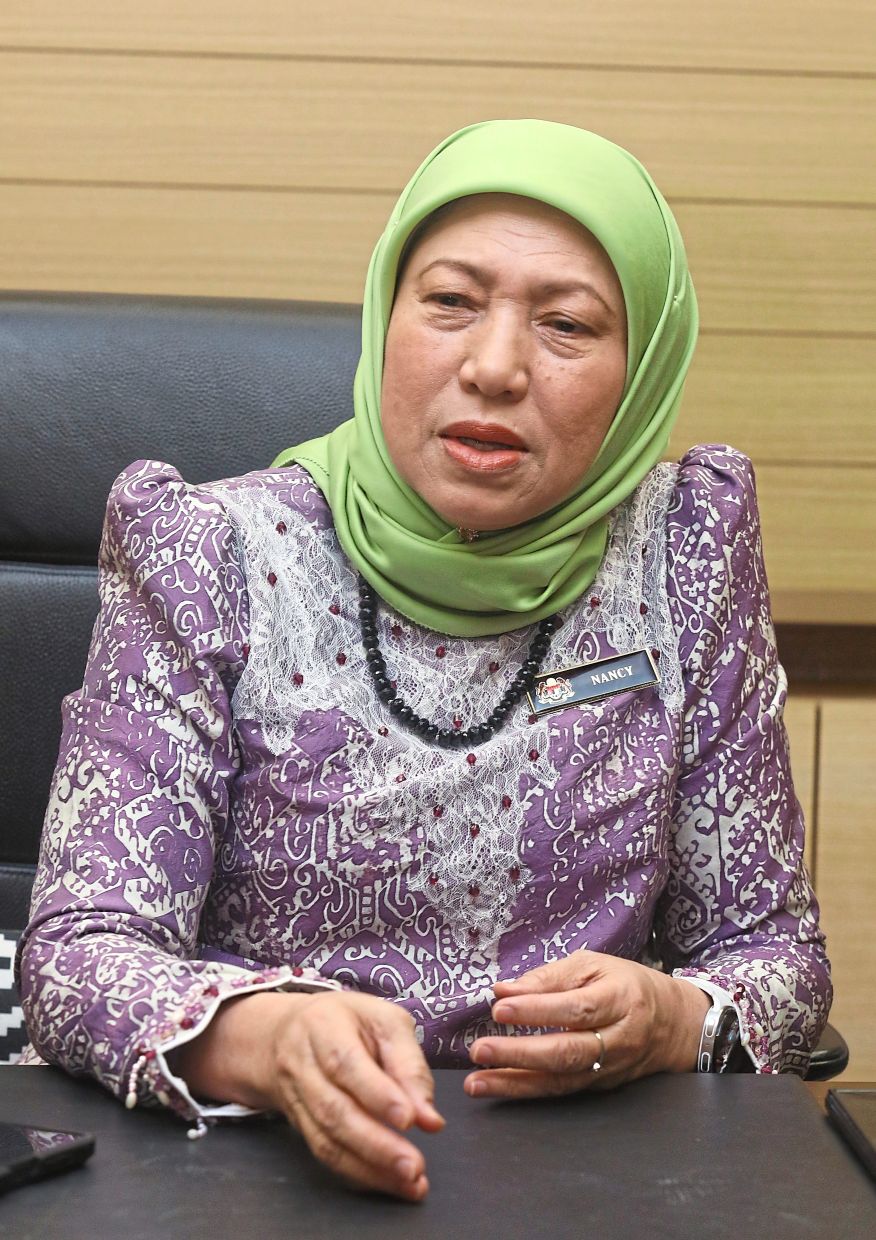
Parents of children with disabilities in Malaysia stand to gain substantially by registering their offspring as OKU, or persons with disabilities, according to Datuk Seri Nancy Shukri, the Women, Family and Community Development minister. The registration process represents far more than mere paperwork; it constitutes the gateway to a comprehensive ecosystem of government assistance that can fundamentally transform a child's developmental trajectory. By formalising a child's disability status through official channels, families unlock access to tangible support spanning welfare programmes, healthcare services, educational accommodations and social development initiatives that might otherwise remain unavailable to them.
The Social Welfare Department (JKM) oversees the OKU registration mechanism, which operates through a straightforward but essential administrative pathway. Parents must compile their child's birth certificate or identification documents alongside medical certification confirming the disability diagnosis, then submit these materials along with any additional documentation that JKM requires. Upon approval, the child receives an official OKU card that serves as the authoritative marker of their disability status within Malaysia's social support framework. This tangible credential opens doors that would otherwise remain closed, granting immediate access to benefits specifically designed to support individuals navigating life with disabilities.
Once registered, eligible families gain entry to a diversified portfolio of assistance mechanisms tailored to different life stages and needs. Financial assistance programmes provide direct economic relief to households managing the costs associated with disability care and treatment. Rehabilitation services help children address functional limitations and develop compensatory skills. Early intervention programmes, particularly valuable during the critical formative years, enable children to progress developmentally at rates closer to their non-disabled peers. Special education facilities accommodate diverse learning needs, while various incentives and concessions reduce financial burdens associated with medical care, transportation and accessibility modifications. For Malaysian families already stretched by the expenses of raising a child with disabilities, these multiple support channels collectively represent substantial material benefit.
The urgency of early registration cannot be overstated, Nancy emphasised, because the window for maximum developmental impact narrows with each passing year. Early intervention research consistently demonstrates that children who receive appropriate support during their formative years achieve superior long-term outcomes across cognitive, social and functional domains. When registration occurs promptly, families can immediately access intervention programmes designed specifically to maximise developmental potential during these irreplaceable early childhood years. Delayed registration means delayed access to these time-sensitive supports, potentially resulting in developmental deficits that become increasingly difficult to remediate as the child matures. The government's message to parents is therefore one of urgency: register now to ensure your child benefits from supports and services when they matter most.
Beyond childhood, Malaysia's disability support framework has evolved significantly to address the reality that needs and aspirations transform across the lifespan. The government acknowledges that individuals with disabilities do not suddenly cease requiring support upon leaving school or reaching adulthood. Instead, their circumstances shift, their employment prospects emerge, and their capacity to participate independently in society becomes increasingly central to their wellbeing and dignity. This developmental understanding has prompted Malaysian policymakers to construct support mechanisms that extend from early childhood through adulthood, ensuring continuity of assistance as individuals navigate successive life transitions.
Employment represents a particularly critical domain for adult persons with disabilities, and the Malaysian government has invested substantially in infrastructure designed to bridge the gap between job seekers with disabilities and employers seeking inclusive workforces. The Social Welfare Department's job coach service exemplifies this commitment, providing trained specialists who deliver on-the-job support enabling OKU workers to secure and sustain employment. Job coaches function as intermediaries, offering practical guidance to employees while simultaneously educating employers about disability inclusion and workplace accommodation. This dual intervention model addresses a fundamental barrier to employment for persons with disabilities: many employers lack understanding of how to effectively support disabled workers, leading to discriminatory hiring practices and workplace cultures that inadvertently marginalise disabled employees.
Complementing the job coach initiative, Malaysia has introduced Disability Equality Training (DET) targeting employers, human resources practitioners and general employees. Rather than focusing narrowly on compliance or awareness-raising, DET seeks to catalyse a deeper cultural shift in how Malaysian society conceptualises disability itself. The training encourages participants to recognise disability not as a personal tragedy or deficit but as a natural dimension of human diversity that necessitates systemic accommodation and individual support. This reframing proves essential because employment discrimination against persons with disabilities often stems not from explicit prejudice but from unconscious assumptions that disabled workers cannot perform productively. DET challenges these assumptions directly, demonstrating through evidence and experiential learning that disabled employees with appropriate support contribute meaningfully to organisational success.
The government has also mobilised existing social security infrastructure to support disability employment pathways. The Social Security Organisation (PERKESO) operates rehabilitation services, skills training programmes and employment placement initiatives specifically designed for OKU jobseekers. Digital platforms such as MyFutureJobs create searchable connections between disabled workers and employers offering suitable positions, reducing information asymmetries that historically limited employment opportunities for persons with disabilities. These coordinated initiatives reflect an understanding that achieving inclusive employment requires intervention at multiple levels simultaneously: individual skill development, employer education, systemic policy change and technological infrastructure that facilitates matching between workers and opportunities.
Beyond employment, the government is expanding support across additional domains recognised as essential to full participation in Malaysian society. Lifelong learning initiatives ensure that persons with disabilities can pursue educational advancement and credential acquisition throughout their careers. Vocational training programmes develop marketable skills tailored to individual abilities and labour market demands. Entrepreneurship support helps disabled individuals establish businesses and achieve economic self-sufficiency through self-employment. Independent living assistance addresses the practical requirements of autonomous decision-making and household management. Collectively, these initiatives represent a philosophical commitment to supporting persons with disabilities not merely as welfare recipients requiring paternalistic care but as active participants capable of contributing to society when provided with appropriate accommodations and resources.
The significance of early OKU registration ultimately extends far beyond administrative convenience or short-term welfare access. For parents, the registration process formalises their child's needs within official recognition systems while simultaneously opening pathways to assistance, development and eventual participation in economic and social life. Registration at an early stage of the child's life enables access to interventions during the most developmentally plastic period, when support carries maximum impact. For the Malaysian government and society more broadly, comprehensive disability registration enables evidence-based policymaking and resource allocation while demonstrating commitment to the principle that persons with disabilities deserve recognition, support and genuine opportunity to contribute their talents and perspectives to the national community. In this sense, early registration serves not simply the immediate family but society itself, by ensuring that human potential is developed and deployed rather than neglected through inaccessibility and lack of support.

