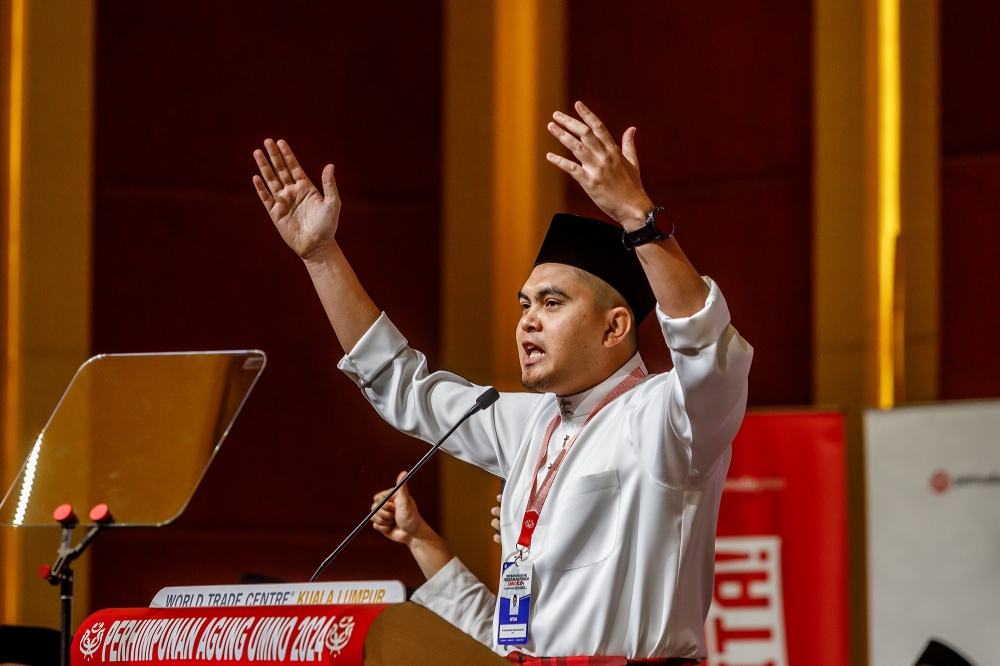
Umno Youth chief Datuk Dr Akmal Saleh has turned up the heat in Malaysia's fractious coalition politics by demanding clarity on whether electoral alliance rules should apply uniformly across all governing blocs. Speaking at a public forum in Kuala Lumpur on July 19, he posed a direct challenge to Pakatan Harapan's Youth leadership, questioning why Barisan Nasional should be uniquely singled out for withdrawal from government based on its alliance strategies when similar logic might equally implicate the ruling coalition's own partners.
The remarks reflect deepening tensions within Malaysia's complex power-sharing arrangements, where multiple political alliances jostle for position and influence. Umno, as the dominant component of Barisan Nasional, has faced mounting pressure from both coalition partners and opposition figures over its approach to electoral cooperation and the composition of governing coalitions. The Youth chief's intervention suggests frustration within the party at what senior members perceive as double standards in how different blocs are assessed when they forge similar political partnerships.
Akmal's challenge cuts to the heart of a fundamental inconsistency in Malaysian political discourse. If electoral alliances and coalition arrangements constitute grounds for removing a partner from government, then the same principle would logically extend to every major political entity currently sharing power. Pakatan Harapan itself comprises multiple parties—including PKR, DAP, and Amanah—that frequently forge separate electoral arrangements with independent candidates and regional partners. The Youth chief's question implicitly highlights this tension: either all such arrangements are acceptable within a governing framework, or none should be treated as disqualifying grounds for political participation.
The underlying dispute reflects broader anxieties about Malaysia's governance stability. Since the 2022 general election, the country has operated under an unusual arrangement involving both Barisan Nasional and Pakatan Harapan in a unity government framework, supplemented by Sabah and Sarawak-based parties. This configuration was intended to stabilize the political environment after years of instability, but it has created new fault lines as partners navigate competing interests and allegiances.
For Umno specifically, the pressure has been particularly acute given the party's traditional dominance in Malaysian politics and its simultaneous efforts to rebuild credibility following corruption-related scandals that damaged its standing. The party has sought to position itself as an essential component of any viable national coalition, yet opponents and critics have questioned whether its electoral partnerships—particularly in certain states—align with professed principles of clean governance and transparent political conduct.
The Pakatan Harapan Youth organization has not been immune from similar scrutiny. The coalition's own member parties have made localized electoral arrangements that sometimes sit uneasily with national positioning on governance standards and alliance principles. These contradictions have fueled accusations from various quarters that Malaysian political parties frequently abandon their stated principles when tactical advantages emerge.
Akmal's intervention also resonates with medium-level party cadres who feel their political leadership operates under inconsistent standards. Junior party members observing these debates may conclude that principles are selectively enforced depending on which coalition a party belongs to, potentially corroding institutional loyalty and party discipline across the broader political ecosystem.
The broader implications for Malaysian governance extend beyond immediate coalition maneuvering. If electoral partnerships and alliance strategies become grounds for removing governing partners, the nation faces genuine instability. Most modern democracies operate on the understanding that electoral alliances are legitimate political strategies, and that parties retain the right to form coalitions based on shared programmatic commitments rather than permanent, pre-determined partnership structures. Governments typically fall due to loss of confidence or electoral defeat, not because of the prior electoral alliances their component parties undertook.
For Southeast Asian observers, Malaysia's ongoing coalition management challenges offer instructive lessons about the complexities of multi-ethnic, multi-party democracies operating with limited institutional checks. The region contains several nations grappling with similarly fragmented political landscapes, and Malaysia's experience—including both successes and tensions—provides relevant reference points for how competing blocs can coexist within democratic frameworks.
Looking forward, Akmal's challenge may catalyze more serious discussions about establishing clearer, more consistent criteria for what constitutes acceptable political conduct within Malaysia's governing arrangements. Whether such conversations yield agreed-upon standards or simply deepen existing divisions remains an open question. What seems certain is that Malaysia's political leadership will need to resolve these underlying tensions if the current unity government framework is to deliver the stability and effective governance that justified its formation.

