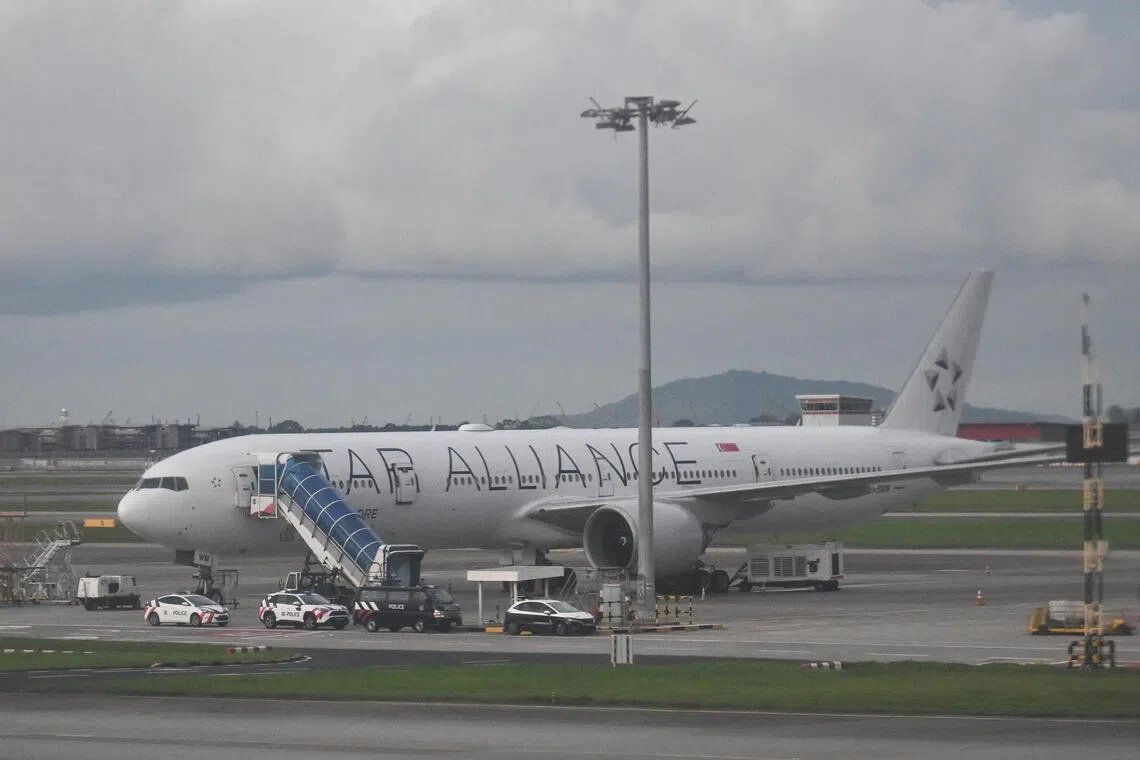
The widow of a British theatre director has launched legal proceedings against Singapore Airlines at the British High Court, seeking compensation for injuries sustained and damages related to her husband's death during a catastrophic turbulence event aboard Flight SQ321 in May 2024. Linda Kitchen, 74, was aboard the aircraft when it plummeted more than 54 metres in approximately five seconds while flying over Myanmar, an incident that claimed her husband's life and left her with severe spinal injuries requiring ongoing specialist care.
Geoffrey Kitchen, a respected theatre director, suffered a fatal heart attack during the dramatic incident on May 21, 2024. The couple, who had been married for 52 years, were midway through a planned six-week holiday taking them through Singapore, Indonesia and Australia when the tragedy unfolded. What began as a routine breakfast service on the London to Singapore route transformed within moments into a harrowing ordeal that would fundamentally alter Linda Kitchen's life and claim her husband's existence.
The violent descent threw passengers and crew throughout the cabin with such force that Geoffrey Kitchen fell directly onto his wife, pinning her against the armrest of her seat with crushing weight. Other passengers eventually aided in moving him away, allowing a physician travelling among the 211 passengers and 18 crew members aboard to attempt cardiopulmonary resuscitation. Despite these efforts, Geoffrey Kitchen could not be revived. The aircraft was immediately diverted to Suvarnabhumi Airport in Bangkok, Thailand, for an emergency landing. In the aftermath, 79 people sustained injuries ranging from minor to severe, with Linda Kitchen requiring ten days of hospitalisation before being airlifted back to Bristol.
The emotional toll of the incident extended beyond physical injury. Linda Kitchen was not informed of her husband's death until two days after the emergency landing, a delay that compounded her trauma. Speaking to British media outlets including The Independent, she described the devastation of learning of Geoffrey's fate while still hospitalised and in considerable pain. Upon returning to the United Kingdom, she required approximately one additional week of hospital care followed by substantial in-home assistance during her recovery period.
Specialist aviation lawyer Anthe Korelidou, representing Kitchen's interests, emphasised that more than two years have elapsed since Geoffrey's death, yet fundamental questions persist regarding the incident and whether preventive measures could have mitigated the catastrophic injuries. Korelidou stated that the family continues to harbour significant concerns about circumstances surrounding the event and what measures might have prevented such severe harm. The filing of High Court proceedings represents a critical development in obtaining answers that the family deserves and establishing accountability for their loss.
Court documents reveal that Linda Kitchen has filed two separate claims, one on her own behalf and another in her name representing the estate of her late husband. Beyond Kitchen's family, British court records demonstrate that multiple other passengers have initiated independent legal action against Singapore Airlines, including Bradley Richards, Jack Jenkins, Hannah Fullerton, Andrew Dawood, Bryan Matthews, and Pauline and Michael Rainey, suggesting broader dissatisfaction among affected parties regarding the airline's response and responsibility.
Singapore Airlines responded to inquiries from The Straits Times on August 29 by declining to comment on matters under judicial consideration. However, the airline had previously implemented a compensation framework in 2024 acknowledging the incident's severity. Passengers who experienced minor injuries received offers of US$10,000, while those sustaining serious injuries requiring long-term medical intervention received advance payments of US$25,000. Additionally, SIA refunded all airfare costs for everyone aboard Flight SQ321 and issued a formal apology, stating that passenger and crew safety remain paramount organisational priorities.
Investigations conducted by Singapore's Transport Safety Investigation Bureau (TSIB) identified storm clouds as the probable cause of the severe turbulence but revealed a critical gap in aircraft systems. The weather radar aboard the aircraft failed to detect these storm formations, catching the flight captain entirely unprepared for the sudden and violent atmospheric conditions. However, the TSIB has not definitively established whether the radar system itself experienced technical malfunction or whether the storm cells possessed characteristics that would have evaded detection regardless of equipment functionality.
This incident carries significant implications for regional aviation safety protocols and passenger protection frameworks. For Malaysian and Southeast Asian travellers, the case underscores the importance of comprehensive airline accountability mechanisms and the adequacy of current compensation structures. The lawsuit suggests that prevailing compensation levels may be insufficient for passengers suffering catastrophic injuries requiring permanent lifestyle adjustments and specialised medical care. Furthermore, the incident highlights potential vulnerabilities in weather detection systems operating in tropical regions where atmospheric conditions can develop with unusual rapidity and intensity.
The legal proceedings also raise questions about international standards for pre-flight weather briefings and real-time atmospheric monitoring during flight operations. Airlines operating throughout Southeast Asia must evaluate whether current protocols adequately prepare crews for the region's distinctive meteorological challenges. For Malaysian aviation regulators and airlines, the SIA Flight SQ321 case provides important lessons regarding system resilience, crew preparedness, and the scope of compensation obligations toward passengers subjected to extraordinary circumstances.
As the case progresses through British courts, attention will focus on how judicial systems evaluate airline responsibility for natural phenomena and the extent to which advanced technology should be expected to provide warning of atmospheric hazards. The precedent established could influence compensation frameworks and safety expectations across the international aviation industry, particularly for carriers operating high-frequency routes through Southeast Asia's complex airspace.

