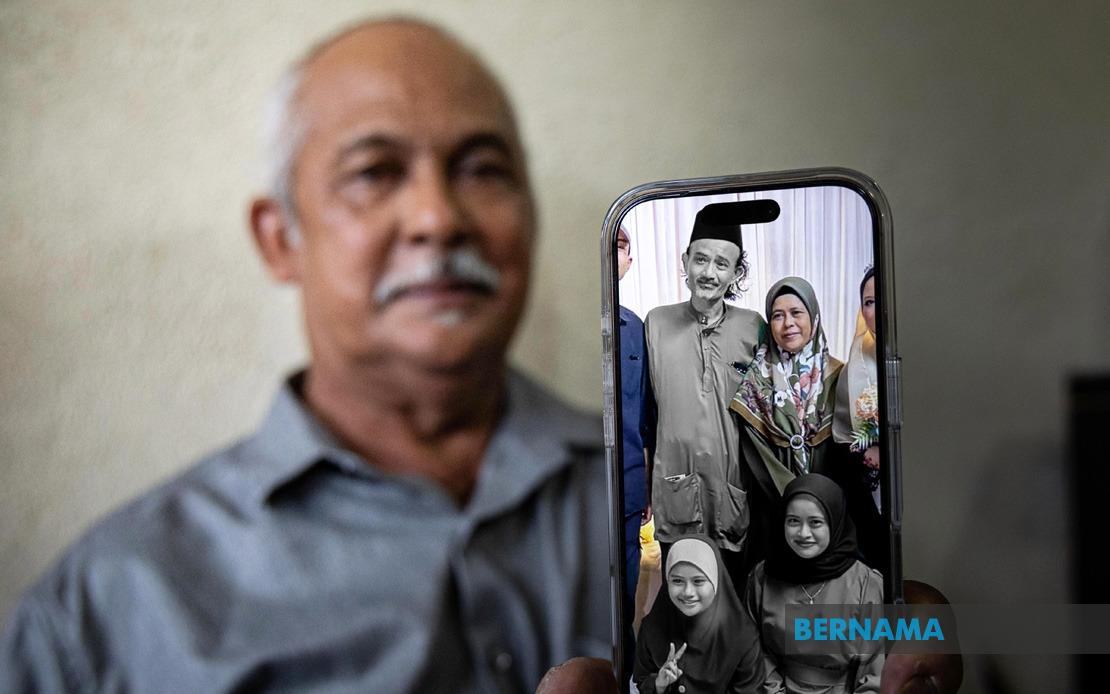
Norhayati Razali continues to grapple with the psychological and physical aftermath of a devastating traffic accident in Kuala Lumpur that claimed the lives of her spouse and two young children. The 55-year-old survivor, currently undergoing treatment at Kuala Lumpur Hospital, has been moved out of the Intensive Care Unit to a regular ward, marking incremental progress in her recovery. However, her journey back to normalcy remains uncertain as she contends with persistent memory issues stemming from the severe injuries sustained when a Malaysian Immigration Department truck collided with her vehicle on Jalan Sultan Ismail on Wednesday.
According to her brother, Mohd Nadzri Razali, the trauma extends beyond the physical wounds visible across Norhayati's body. She has sustained injuries to her hands, waist, knees, legs, and most critically, her head, creating a complex medical situation that requires ongoing specialist care. The positive signs in her physical recovery—she can now consume food and drink independently without tube feeding—mask the deeper cognitive struggles. Mohd Nadzri explained that family members brought Norhayati to view the bodies of her deceased loved ones and attempted to explain the tragic circumstances, but her retention of these crucial facts appears tenuous at best.
The disconnect between information provided and memory retention emerged starkly when Norhayati, the day after being informed of her family's deaths, asked her relatives where her husband and children had gone. This troubling pattern of memory loss suggests that the head injuries she sustained may have compromised her ability to consolidate and retain new information—a common consequence of traumatic brain injury. The family finds itself in an agonising limbo, uncertain whether Norhayati genuinely cannot remember the tragedy or whether her mind is struggling to process and accept the catastrophic loss.
Medical decisions about her ongoing care remain unresolved. Doctors have not yet determined whether Norhayati can be transferred to a hospital closer to her home in Perak, such as facilities in Ipoh or Teluk Intan, or whether she must remain in Kuala Lumpur for continued specialist treatment. Her brother expressed hope that a transfer might ease the family's burden in providing care and support during her recovery, but this hope hinges on medical clearance that has not yet materialised. The uncertainty compounds the family's distress, as they struggle to manage both the logistics of supporting a hospitalised relative across state lines and the emotional weight of their devastating loss.
Family connectivity has itself become a casualty of the accident. Mohd Nadzri, who lives in Perak, has been unable to visit his sister in the weeks following the crash due to transportation constraints and his unfamiliarity with Kuala Lumpur's road network. This geographical and practical barrier to family support highlights the ripple effects of such tragedies beyond the immediate victims. He has arranged to make the journey this weekend, but the delay in familial contact speaks to the complications that arise when accidents uproot people from their normal support systems and place them in distant medical facilities.
The accident itself emerged from a sequence of decisions and circumstances that remain troubling. On August 19, the Malaysian Immigration Department truck—a Black Maria vehicle—was en route to Chow Kit in central Kuala Lumpur to conduct enforcement operations targeting irregular migrants. The truck was operating with its beacon light and siren activated, yet investigations suggest it proceeded through a red traffic light at the Jalan Sultan Ismail intersection. A Proton Saga car, lawfully crossing the intersection on a green light, became the vehicle's collision target, and the impact caused the truck to careen out of control.
The consequences of that initial collision cascaded through the intersection. The truck, having struck the Proton Saga, veered sideways and struck additional pedestrians and a second vehicle, an Inokom Matrix car, in what witnesses describe as a chaotic aftermath. Three members of Norhayati's family died at the scene: her husband and two children. A fourth pedestrian suffered serious injuries. The accident transformed what should have been a routine enforcement operation into a mass casualty incident, raising critical questions about vehicle operation protocols and intersection safety.
Norhayati's family, through her brother's statements, has called for a transparent and thorough investigation into the circumstances leading to the collision. Mohd Nadzri specifically requested that traffic light camera footage be examined to establish the precise sequence of events and determine culpability. His appeal for justice reflects a broader concern within Malaysian society about accountability when government vehicles are involved in traffic fatalities, particularly when those vehicles are operating under special powers for law enforcement purposes.
The investigation will need to scrutinise several critical factors. The decision to operate the truck with beacon and siren activated during what appears to have been a routine immigration enforcement sweep warrants examination. Traffic safety protocols governing emergency vehicle operations require vehicles to still exercise caution at intersections even when displaying warning signals; the duty to proceed defensively does not disappear simply because a vehicle has activated lights and sirens. Additionally, investigators should review whether the truck's speed and positioning through the intersection complied with traffic regulations, and whether the driver possessed appropriate training for emergency vehicle operation.
For Malaysian road users, this accident represents a sobering reminder of the vulnerability pedestrians and regular drivers face when sharing intersections with large, heavy vehicles operated under special conditions. The fact that a family was essentially erased from existence in seconds—leaving behind a widow struggling to comprehend her loss while facing complex rehabilitation and psychological trauma—underscores the human cost of traffic accidents. Norhayati's ongoing memory struggles and her family's grief transcend the immediate incident to illuminate broader questions about safety standards, enforcement operations, and accountability within government agencies.
The case also highlights deficiencies in how Malaysia's health and social services support accident survivors and bereaved families. A woman who has lost her entire immediate family faces not only physical rehabilitation but also psychological trauma and cognitive recovery in a distant hospital, with limited family support due to logistical constraints. The absence of clear protocols for transferring such patients to facilities closer to their homes suggests gaps in the country's approach to holistic trauma recovery and family-centred care.
As Norhayati's medical team works toward further improvement in her physical condition, the more elusive question of psychological recovery looms. Whether her memory issues will resolve, whether she will fully comprehend and process her loss, and how she will rebuild a life suddenly stripped of her most cherished relationships remain open questions. Her struggle for both physical healing and emotional adjustment continues, shadowed by the family's broader quest for transparent answers about how such a tragedy could unfold on a major Kuala Lumpur thoroughfare in broad daylight.

