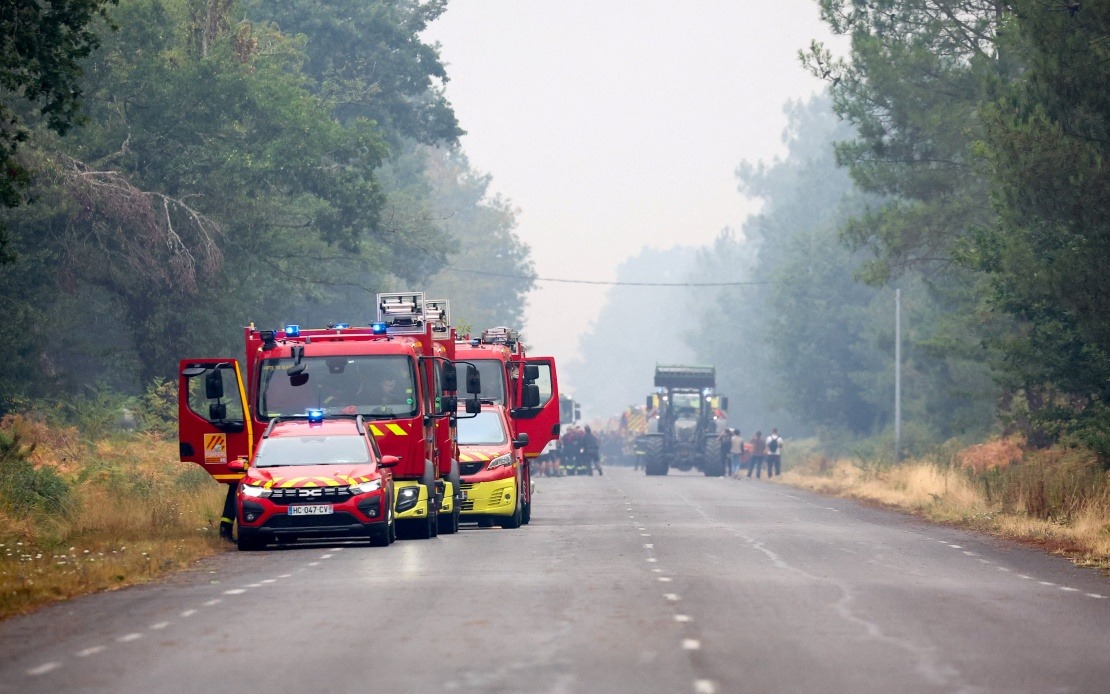
Firefighting operations across southwestern France and Spain achieved modest progress this week as the most destructive blazes showed tentative signs of stabilisation, offering brief respite to exhausted emergency services and evacuated communities. Nevertheless, meteorological agencies across both nations have sounded fresh alarms about an approaching heatwave that threatens to reverse gains made by thousands of deployed firefighters and potentially trigger a new cycle of uncontrolled burning in coming days.
In France's Gironde department, located in the southwestern region bordering Spain, authorities reported that the primary fire remained under control through Wednesday morning, though overnight operations revealed recurring flare-ups that required immediate intervention. The prefecture disclosed that firefighting teams, numbering more than 2,000 personnel, maintained heightened vigilance across the still-active perimeter, focusing efforts on extinguishing scattered hotspots that could reignite under favourable conditions. The sustained deployment reflects concerns that the blaze could reaccelerate rather than conclude, particularly given predicted atmospheric changes.
The human cost of the emergency has already marked itself across the affected regions. Gironde alone reported 126 injured firefighters since the outbreak began, a toll that underscores the extreme conditions and prolonged physical demands placed on emergency responders. This figure, while significant, represents only the direct casualties recorded in one department and does not account for injuries sustained elsewhere or the broader health impacts on communities exposed to smoke and heat stress.
Progress in adjacent departments offers limited cause for optimism. A major fire in the southeastern Var department, which consumed nearly 4,800 hectares before containment on Tuesday, demonstrated the scale of destruction possible within days of ignition. Similarly, the southwestern Landes department secured its fire after it had already scorched 3,600 hectares, with 350 firefighters remaining in place to prevent resurgence. These figures illustrate the devastating ground-level impact of each blaze—equivalent to multiple cities worth of forestland converted to ash and charred terrain within a compressed timeframe.
As a precautionary measure, French meteorological authorities designated 65 departments under orange alert status due to elevated wildfire risk, with an additional 16 receiving separate alerts as the anticipated heatwave draws closer. This dual-alert system reflects the reality that current progress in controlling existing fires may prove temporary if atmospheric conditions shift toward extreme heat and low humidity. The cascading nature of wildfire risk in Mediterranean climates means that successful suppression of one fire can be quickly nullified by new ignitions sparked across previously safe territories.
Spain's situation parallels France's in both the territorial scale of destruction and the meteorological threats looming ahead. The Sierra Oeste region near Madrid experienced stabilisation overnight without fresh flare-ups, and active suppression operations continued across Madrid, Avila, Toledo, Castellon, and Almeria as Spanish authorities similarly braced for incoming heat conditions. The geographic dispersal of active fires across multiple provinces indicates a systemic regional vulnerability rather than isolated incidents, suggesting that comprehensive solutions require coordinated response across provincial boundaries.
Evacuation protocols have begun reversing as immediate danger receded in certain zones. Residents from 15 municipalities across Madrid and Avila received clearance to return home late Tuesday, representing a partial restoration of normalcy for those communities. Meanwhile, significantly larger populations in Castellon and Toledo—totalling approximately 15,000 residents across 20 municipalities—similarly obtained permission to leave temporary shelters and return to their homes. These organised returns demonstrate the scale of displacement the fires triggered and the ongoing logistical complexity of managing population movements across affected territories.
The Vall d'Uixo wildfire in Castellon province presents a cautionary example of suppression difficulties even as reported fire counts decrease. This particular blaze, which ignited on Saturday, has consumed 10,000 hectares and forced 10,000 people from their homes, yet remained beyond firefighting control as of the latest reports. The inability to contain this single fire despite intensive efforts highlights operational limitations and the possibility that announced containment of other fires may reflect damage already sustained rather than imminent resolution of threats.
Infrastructure damage compounds civilian distress across both nations. A total of 30 roads spanning five provinces—Avila, Castellon, Madrid, Toledo, and Leon—remained closed as of the reporting date, disrupting commercial transport, emergency response capabilities, and community connectivity. Road closures in fire-affected regions can impede evacuation procedures, delay supplies to unaffected areas, and create bottlenecks that hamper fire management operations requiring rapid equipment repositioning.
The pattern of stabilisation followed by fresh threats reflects the structural vulnerability of Mediterranean Europe to climate-amplified wildfire seasons. Recent years have documented intensifying fire regimes, and this current episode appears consistent with projections of more severe, frequent episodes driven by warming air temperatures and altered precipitation patterns. For Southeast Asian observers, the French and Spanish experiences offer instructive parallels to regional challenges in Sumatra, Borneo, and other fire-prone territories, particularly regarding the inadequacy of reactive suppression when underlying climatic conditions favour combustion.
The approaching heatwave carries genuine implications for regional stability beyond immediate fire management. Healthcare systems in both nations face potential surge demands as heat-related illnesses accelerate during the emergency phase. Agricultural zones already stressed by the fires and preceding dry conditions will face further pressure on remaining crops and water resources. Energy infrastructure may experience strains from cooling demands coinciding with evacuation-related disruptions to normal commercial operations.

