The Malaysian Association of the Wives and Women Civil Servants' Prime Minister's Department branch is mounting an ambitious expedition to scale Mount Kinabala, Southeast Asia's highest peak, in a deliberate effort to cultivate holistic resilience among female public sector employees. Scheduled for mid-July, the four-day mission will bring together sixteen participants drawn from various departments and agencies within the Prime Minister's Department, making it a significant institutional gesture toward nurturing the capabilities of women in government service.
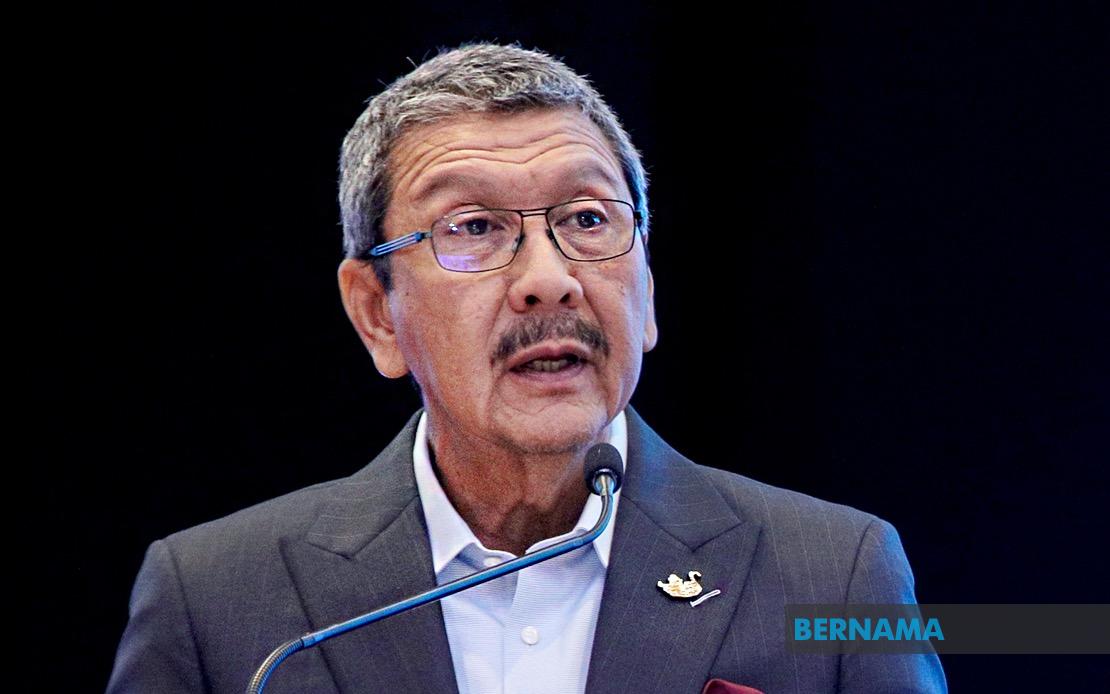
The initiative carries symbolic weight beyond the physical challenge of ascending the 4,095-metre mountain. According to Tan Sri Wan Ahmad Dahlan Abdul Aziz, the Director-General of Public Service and adviser to the Puspanita JPM branch, climbing expeditions serve a deeper psychological and professional function. He framed the Mount Kinabala undertaking not simply as a recreational pursuit, but as a structured developmental experience that cultivates internal fortitude through discipline, resolve, and comprehension of perseverance. This framing reflects a growing recognition within Malaysia's civil service that leadership competencies extend beyond technical knowledge to encompass mental and emotional durability—qualities increasingly valued in Malaysia's evolving governance landscape.
Dr Azlifah Bahari, who chairs the Puspanita JPM branch, is leading the expedition scheduled from July 14 to 17. Her leadership of this initiative signals the branch's proactive approach to member welfare and professional growth. The selection of Mount Kinabala, located in Sabah and iconic to Malaysian national identity, elevates the mission beyond a routine team-building exercise, positioning it instead as an affirmation of women's capability to achieve demanding goals within a Malaysian context. This geographical choice also emphasises regional cohesion, as participants will traverse terrain of national significance.
The resilience-building dimension of this expedition addresses an increasingly acknowledged concern within human resources management globally: the distinct pressures faced by women navigating hierarchical bureaucratic structures. By deliberately creating an environment where female civil servants collaborate toward a shared ambitious objective, the programme attempts to strengthen both individual psychological resilience and collective institutional bonds. The physical exertion and environmental challenges of high-altitude climbing serve as proxies for the professional obstacles these women navigate routinely, translating abstract concepts of perseverance into tangible, embodied experience.
Wan Ahmad Dahlan's emphasis on safety protocols and environmental stewardship during the expedition reflects contemporary best practices in institutional risk management. His directive that participants observe all prescribed safety measures and environmental guidelines demonstrates that the resilience-building objective operates within a framework of responsible governance. This attention to procedural integrity is particularly relevant for civil servants, whose conduct is subject to public scrutiny and institutional accountability. The expedition thus models the disciplined approach that characterises professional standards within Malaysia's public service.
The cooperative ethos that Wan Ahmad Dahlan highlighted as foundational to Puspanita's mission reveals an understanding that resilience is not merely an individual attribute but a collective property. By bringing together women from different departments and hierarchical levels within the Prime Minister's Department, the expedition creates cross-functional networks that can yield institutional benefits beyond the climbing experience itself. These informal connections often prove valuable for knowledge-sharing and collaborative problem-solving in subsequent professional interactions.
For Malaysia's civil service, this initiative reflects broader global trends emphasizing diversity and inclusion within government institutions. By institutionally supporting women's professional development and wellbeing, the Prime Minister's Department positions itself as responsive to contemporary expectations regarding equitable public sector management. The explicit focus on women's resilience acknowledges that gender-specific barriers and experiences deserve tailored institutional responses rather than generic approaches.
The timing of this expedition during mid-July positions it within a broader annual rhythm of government activities, suggesting that such initiatives may become regular institutional fixtures. Should the Mount Kinabala mission prove successful, it could establish a template for other government departments seeking to strengthen staff cohesion and individual resilience through structured outdoor experiences. The replicability of the model across Malaysia's decentralised bureaucracy could amplify its systemic impact.
For women civil servants contemplating or advancing careers within Malaysia's public sector, the Puspanita initiative signals institutional commitment to their holistic development. By framing mountain-climbing as a legitimate professional development activity, the programme challenges conventional hierarchies that have historically marginalised such pursuits as peripheral to core governance functions. This reconceptualisation gradually shifts institutional culture toward recognising that robust individual and collective wellbeing directly supports effective public service delivery.
The expedition also carries implications for Malaysian civil service recruitment and retention strategies. As government agencies compete with private sector employers for talented professionals, particularly women, demonstrating tangible commitment to staff development and welfare becomes strategically significant. The Puspanita initiative, widely visible through official channels, communicates that the Malaysian civil service values women employees sufficiently to invest institutional resources in their ongoing development beyond conventional training frameworks.

