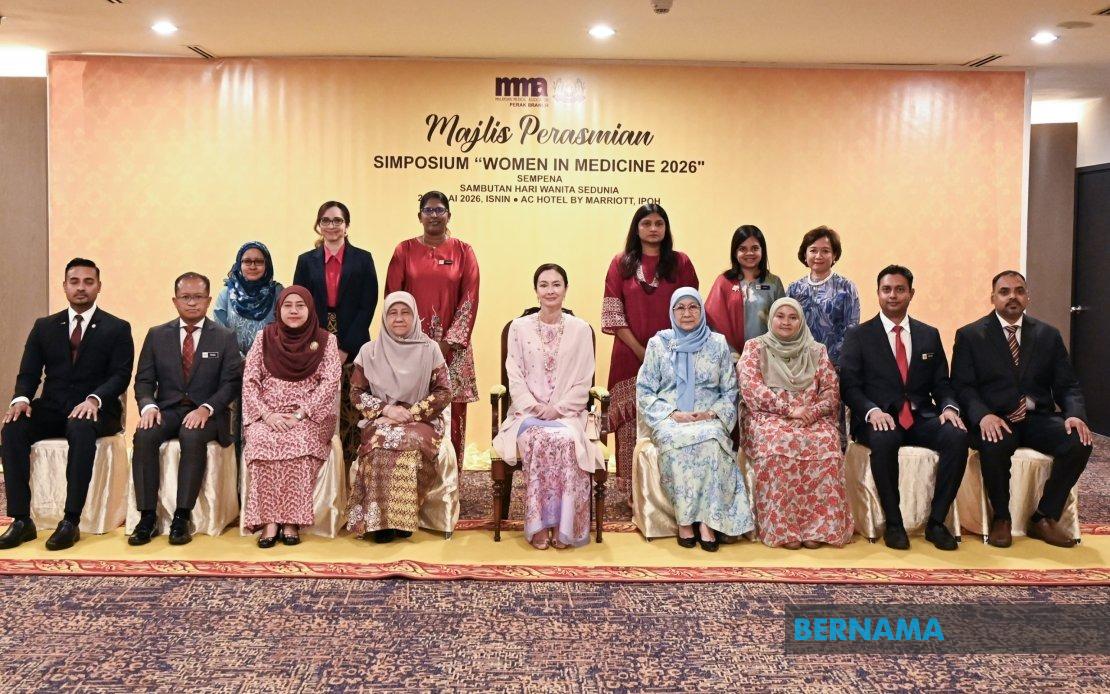
The Malaysian medical establishment is increasingly recognising women's critical contribution to solving the sector's most pressing challenges. At a symposium in Ipoh today, healthcare leaders underscored how women physicians and administrators bring distinctive qualities—empathy, inclusive decision-making, and people-focused strategies—that are becoming indispensable as the profession navigates unprecedented complexity.
Dr Monesh Pillai, chairman of the Perak Malaysian Medical Association, articulated this perspective while addressing participants at the Women in Medicine 2026 Symposium. He emphasised that Malaysia's healthcare system confronts a formidable array of emerging pressures: escalating mental health disorders, the growing burden of non-communicable diseases, an increasingly elderly population requiring specialised care, the technological demands of digital healthcare systems, and the transformative potential of artificial intelligence in clinical practice. These interconnected challenges demand not merely technical expertise but visionary leadership capable of reimagining how healthcare is delivered and organised.
The symposium, officially inaugurated by the Raja Permaisuri of Perak, Tuanku Zara Salim, was convened in alignment with International Women's Day, serving as a platform to recognise both the achievements of women in medicine and the systemic barriers they continue to navigate. For Malaysia, where women constitute a substantial proportion of the medical workforce yet remain underrepresented in senior leadership positions, such initiatives address a critical gap in healthcare governance. When women remain absent from decision-making tables, policymakers may overlook healthcare priorities that disproportionately affect female patients and families.
Dr John Emmanuel, organising committee chairman for the symposium, broadened the conversation beyond individual advancement to examine structural healthcare outcomes. He argued persuasively that expanding women's leadership roles produces measurable improvements in patient care quality and community health outcomes. This perspective aligns with international research demonstrating that healthcare institutions with greater gender diversity at leadership levels often report higher standards of care coordination, better communication between departments, and more responsive approaches to vulnerable populations.
Crucially, Dr Emmanuel reframed the discourse around empowerment beyond merely creating opportunities for women to participate in medicine. Rather, he emphasised that genuine empowerment requires establishing environments where women can exercise full agency—to lead strategic initiatives, shape institutional policies, conduct pioneering research, and ultimately determine the trajectory of healthcare innovation. This distinction matters significantly for Malaysian policymakers considering gender equity measures; symbolic inclusion without corresponding authority leaves underlying power imbalances intact.
The symposium's thematic focus—'For All Women and Girls: Rights. Equality. Empowerment.'—reflects a deliberate expansion of the healthcare profession's understanding of women's roles within medicine. Historically, discussions centred narrowly on women as clinicians, particularly physicians. Contemporary recognition encompasses the full ecosystem of healthcare delivery: women administrators restructuring hospital systems, researchers investigating disease mechanisms, educators training the next generation of healthcare workers, nurses providing frontline patient care, pharmacists ensuring medication safety, allied health professionals addressing rehabilitation needs, and women in patient and advocacy roles shaping healthcare priorities from lived experience. This pluralistic perspective acknowledges that healthcare transformation requires contributions across multiple dimensions of professional activity.
The calibre of speakers at the symposium reflected this comprehensive approach. Datuk Dr Adeeba Kamarulzaman, president and pro vice-chancellor of Monash University Malaysia, delivered insights on translating clinical experience into global health policy influence—a pathway that remains disproportionately difficult for women despite their clinical capabilities. Dr Sangeetha Siniah, a paediatric immunologist and infectious disease specialist at Sunway Velocity Medical Centre, presented on allergic and immune conditions affecting women and children, illustrating how gender-specific medical knowledge enhances clinical practice and population health outcomes.
For Malaysia specifically, advancing women's medical leadership carries implications beyond individual career progression. The nation's healthcare system must simultaneously manage chronic disease prevention in an ageing demographic, expand mental health services addressing the psychological toll of rapid modernisation, integrate digital technologies into existing clinical workflows, and prepare for artificial intelligence applications in diagnosis and treatment planning. Each of these priorities benefits from leadership perspectives informed by diverse lived experiences and professional backgrounds. Women leaders, statistically more likely to prioritise inclusive consultation and longer-term systemic thinking, may prove particularly valuable in navigating these multifaceted challenges.
The participation of senior government figures—including the wife of the Perak Menteri Besar and the state's Health director—signals official recognition of gender equity in healthcare as a policy priority rather than merely an aspirational ideal. This institutional endorsement provides crucial legitimacy for initiatives promoting women's advancement, potentially encouraging other state health departments and private healthcare networks to examine their own leadership demographics and promotion pathways. Regional comparisons suggest that Southeast Asian healthcare systems achieving greater gender balance in senior roles report enhanced capacity for adaptive policy responses during public health emergencies and improved stakeholder trust in health institutions.
Looking forward, the symposium's prominence in Perak's healthcare calendar suggests momentum building within Malaysian medical circles toward more systematic gender equity programming. Whether this translates into substantive changes—increased mentorship for aspiring female leaders, transparent promotion criteria reducing implicit bias, family-friendly policies enabling career continuity—remains to be seen. Nonetheless, the explicit articulation by leading medical organisations that women's leadership strengthens healthcare represents meaningful progress in professional culture. For Malaysia's healthcare system to meet its evolving challenges effectively, such cultural shifts must eventually crystallise into institutional structures ensuring that talent and leadership capability are genuinely gender-neutral criteria.

