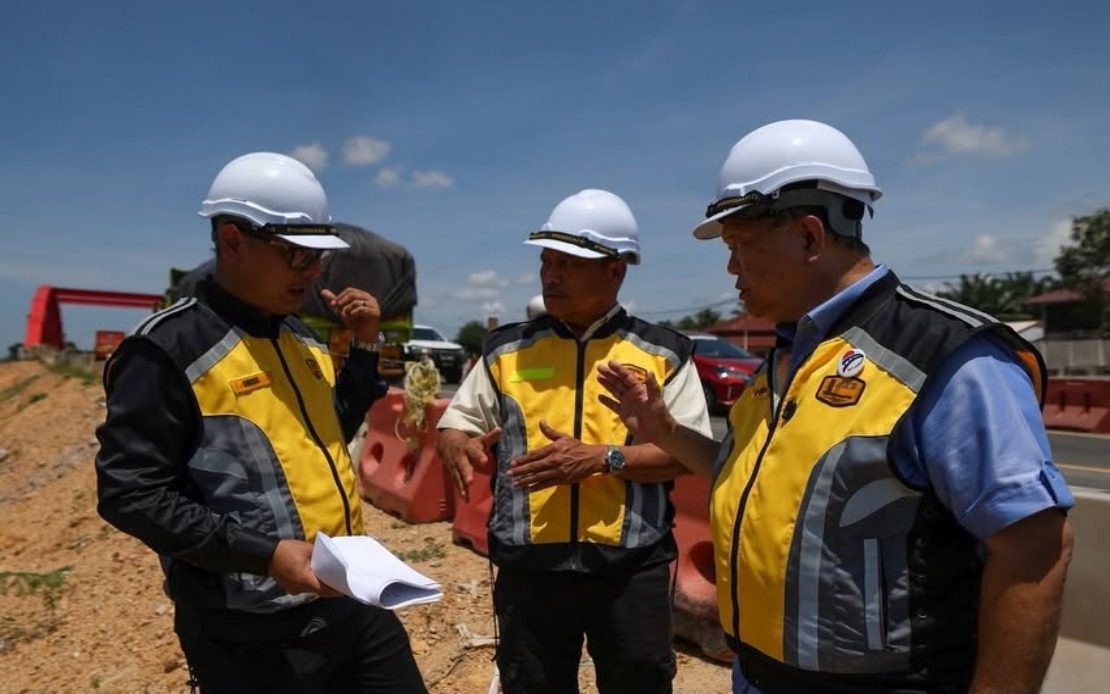
Works Minister Datuk Seri Alexander Nanta Linggi has moved to break a cycle of persistent delays plaguing the Sungai Durian Bridge Replacement Project in Kuala Krai, issuing a direct order to the contractor to mobilise additional resources and complete the work to schedule. The minister's intervention, announced following a surprise visit to the construction site, underscores growing frustration with a project that has already been granted six Extensions of Time yet continues to slip behind its targeted completion date.
The replacement bridge initiative represents a significant infrastructure commitment for the Kuala Krai district in Kelantan, with particular importance for regional connectivity and local economic development. The project's extended timeline has drawn increasing public attention, as communities dependent on the crossing have endured prolonged uncertainty regarding when improved infrastructure will finally materialise. By publicly committing to a hard completion schedule, Nanta has raised the stakes for project execution and signalled zero tolerance for further postponements.
During his unannounced inspection, the minister identified specific technical obstacles contributing to the current setbacks. Borepile installation works—critical foundation elements necessary for bridge stability—have been substantially hampered by unexpected encounters with existing underground utility pipelines. These subsurface complications could not have been fully anticipated during initial project planning and design phases, yet they have nonetheless consumed considerable time as contractors coordinate with multiple utility authorities to safely relocate or work around these infrastructure elements. Such conflicts between new construction and existing services remain endemic in Malaysia's infrastructure development landscape, particularly in districts where utility mapping may be incomplete or outdated.
Beyond foundation challenges, the project has also encountered difficulties with the temporary support structure required during installation of the steel bridge superstructure. This temporary framework must provide safe working conditions and precise load distribution during the critical phases when the main steel elements are positioned and connected. Technical issues arising during this phase demand careful resolution to ensure both worker safety and structural integrity, making quick-fix solutions inadvisable regardless of schedule pressures. The minister's acknowledgment of these specific problems demonstrates informed oversight rather than dismissive pressure on the contractor to cut corners.
Nanta's response, however, indicates that technical complexity, while understandable, cannot become an indefinite excuse for non-completion. In his public statement, he emphasised that prolonged delays impose tangible costs on communities whose daily lives and economic activities depend on reliable crossing infrastructure. The phrase "the public had waited far too long" reflects accumulated frustration and signals that implementation weaknesses will no longer be passively accepted. This stance carries implications beyond this single project, potentially establishing expectations for enhanced accountability across Malaysia's infrastructure portfolio.
The directive to deploy additional resources represents a practical response that may unlock faster progress without necessarily compromising safety or quality standards. Increasing on-site personnel, equipment, and supervision can address bottlenecks and accelerate parallel work activities. However, this approach requires careful coordination—simply adding more workers without corresponding improvements to scheduling, logistics, and technical planning can actually slow progress through congestion and rework. The Ministry of Works will presumably ensure that resource augmentation is strategically deployed rather than indiscriminately applied.
The minister has also mandated closer collaboration between the contractor and the Public Works Department to resolve outstanding technical issues. This represents a shift toward greater government involvement in day-to-day problem-solving rather than leaving the contractor solely responsible for obstacle resolution. While potentially accelerating decisions, such direct involvement carries risks if it devolves into government micromanagement that slows rather than enables progress. The balance between supportive oversight and productive autonomy will prove crucial to achieving the stated acceleration objectives.
The six previous extensions already granted reveal a pattern of optimism followed by disappointment regarding completion timelines. Each extension presumably came with updated cost assessments and revised schedules that, in turn, proved insufficient. This pattern raises questions about how the current completion deadline was calculated and what factors distinguish it from previous projections. Without addressing underlying estimation weaknesses or discovering fundamentally new information, the risk remains that the latest schedule, too, may prove unrealistic.
For Kelantan and Kuala Krai specifically, bridge infrastructure carries outsized importance given the state's economic development trajectory and reliance on regional connectivity for commerce and tourism. This project symbolises broader challenges the state faces in advancing its infrastructure stock at a pace matching national development standards. Completing the replacement structure would demonstrate that Kelantan can execute major projects despite coordination complexities and technical obstacles, potentially improving investment confidence in future initiatives.
The minister's willingness to stake his credibility on resolving this specific project also signals broader commitment to infrastructure delivery accountability. Malaysian public discourse increasingly demands measurable results rather than announcements of future intentions. By making his reputation partly contingent on this bridge's timely completion, Nanta has elevated the political salience of project success and positioned the Ministry of Works as a responsible steward of public investment. The coming months will reveal whether this combination of political pressure, additional resources, and enhanced oversight can finally move the project across the finish line after years of frustration.

