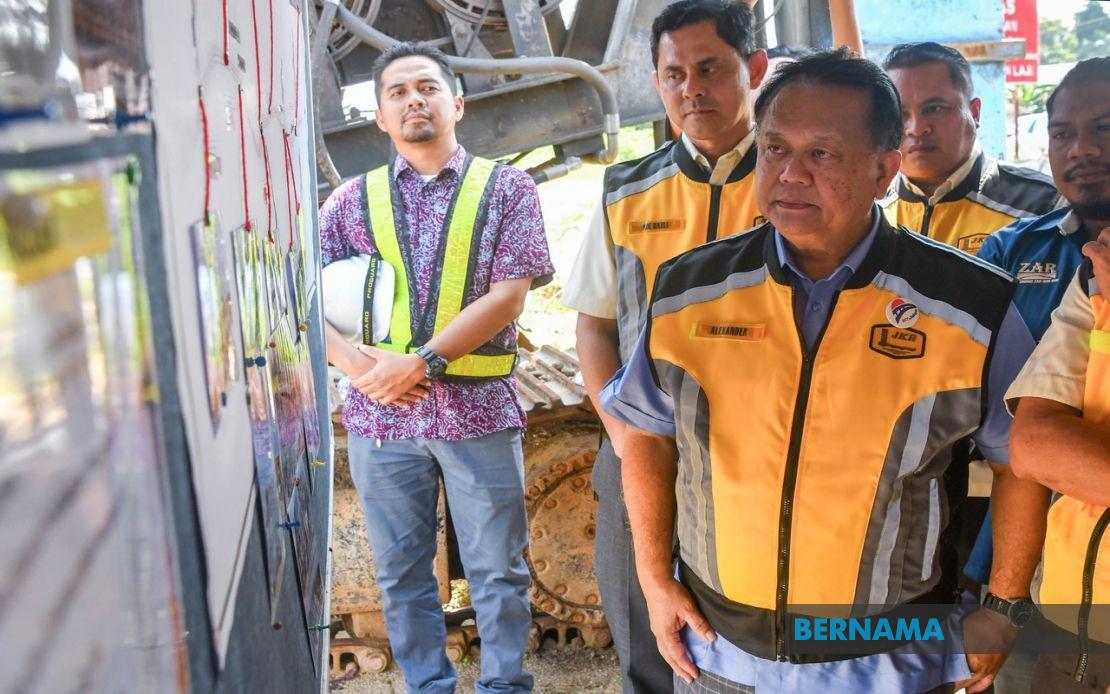
Malaysia's Works Ministry is stepping up oversight of 50 projects that have fallen behind schedule, with the infrastructure portfolio under intense scrutiny to prevent further delays and cost overruns. Works Minister Datuk Seri Alexander Nanta Linggi disclosed the monitoring effort during a visit to the FT209 and FT131 road upgrading project in Kelantan, emphasising that identifying troubled initiatives is now a systematic priority across the ministry's sprawling portfolio.
Out of 865 projects nationally under the ministry's responsibility, these 50 flagged initiatives represent a significant proportion requiring immediate remedial attention. The prevalence of delays underscores the structural challenges facing Malaysia's infrastructure development ecosystem. In Kelantan alone, only seven out of 104 projects bearing the ministry's designation have been categorised as "sick", suggesting that while the state has relatively manageable problems, the issue manifests unevenly across different regions and project types.
The underlying causes of project delays are multifaceted and reveal systemic vulnerabilities in Malaysia's construction and development framework. Contractor financial instability ranks prominently among the culprits, reflecting broader economic pressures on the construction industry and inadequate capacity screening during procurement. Management failures within contracting organisations compound these difficulties, alongside complications in securing land for project sites—a persistent bottleneck in Malaysian infrastructure development. Utility relocation disputes add further complexity, as relocating existing water pipes, electrical cables, and telecommunications networks requires coordination with multiple agencies and often sparks unforeseen costs. Site conditions discovered only during active construction, such as underground obstructions or geological complications not detected during planning phases, further frustrate implementation timelines and budgets.
The ministry's decision-making framework for troubled projects reflects pragmatic cost considerations. Rather than automatically terminating underperforming contracts, officials evaluate whether a project nears completion. When only 10 to 15 percent of work remains, the ministry opts to grant extensions of time rather than terminate contracts and hire replacement contractors—a calculation based on minimising total expenditure, as contract termination and contractor replacement invariably generate higher administrative costs and potential legal complications.
Governance around project monitoring has been substantially formalised and intensified. Weekly reviews now follow Cabinet meetings, allowing the ministry to assess progress systematically and identify corrective measures. Datuk Seri Alexander Nanta Linggi has delegated specific oversight authority to his deputy minister, concentrating accountability for monitoring sick projects nationwide and ensuring that follow-up actions proceed effectively. This bureaucratic architecture suggests recognition that passive monitoring yields poor results and that active intervention requires senior-level attention and dedicated resources.
The ministry maintains a graduated enforcement approach when projects persistently underperform. Removing contractors represents an intermediate sanction, signalling accountability while preserving the possibility of project completion. Terminating contracts constitutes the ultimate enforcement option, but ministry officials emphasise that such decisions demand careful deliberation and adherence to proper governance protocols. This caution reflects awareness that hasty contract terminations invite litigation from affected contractors and damage the ministry's credibility among suppliers and construction firms, potentially deterring future bidding for public infrastructure work.
The FT209 and FT131 road upgrading project in Kelantan exemplifies both the ministry's infrastructure ambitions and the practical complications that arise during implementation. This RM191 million initiative targets congestion on Federal Road FT131, particularly along the route connecting Kubang Kerian through Sabak to Pengkalan Chepa. The six-kilometre roadway upgrade has achieved 71.61 percent physical completion, with September next year targeted for handover. Land acquisition alone, involving 300 separate lots, has consumed more than RM200 million—illustrating how real estate complications can substantially inflate project costs beyond initial engineering estimates.
Further complications emerged during construction when the project triggered flooding affecting nearby residents, a consequence of altered drainage patterns during the upgrading work. Datuk Dr Ahmad Marzuk Shaary, the Member of Parliament for Pengkalan Chepa, raised this issue directly with the minister during the site visit. The ministry responded by instructing contractors to immediately construct a temporary 40-metre drainage channel to mitigate flooding until the project reaches completion next year. This adaptive management demonstrates the ministry's willingness to address unanticipated community impacts, though such interventions inevitably inflate final project costs.
For Malaysian readers, this disclosure about project monitoring carries several implications. First, it confirms that infrastructure delays remain a persistent challenge despite government investment and planning. Second, the ministry's acknowledgment of systematic problems—coupled with weekly reviews and potential contractor sanctions—suggests that accountability mechanisms are slowly gaining traction within Malaysia's bureaucracy. Third, the scale of land acquisition costs for a single road project underscores how property rights and compensation frameworks affect infrastructure timelines and budgets, a reality that extends beyond Kelantan to virtually every major development corridor nationwide.
The broader context involves Malaysia's ambition to maintain infrastructure development momentum while managing fiscal constraints and economic uncertainties. Southeast Asia's competitive dynamics mean that delayed or poorly executed infrastructure projects erode Malaysia's investment attractiveness relative to other regional economies. The ministry's intensified monitoring regime represents a recognition that governance failures in project implementation damage the credibility of Malaysia's development planning and discourage both domestic and foreign investors from committing to long-term partnerships in Malaysian infrastructure.
Moving forward, the ministry's demonstrated commitment to weekly reviews and potential contractor enforcement may gradually improve project delivery rates. However, addressing root causes—such as contractor capacity building, improved land acquisition mechanisms, and more rigorous pre-construction site assessment—will require investments extending beyond the ministry's direct authority. Coordination with state governments on land matters, with utility companies on relocation protocols, and with environmental regulators on drainage and ecological impacts remains essential for sustainable improvement in project outcomes across Malaysia's infrastructure portfolio.

