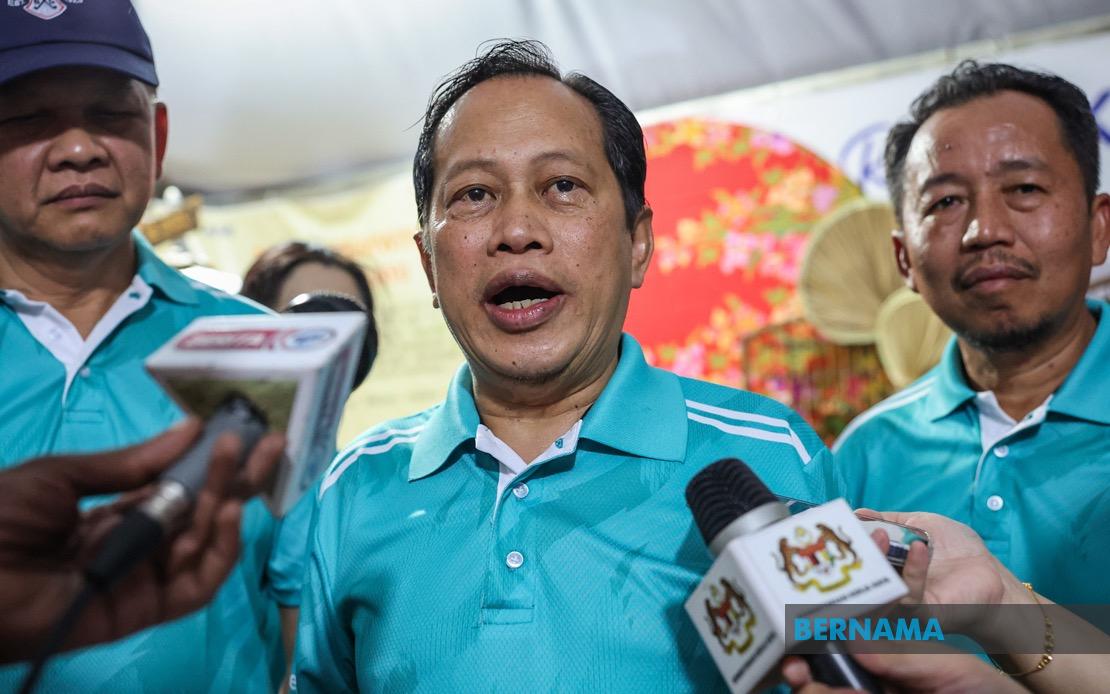
The Works Ministry (KKR) is positioning itself for a record development allocation in Malaysia's Budget 2027, signalling the government's continued emphasis on infrastructure expansion and modernisation. Deputy Works Minister Datuk Seri Dr Ahmad Maslan made this ambition clear while addressing participants at the Cultural Night Run in Batu Kawan, underlining the ministry's drive to secure elevated funding compared to previous budgets. The push reflects broader recognition within the government that Malaysia's sprawling highway network and aging infrastructure require sustained investment to meet the demands of a growing economy and population.
The ministry received approximately RM10 billion in the preceding budget allocation, of which RM9 billion was directed towards development initiatives. Ahmad's remarks suggest the ministry believes this quantum is insufficient to address the scale and complexity of nationwide infrastructure challenges. In preparation for discussions with Finance Minister II scheduled for August 28, the Works Ministry has instructed all subordinate divisions and agencies—including the Malaysian Highway Authority (LLM), Construction Industry Development Board Malaysia (CIDB), and Public Works Department (JKR)—to compile comprehensive budget submissions. This methodical approach demonstrates the ministry's intent to present a well-documented case for enhanced funding.
Beyond financial allocations, the ministry is aggressively pursuing technological solutions to enhance the efficiency and safety of Malaysia's highway system. A centrepiece of this modernisation effort involves the expansion of smart highways powered by digital technology, artificial intelligence, and real-time monitoring systems. The rollout encompasses closed-circuit television surveillance, intelligent lane management, and data-driven traffic analysis across the nation's extensive network. These upgrades represent a significant shift towards a more responsive and user-centric approach to highway management, addressing pain points that Malaysian motorists have long experienced during peak travel periods.
A particularly notable initiative is the development and deployment of TuJu, Malaysia's homegrown navigation application created by LLM. Positioning itself as a serious competitor to established global platforms like Waze and Google Maps, TuJu offers functionality specifically tailored to Malaysia's highway ecosystem. The application integrates real-time CCTV feeds from the LLM Traffic Control Centre, which oversees hundreds of cameras across all 34 highways nationwide, including both crossings in Penang. Users can access toll rates, locate rest and recreation areas, arrange emergency assistance, and receive instantaneous traffic updates. Integration with complementary government platforms such as KKR and MYJalan applications enables motorists to report road hazards and service deficiencies, creating a feedback loop that enhances overall highway management.
The LLM Traffic Control Centre represents the technological backbone of this integrated approach, monitoring hundreds of surveillance points across Malaysia's 34-highway network operated by 28 separate concessionaires. Collectively, these highways span more than 2,000 kilometres, with PLUS Malaysia Berhad alone managing more than 1,000 kilometres of this critical infrastructure. This sprawling and fragmented operational structure underscores the coordination challenges inherent in managing Malaysia's national highway system and reinforces the value of centralised monitoring and data-sharing mechanisms. By consolidating surveillance and traffic information through TuJu and associated platforms, the government is attempting to impose coherence and real-time visibility across a complex landscape of multiple private and public operators.
Another significant modernisation initiative under development is the Multi Lane Free Flow (MLFF) system, which fundamentally transforms the toll collection experience by eliminating the need for vehicles to stop at traditional toll plazas. However, this innovation remains in the proof-of-concept stage, reflecting the technical and logistical complexities involved in transitioning an entire toll infrastructure. Importantly, Ahmad clarified that MLFF implementation will proceed through business-to-business arrangements among the 28 highway concessionaires without direct government funding. This approach shifts financial responsibility to private operators, who may employ their own subsidiaries or engage external service providers to deliver the technology. PLUS Malaysia Berhad has already begun implementation using JustGo, demonstrating early adoption of free-flow toll collection mechanisms.
The ministry's emphasis on smart highway infrastructure and digital navigation solutions reflects a broader regional trend towards leveraging technology to optimise road transportation systems. For Malaysian commuters, these initiatives promise tangible benefits including reduced travel times, improved safety through real-time hazard awareness, and enhanced emergency response capabilities. The integration of AI and CCTV monitoring enables authorities to identify bottlenecks and respond dynamically, while the availability of comprehensive information through platforms like TuJu empowers drivers to make informed routing decisions. Collectively, these developments position Malaysia as a leader in smart infrastructure within Southeast Asia, potentially creating a model for neighbouring countries grappling with similar highway management challenges.
From a budgetary and political perspective, the Works Ministry's push for elevated funding reflects competition among government departments for finite resources. The ministry's strategy involves presenting concrete deliverables and technological achievements that demonstrate value and justify increased allocation. The recent Cultural Night Run event, which drew 5,000 participants including 114 international attendees from 18 countries, served partly as a platform to showcase the ministry's capabilities and infrastructure investments. Such high-profile events help build political momentum and public visibility, supporting the ministry's budget advocacy ahead of formal presentations to the Finance Ministry.
The fragmented governance structure of Malaysia's highways—with 28 different concessionaires operating 34 separate toll routes—creates both opportunities and challenges for integrated modernisation efforts. While this private-sector-led model has enabled infrastructure development without proportional government expenditure, it also complicates system-wide upgrades and coordinated policy implementation. The ministry's investment in centralised monitoring through the LLM Traffic Control Centre and the development of integrated applications like TuJu represent efforts to impose operational coherence despite this structural fragmentation. Success in these initiatives could yield significant efficiency gains and improved public satisfaction, strengthening the ministry's case for sustained or enhanced budgetary support.
Looking forward, the Works Ministry faces the challenge of balancing technological innovation with practical infrastructure maintenance and expansion. While smart highways and digital solutions capture headlines and demonstrate modernity, the underlying physical infrastructure of Malaysia's highways requires continuous upkeep and periodic replacement. The ministry's bid for increased development allocation likely encompasses both categories—funding for visible technology initiatives that attract political and public support, as well as maintenance and expansion projects that may receive less attention but remain essential to system functionality. This dual imperative shapes the ministry's budget submission strategy and its positioning within broader government spending priorities.
The stakes for Malaysia's infrastructure development extend beyond routine highway management. As Southeast Asia's largest economies compete for regional prominence and economic influence, the quality and sophistication of transportation infrastructure serve as both practical necessities and symbolic markers of national capability. Malaysia's pursuit of smart highways and integrated digital solutions signals ambitions to position itself as a technologically advanced nation capable of delivering world-class infrastructure. The Works Ministry's budget request, therefore, carries significance that transcends routine departmental funding negotiations, touching on broader questions of national competitiveness and regional standing.

