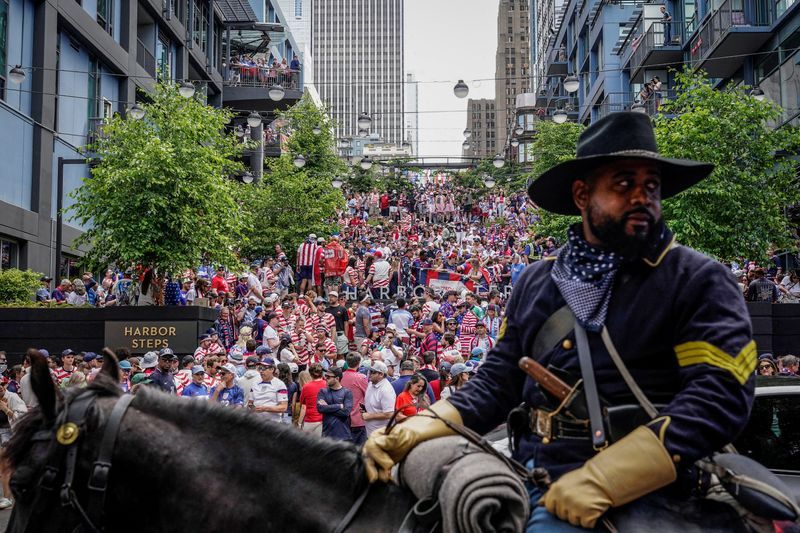
The 2026 FIFA World Cup has spread across 16 cities in North America, fundamentally reshaping how communities engage with the world's most watched sport. Reuters photographers embedded throughout the tournament have documented both the spectacle on the pitch and the profound social transformations unfolding in stadiums, streets, and neighbourhoods from Mexico City to Vancouver. Their observations reveal that this World Cup represents far more than a sporting event — it is a cultural phenomenon that has reconnected diaspora communities, broken down social barriers, and introduced the beautiful game to audiences who rarely experience it with such intensity.
In Mexico, where football runs through the veins of the nation, the World Cup has manifested itself differently across cities, yet with equal passion. Mexico City's legendary Estadio Azteca, which has hosted two World Cup finals throughout history, continues to dominate the tournament narrative, but photographers have discovered that the real story extends far beyond this iconic venue. In residential neighbourhoods throughout the capital, communities have reconfigured their physical spaces to accommodate soccer pitches, demonstrating how deeply embedded the sport is in Mexican urban planning and social life. The passion for football — what locals call "la pasion" — transcends economic boundaries and neighbourhood divisions, uniting residents in shared celebration.
Westward in Guadalajara, the tournament has awakened historical memories connected to Pele's 1970 visit, a moment now commemorated by a statue unveiled this year. Yet the most striking observation from photographers covering this western Mexican city concerns the unexpected friendships that blossomed between rival fan bases. Mexican and Colombian supporters, initially distinct in their allegiances, gradually integrated into each other's pre-match gatherings and celebrations, demonstrating how football can dissolve national boundaries and forge genuine human connections. This phenomenon suggests that the World Cup's real victory may lie not in winning matches but in building bridges between cultures.
Monterrey exemplifies how football has become woven into the fabric of Mexican social rituals. Rather than confining the sport to stadiums, locals gather in backyards for impromptu matches accompanied by traditional barbecue and cold beverages, transforming the tournament into an extension of everyday life. This integration of football into domestic and communal spaces reflects how thoroughly the sport has permeated Mexican culture, making the World Cup not an imported spectacle but a natural continuation of existing traditions.
Crossing into the United States, Miami presented an entirely different context. With its substantial Latin American population already well-established, the arrival of the World Cup felt less like an external imposition and more like an affirmation of the city's existing identity. The relentless Florida heat and humidity posed logistical challenges for photographers spending extended hours documenting the action, yet visiting supporters demonstrated remarkable resilience, treating uncomfortable weather as a minor inconvenience to their celebration. Miami's experience suggests that the World Cup gains greatest resonance in cities where football already occupies cultural prominence.
Texas embodied a distinctly American interpretation of hosting the tournament, where everything operated on a grander scale than in other venues. Enormous servings of Texas barbecue, expansive six-lane highways, and massive stadiums created an overwhelming sensory experience for international visitors unaccustomed to American spatial proportions. Texans' celebrated friendliness extended warmly to visiting supporters, and remarkably, even fans whose home nations were not competing actively supported other teams during matches. This generosity of spirit transcended the typical competitive intensity associated with football fandom, suggesting that the World Cup can cultivate unusual expressions of solidarity.
Witnesses to Argentina's matches in Texas described the atmosphere as electric, particularly during Lionel Messi's historic moment when he broke the all-time men's World Cup goal-scoring record. The collective roar from packed stadiums reflected a rare convergence of sporting achievement and global audience appreciation. For photographers like Hannah McKay, covering such moments revealed how football can transcend its role as mere entertainment, becoming instead a vehicle for witnessing human excellence and shared astonishment.
Atlanta's Mercedes-Benz Stadium, with its retractable roof and unconventional architecture, might have seemed to conflict with traditional football aesthetics, yet the Southern city's atmosphere proved palpable and energetic. Fan zones overflowed with crowds, restaurants transformed into impromptu viewing centres with televisions broadcasting matches, and commercial activity surged as businesses capitalised on the tournament's economic opportunities. This pattern repeated across multiple host cities, suggesting that the World Cup functions as a significant economic stimulus beyond its sporting dimensions.
Los Angeles presented a unique challenge and opportunity for photographers documenting immigrant communities. The sprawling city's characteristic pattern of car-dependent isolation gave way temporarily to increased pedestrian activity and street-level congregation. Various diaspora communities — Iranian, South Korean, and Mexican residents — seized the World Cup as an occasion to openly celebrate their ancestral nations through flags, cultural displays, and public gatherings. This public assertion of identity within a major American city carried particular significance given recent shifts in U.S. immigration policy, suggesting that the tournament provided space for communities to assert their belonging and cultural pride.
San Francisco's experience mirrored this pattern while adding another dimension. Carlos Barria observed how the tournament created opportunities for cultural exchange that extended beyond the football pitch itself. International residents embraced visible expressions of their heritage, while native-born Americans encountered cultures and traditions they might never otherwise explore. This mutual education process, Barria suggested, encapsulated the true spirit of the beautiful game — the capacity to bring strangers together and facilitate genuine cross-cultural understanding despite broader societal tensions around immigration.
Kansas City, straddling the Kansas-Missouri border, revealed how football integrates into communities where baseball and American football traditionally dominated the sporting landscape. Soccer's arrival did not displace existing sports but rather enriched the local sports ecosystem, generating enthusiasm and camaraderie among residents discovering or rediscovering the sport. The overwhelmingly positive atmosphere reflected communities finding common cause in celebrating athletic competition and gathering together for shared enjoyment.
Philadelphia presented a notable contrast to other host cities, where the World Cup's presence remained largely invisible except on match days near stadiums. For photographers accustomed to South African football culture, where tournaments dominate public discourse and atmosphere, Philadelphia's compartmentalized approach to the World Cup seemed peculiar. This observation reveals how different societies prioritize football within their broader cultural ecosystems, with American cities often treating the sport as one entertainment option among many rather than as a dominant social force.
New York embodied the tournament's global character through unexpected convergences of events and cultures. Norwegian supporters performing their traditional Viking row shared Times Square with Latin American fans conducting elaborate pre-match "banderazos," while the New York Knicks simultaneously captured headlines by winning the NBA championship for the first time in over five decades. For Dylan Martinez, this collision of sporting spectacles reinforced the city's reputation as never sleeping, always in motion, perpetually generating newsworthy moments. Boston's experience proved historically significant for photographer Brian Snyder, who had documented the 1994 World Cup in the same city. The transformation was striking — fan engagement and visible community participation had expanded dramatically in the intervening three decades, with local diaspora communities including Haitians, Moroccans, and Cape Verdeans celebrating their nations' participation alongside Boston's adopted embrace of Scotland's Tartan Army.
West Coast cities presented varied responses to the tournament. Vancouver proved more subdued than other host cities, with the World Cup's presence requiring active seeking rather than obvious immersion. For photographers like Agustin Marcarian, accustomed to Buenos Aires' passionate football culture, Vancouver's reserved atmosphere felt surprisingly cool. Conversely, Seattle's Pacific Northwest streets erupted in festive celebration, with residents embracing patriotic dress and complete entertainment experiences whenever the U.S. national team played. These divergent responses suggest that World Cup enthusiasm correlates not simply with hosting status but with each city's pre-existing relationship with football and its broader cultural values regarding public celebration and sporting passion.

