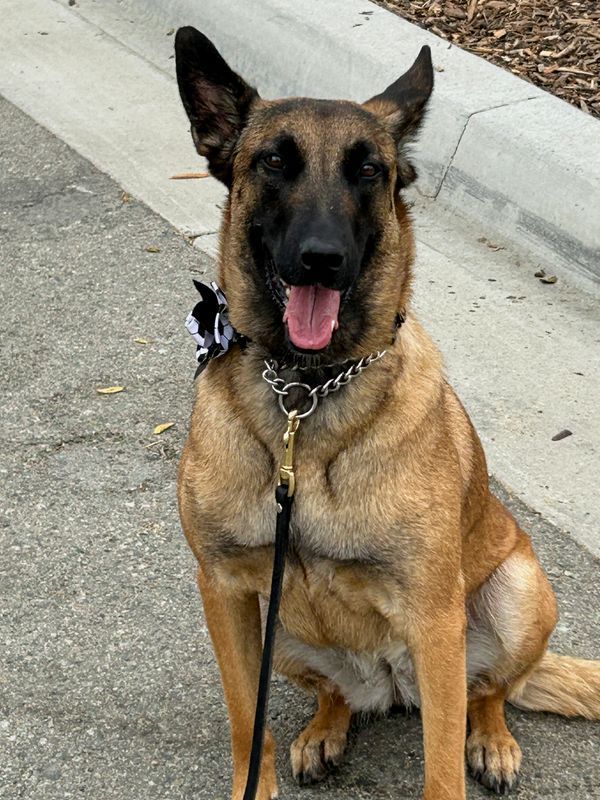
Security planners deploying dogs across the 2026 FIFA World Cup venues faced an unprecedented operational challenge: protecting a three-nation tournament spanning 16 cities while managing the behavioural and psychological dimensions of using animals in crowd control. Kali, a five-year-old Labrador Retriever stationed at Los Angeles Stadium, exemplified the approach—a gentle, well-mannered presence whose keen olfactory capabilities could detect explosives, firearms, and contraband that human officers might miss. The tournament's massive geographic footprint and geopolitical backdrop transformed routine stadium security into a complex coordination problem that forced security agencies to mobilise canine resources at unprecedented scale.
The underlying security environment demanded this mobilisation. The United States, co-hosting the event alongside Canada and Mexico, maintained active military tensions with Iran, whose national team competed in American venues. Beyond bilateral hostilities, the Trump administration's fractured diplomatic relationships with multiple participating nations created an atmosphere of heightened vigilance. Meanwhile, Mexico grappled with cartel violence triggered by government anti-narcotics operations occurring just months before tournament kick-off. These factors, combined with volatile inter-team rivalries and spontaneous protest activity—particularly surrounding Iran's matches in Los Angeles—established a threat landscape that required visible, credible security measures capable of detecting genuine dangers while reassuring international visitors.
Glen Kucera, heading Allied Universal Enhanced Protection Services, the largest private canine security provider in the United States, deployed approximately 300 of his company's 1,000 dog teams exclusively to World Cup operations. This single private contractor's contribution represented only a portion of the canine workforce. Federal agents brought Labrador Retrievers trained by the Bureau of Alcohol, Tobacco, Firearms and Explosives, each specialising in explosive detection. Local law enforcement—the Los Angeles County Sheriff's Department, for instance—contributed additional handlers and dogs including Buck, paired with officer Anthony Meyers. The scale reflected the tournament's complexity: matches required security at stadiums, training facilities, hotels, and transportation corridors simultaneously across three countries, creating logistical demands that exhausted conventional security resources and necessitated private-sector supplementation.
The geographic dispersion compounded coordination difficulties. Unlike previous World Cups concentrated within single nations, this event stretched security operations across North American infrastructure spanning multiple jurisdictions, time zones, and legal frameworks. Each city and stadium required customised threat assessments. Los Angeles faced the Iran match complications: security had to accommodate Iranian team members who were required to remain in Mexico, fly into the United States immediately before kickoff, and depart immediately afterwards—creating a fluid operational schedule that security personnel had to adjust continuously. Simultaneously, political demonstrations anticipated outside the stadium demanded crowd management protocols that balanced First Amendment protections with explosive detection capabilities. Vancouver's Canadian authorities developed an entirely separate multi-layered strategy, while Guadalajara introduced robotic dog technology supplementing organic canine units, revealing how different jurisdictions adapted detection approaches to local conditions and available resources.
The selection of dog breeds revealed deeper strategic considerations about security's visual and psychological dimensions. Kucera's deliberate preference for Labrador Retrievers over German Shepherds represented a calculated choice recognising that international spectators originated from nations with vastly different relationships to security apparatus and pet ownership. Many countries outside Western contexts associate large, imposing canine units with authoritarian policing, creating legitimate anxiety among attending families. Laboratories, by contrast, project approachability and friendliness while maintaining equivalent olfactory capabilities. This breed selection acknowledged that effective security encompasses not merely physical threat interdiction but also crowd psychology—maintaining public confidence and comfort while deterring malicious actors.
Kucera articulated the security model's philosophical foundation when stating that ninety-five percent of canine security constitutes visual deterrence rather than active detection. The presence of alert dogs stationed at stadium entrances sends a clear signal to genuinely dangerous actors that security measures are comprehensive and technologically sophisticated. Potential smugglers of explosives, firearms, or other dangerous materials confronting dozens of detection dogs across multiple checkpoints face elevated risk of apprehension, making the venue simply an unwise target. This deterrent effect multiplies when potential attackers cannot predict whether they encounter federal agents, local law enforcement, or private security—the uncertainty itself discourages attempts. The dogs essentially function as an insurance policy that transforms risk calculations for would-be threats.
Non-terrorist security concerns equally animated the deployment strategy. International soccer culture normalises celebratory fireworks following goals or victories, particularly among supporters from nations where such displays carry cultural significance. However, stadium environments filled with compressed crowds create catastrophic risk scenarios if fireworks ignite inside confined spaces. Security personnel recognised that well-intentioned fans might inadvertently introduce prohibited pyrotechnics, necessitating detection mechanisms beyond visual inspection. Explosive-detection dogs could identify gunpowder residues and other pyrotechnic compounds that casual screening might overlook, preventing genuine accidents rather than merely interdicting malicious weapons.
Iran's participation generated the tournament's most acute security challenges, requiring security planners to manage not only geopolitical tensions and explicit protest activity but also the Iran team's exceptional logistical constraints. The team's required isolation in Mexico before matches meant security personnel never achieved the routine familiarity and pattern-recognition advantages of standard tournament preparation. Iran's matches against New Zealand and Belgium in Los Angeles, followed by their final group encounter with Egypt in Seattle, required security organisations to maintain heightened readiness across multiple states and time zones specifically because Iran's participation sparked organised political demonstrations. Dogs became not merely explosives detectors but crowd-management assets capable of establishing perimeters and enforcing security zones during politically charged events.
The tournament's ultimate success—with no security incidents attributable to breaches in canine detection—validated the operational approach, though this positive outcome cannot be cleanly attributed solely to the dogs versus other security layers. What the deployment definitively accomplished was creating visible, comprehensive security infrastructure that international spectators recognised as serious and credible. When thousands of fans from dozens of nations arrived at stadiums, they encountered multiple detection dogs at every major access point, immediately recognising they were being subjected to systematic screening. This visibility achieved Kucera's stated objective: making clear to prospective troublemakers that attacking a World Cup venue presented substantially elevated risks compared to softer targets.
For Southeast Asian readers and security planners considering major regional events—from ASEAN summits to regional sports tournaments—the North American World Cup canine deployment offers instructive lessons. The model demonstrates that effective large-scale security requires layered approaches combining technology (explosive detection), personnel (trained handlers), and psychology (visible deterrence). The strategic choice of friendly dog breeds while maintaining serious detection capabilities illustrates how security planners can balance safety imperatives with hospitality and international visitors' comfort. The geographic dispersion across three nations and sixteen cities revealed that modern transnational events demand security coordination that transcends traditional law-enforcement boundaries, requiring private-sector partnerships and real-time information sharing across jurisdictions.
Moreover, the Iran matches illuminated how geopolitical tensions can transform routine sporting events into security flashpoints requiring adapted protocols. Southeast Asian nations hosting major tournaments must anticipate that international participation inevitably creates political dimensions extending far beyond the sporting competition itself. The dogs ultimately represented not merely detection technology but symbols of security readiness that allowed the tournament to proceed despite substantial underlying tensions. Their presence communicated to international spectators that organisers took threats seriously while implementing measures proportionate to actual risks—neither creating fortress atmospheres that alienate fans nor dismissing legitimate security concerns. As regional powers increasingly compete for major sporting and diplomatic events, this balanced security approach may offer valuable precedent for managing the inevitable intersection of international competition, geopolitical complexity, and public safety.

