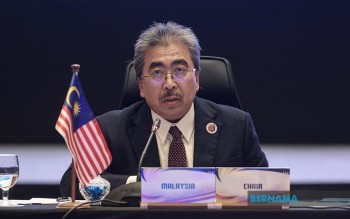
The World Trade Organization stands at a critical juncture and must fundamentally reshape its institutional frameworks to reflect the realities of contemporary global commerce, according to Malaysia's Investment, Trade and Industry Minister Datuk Seri Johari Abdul Ghani. Speaking at the 39th Asia-Pacific Roundtable in Kuala Lumpur on June 30, Johari articulated growing concerns within the region about whether the multilateral trading body remains equipped to address the strategic and economic challenges facing member nations in an increasingly fractious geopolitical environment.
When the WTO was established in the 1990s, its founding principles reflected a distinct historical moment when policymakers broadly embraced the notion that dismantling trade barriers and expanding cross-border market access represented the primary pathway to prosperity and international peace. That consensus, however, has eroded substantially. Contemporary economic strategy now operates within an entirely transformed context where governments prioritize considerations that would have seemed peripheral or subordinate in the organization's early years. The calculus of national interest has shifted decisively, placing greater emphasis on resilience and the capacity to withstand external economic shocks, technological self-sufficiency, and the ability to operate with reduced dependence on potentially unreliable trading partners.
The minister emphasized that strategic competition among major powers has fundamentally altered how nations approach trade and industrial policy. Governments increasingly view certain sectors and capabilities through a security lens rather than purely commercial one. This philosophical reorientation represents perhaps the most significant challenge to the WTO's foundational logic. Where the institution once championed near-universal market opening as an inherent good, contemporary policymakers grapple with the tension between economic efficiency and strategic vulnerability. Supply chain resilience has emerged as a dominant concern, particularly following the pandemic's exposure of dangerous dependencies in critical sectors including semiconductors, pharmaceuticals, and rare earth elements. Nations across the region and globally have begun actively restructuring their trade relationships and industrial policies to reduce what they perceive as dangerous concentrations of supply.
Johari articulated a sobering assessment of the organization's future relevance without meaningful adaptation. The WTO faces a genuine risk of gradually becoming a marginalized institution if it cannot evolve beyond its original mandate to accommodate these new realities. This constitutes no mere rhetorical flourish but reflects growing apprehension within regional capitals that the organization lacks mechanisms to address discriminatory practices that do not fit neatly within its traditional dispute resolution framework. Strategic subsidies, intellectual property disputes tied to national security concerns, and industrial policies designed to nurture technological leadership operate in grey zones where the WTO's existing architecture struggles to provide clarity or effective remedies.
From Malaysia's perspective, this institutional evolution carries particular significance. As a Southeast Asian economy deeply integrated into global supply chains yet seeking greater strategic autonomy, Malaysia must navigate an increasingly complex landscape where traditional free-trade ideology confronts legitimate concerns about economic vulnerability and technological sovereignty. The nation functions simultaneously as a trading hub, a production center for critical electronics and semiconductors, and a consumer seeking secure access to essential imports. These overlapping interests create inherent tensions that only a reformed and more flexible multilateral system could accommodate effectively.
The minister stressed that the multilateral trading system remains essential precisely because geopolitical competition has intensified rather than abated. Credible multilateral rules acquire greater importance, not less, when great-power rivalry threatens to destabilize international commerce. The WTO and similar institutions function as buffers against economic tensions metastasizing into broader geopolitical conflict. Without functional multilateral mechanisms for managing disputes and establishing transparent rules of engagement, bilateral tensions could easily escalate, creating a cascade of retaliatory measures that would devastate interconnected regional economies. Southeast Asia's prosperity depends fundamentally on an orderly international trading environment; wholesale collapse of multilateral frameworks would produce severe consequences for the entire region.
Yet maintaining the status quo offers no viable path forward. Malaysia's position, as articulated by Johari, reflects a sophisticated understanding that continued support for the multilateral system requires simultaneous acknowledgment that the system itself must undergo substantial reform. This represents not a rejection of free trade principles but rather a recognition that those principles must coexist with legitimate state concerns about strategic resilience and technological capacity. The balance between openness and protection requires recalibration to reflect contemporary priorities without abandoning the institutional frameworks that have generally served global commerce reasonably well.
The 39th Asia-Pacific Roundtable, organized by the Institute of Strategic and International Studies (ISIS) Malaysia under the banner of the ASEAN Institutes of Strategic & International Studies network, convenes leading policymakers, diplomatic officials, military strategists, academic researchers, corporate executives, and analytical experts throughout June 30 to July 2, 2026. The conference theme, "Accelerating Agency and Action," signals recognition that the region must move beyond analysis toward concrete policy responses addressing the interconnected geopolitical, economic, and security challenges reshaping the Asia-Pacific landscape. Johari's intervention at this gathering underscores how trade architecture reform has become central to regional strategic discussions.
The implications extend well beyond technical discussions among trade economists. A dysfunctional or irrelevant WTO creates space for parallel regional arrangements that may fragment the global system into competing blocs with incompatible standards and rules. Southeast Asia, positioned between major powers and dependent on stable access to multiple markets, faces particular peril from such fragmentation. Malaysia and neighboring nations benefit from a rules-based system that prevents arbitrary discrimination and provides small and medium-sized economies with a platform to challenge larger trading partners' unfair practices. Without a functioning WTO, such countries lose their most effective recourse against economic coercion.
The challenge confronting the institution involves incorporating legitimate security and resilience considerations while maintaining the core prohibition against arbitrary and unjustified protectionism that would simply enable economically inefficient industries to hide behind nationalist rhetoric. This requires nuanced rulemaking that distinguishes between genuine strategic necessities and pretextual protectionism. The task demands political will from major trading nations to accept constraints on their behavior and from smaller nations to participate constructively in developing new frameworks rather than fragmenting into competing alignments.
Johari's remarks reflect Malaysia's pragmatic approach to these tensions. The nation cannot afford wholesale rejection of liberal trade principles given its integration into global commerce; simultaneously, it cannot ignore legitimate concerns about vulnerability and strategic autonomy. This balancing act describes the fundamental challenge facing policymakers throughout Southeast Asia. The WTO must evolve to accommodate these diverse needs, or risk irrelevance as nations pursue alternative arrangements outside multilateral frameworks. For Malaysia and the region, the stakes in this institutional evolution extend far beyond abstract questions of trade governance to encompass prosperity, security, and geopolitical positioning in an increasingly competitive world.

