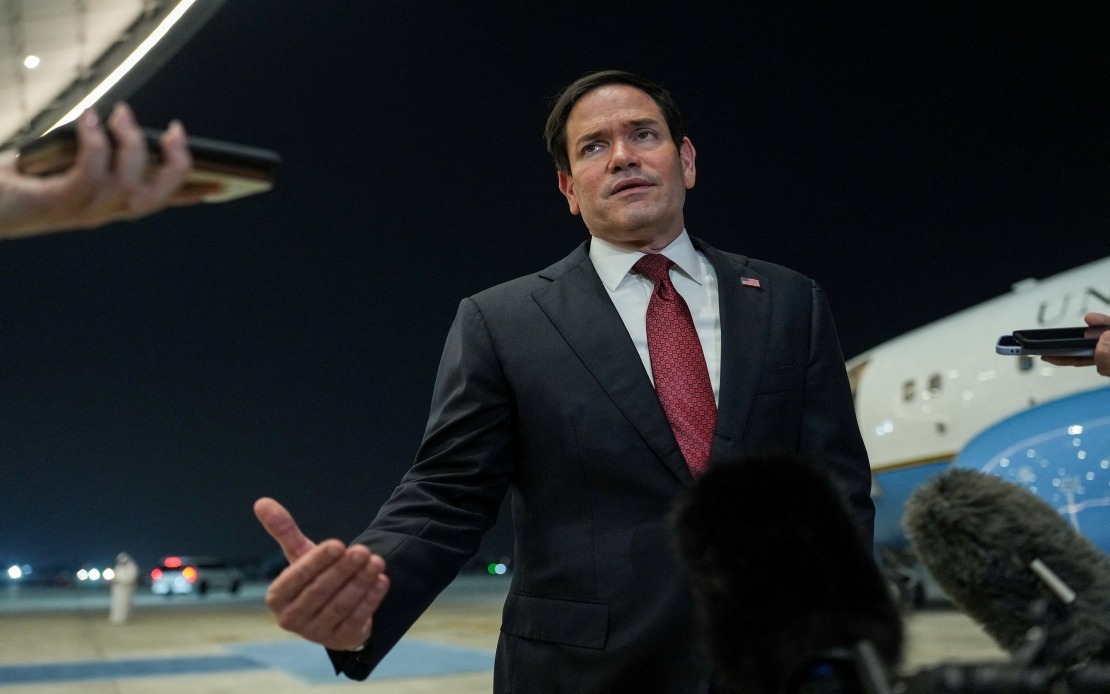
The United States and China are moving forward with arrangements for a high-level presidential visit scheduled for September, according to US Secretary of State Marco Rubio, signalling that both nations intend to maintain high-level engagement despite escalating political disputes. Speaking to journalists at Joint Base Andrews on Sunday before traveling to a regional diplomatic gathering, Rubio expressed confidence that Chinese President Xi Jinping would complete his planned trip to American soil, with preparatory teams from Beijing continuing their groundwork for the engagement.
The anticipated September visit represents a significant moment for bilateral relations at a time when Washington and Beijing are locked in disagreements over multiple fronts. US President Donald Trump levelled accusations against China on Thursday of attempting to interfere in the 2020 American presidential election, which Trump lost to Joe Biden. The Chinese government promptly denied the allegations, rejecting the charge as baseless. Such recriminations underscore the fraught nature of current US-China relations, yet the determination to proceed with Xi's visit suggests both capitals recognise the necessity of maintaining diplomatic channels even amid serious disputes.
Rubio's statement carries particular weight given his role as the nation's top diplomat and his typically hawkish stance toward Beijing. His explicit confirmation that Chinese officials continue sending advance delegations to coordinate logistics for the visit indicates that despite the recent rhetoric, practical groundwork remains uninterrupted. The secretary of state's message appeared calibrated to signal American receptiveness to the engagement whilst acknowledging that disagreements between major powers are both inevitable and manageable through sustained dialogue.
The original invitation emerged from Trump's May visit to Beijing, during which he extended the formal request for Xi to visit the White House. The proposed date of September 24 was agreed upon during that engagement, establishing a timeline that now appears locked in despite the intervening diplomatic friction. For Southeast Asian observers, the persistence of this high-level engagement despite tensions offers insights into how the world's two largest economies are attempting to compartmentalise disputes whilst preserving broader relationship structures.
Rubio's remarks emphasised that major power competition necessarily generates disagreements, yet this reality need not derail communication or damage the fabric of bilateral relations. His framing positioned dialogue as a shared responsibility between Washington and Beijing, underscoring that both nations bear accountability not only to their own populations but to the international community more broadly. This perspective reflects a nuanced diplomatic approach that acknowledges rivalry whilst insisting on the imperatives of engagement.
The timing of Rubio's comments proves significant, arriving as he departed for the Association of Southeast Asian Nations (ASEAN) foreign ministers' meeting scheduled for Manila. The proximity of this regional gathering to the announcement creates an opportunity for informal discussions regarding the planned presidential visit. Chinese Foreign Minister Wang Yi's confirmed attendance at the Manila meeting provides an immediate venue for US and Chinese representatives to continue coordination efforts away from the glare of official announcements.
For ASEAN nations, the maintenance of Xi's visit to Washington carries strategic implications extending well beyond bilateral US-China relations. Southeast Asian governments have long sought to encourage sustained American engagement with the region whilst avoiding being forced to choose between Washington and Beijing. The persistence of high-level diplomatic engagement between the two powers, even amid tensions, creates space for regional players to pursue balanced foreign policies. Conversely, should US-China relations deteriorate sufficiently to result in the cancellation or significant downscaling of such visits, regional states might face increased pressure to clarify their positions in what could become a more polarised strategic environment.
China's Foreign Ministry confirmed that both sides maintain active communication channels regarding the planned late-year visit, essentially echoing Rubio's assessment whilst adding official Chinese validation to the continued preparations. This reciprocal confirmation from Beijing suggests that despite public disagreements on specific issues, the fundamental commitment to maintaining executive-level engagement remains intact. The parallel public statements from both capitals serve to reassure stakeholders that the relationship, whilst troubled, possesses sufficient structural resilience to withstand periodic crises.
The broader context of US-China competition encompasses trade disputes, technology restrictions, military posturing in the South China Sea, and competing influence operations throughout the Indo-Pacific region. Within this complex landscape, summit-level meetings serve as critical opportunities for leaders to directly communicate intentions, establish boundaries, and explore possibilities for managed competition. The scheduled September visit thus represents more than ceremonial diplomatic ritual; it constitutes a substantive opportunity for Trump and Xi to address accumulated grievances and potentially reset parameters for ongoing bilateral engagement.
For Malaysia and other Southeast Asian nations, the sustainability of US-China diplomatic engagement matters considerably. A region characterised by unmanaged great power competition generates instability, uncertainty, and pressure on smaller states to take sides in ways that contradict national interests. The commitment of both Washington and Beijing to maintain high-level dialogue, even when disagreeing publicly on matters of significant concern, suggests they recognise mutual interests in avoiding complete rupture. Rubio's reassurance that preparations continue unabated sends a message that despite contemporary tensions, neither power intends to allow disputes to metastasise into comprehensive confrontation that would reshape the regional order.
The September visit, assuming it proceeds as planned, will provide critical talking points regarding technology, trade, and strategic competition. Whether Xi's trip ultimately strengthens bilateral stability or merely provides a temporary pause in escalating tensions remains to be seen. What appears clear, however, is that despite profound disagreements on matters ranging from electoral interference to regional security, both the United States and China are signalling their preference for engagement over isolation. This posture, however fragile and contested, offers Southeast Asian governments some reassurance that regional stability remains possible even as American and Chinese strategic competition intensifies.

