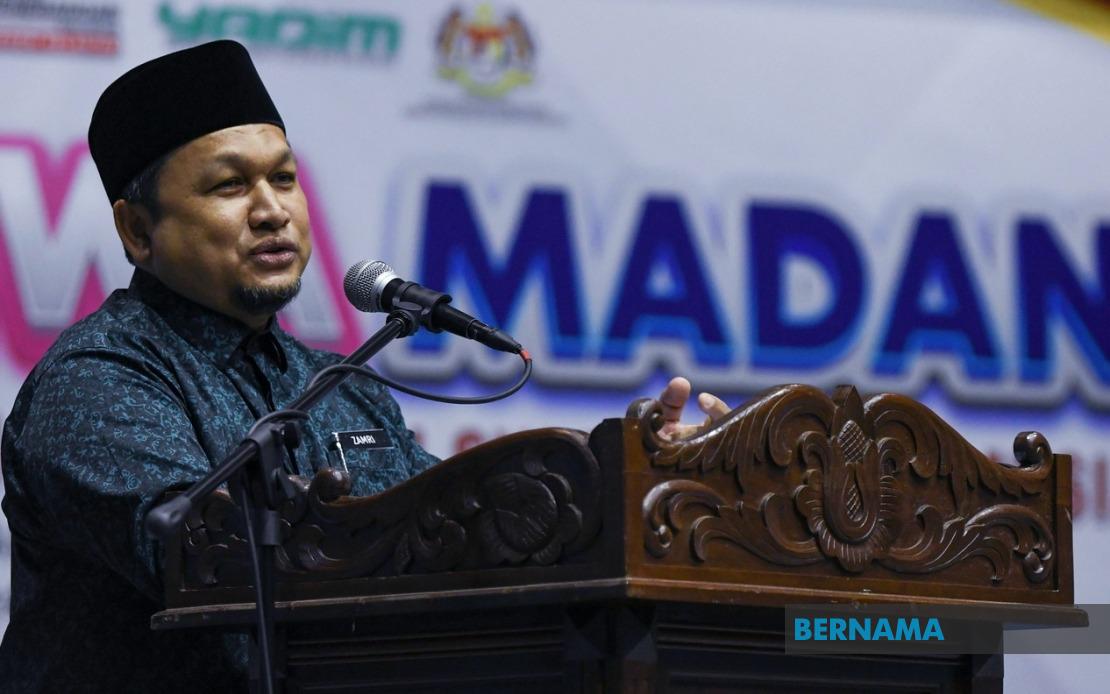
The Malaysian government's initiative to establish clearer accreditation standards for religious figures operating on digital platforms has found strong backing from Yayasan Dakwah Islamiah Malaysia (YADIM), the country's primary Islamic outreach foundation. Zamri Zainal Abidin, YADIM's chief executive, framed the proposal as a necessary safeguard in an era when social media has become the dominant avenue for Islamic teaching and religious guidance. The foundation views the measure not as censorship but as a credibility checkpoint that will help preserve the authenticity of Islamic instruction in online spaces where misinformation spreads rapidly and unchecked.
The crux of YADIM's position rests on a fundamental concern: the digital landscape has lowered barriers to religious authority. Without formal qualification requirements, almost anyone can present themselves as an "ustaz" or preacher on social media platforms, irrespective of their actual knowledge of Islamic theology or jurisprudence. This democratisation of religious authority, while appearing inclusive, creates substantial risks. Those seeking religious guidance—particularly younger Malaysians who increasingly turn to TikTok, YouTube, and Instagram rather than traditional mosque sermons—face difficulty distinguishing between qualified scholars and self-appointed speakers with minimal grounding in Islamic learning. The problem is compounded by the sheer volume of religious content now circulating; verification becomes logistically challenging for ordinary users.
Zamri emphasized that the framework would not function as a blanket restriction on dakwah activities or erect barriers against sincere individuals wanting to share Islamic knowledge. Instead, it aims to establish baseline standards ensuring that those offering spiritual guidance possess foundational competency. This distinction is crucial for public acceptance: the framing positions regulation as quality assurance rather than suppression. The Foundation argues that implementing such standards protects both religious institutions' credibility and the integrity of Islamic teachings themselves. When unqualified speakers distort concepts or misrepresent religious principles—whether through genuine misunderstanding or deliberate manipulation—they damage public trust in the entire religious establishment.
The vulnerability of young audiences particularly concerns YADIM leadership. Social media algorithms typically prioritise engaging content over accuracy, meaning charismatic but theologically unsound preachers can accumulate massive followings. Young people absorbing religion through viral clips rather than comprehensive study risk developing fragmented or skewed understanding of Islamic principles. Furthermore, some online speakers exploit their audience's trust for financial gain through solicitations or dodgy financial schemes marketed as Islamic investments. Without accreditation mechanisms, victims have limited recourse and the broader Muslim community bears reputational damage.
YADIM's support follows the announcement by Minister in the Prime Minister's Department (Religious Affairs) Dr Zulkifli Hasan, signalling government commitment to this regulatory direction. YADIM's endorsement carries weight given its status as the government's official dakwah agency operating under the Prime Minister's Department. The foundation positioned itself as a natural partner in implementation, noting it has already institutionalised similar practices. YADIM-trained preachers, including participants in its Daie Muda (Young Preacher) programme, currently receive formal accreditation from the Federal Territories Mufti Department. This existing framework serves as proof-of-concept that rigorous certification is administratively feasible and can operate alongside vibrant Islamic outreach.
The timing of this proposal reflects broader regional conversations about online content regulation and digital governance. Southeast Asian nations are grappling with balancing free expression against protecting populations from harmful misinformation. For Malaysia, where religion intersects with national identity and social cohesion, the stakes feel particularly high. Religious misinformation can inflame communal tensions or undermine interfaith relations, making the question of online religious content governance a matter of public interest beyond purely theological concerns.
Implementing such a framework will require careful operational design. Who determines accreditation criteria? How do authorities avoid accusations of bias or political manipulation? Will the process be transparent and appealable? These practical questions loom large, particularly given Malaysia's religious diversity and the political salience of Islam in national discourse. YADIM's framing emphasises that accreditation should enhance rather than diminish the accessibility of legitimate religious teaching, but scepticism from some quarters is inevitable. Digital preachers with large followings might resist regulation, and civil liberties advocates could raise concerns about state oversight of religious speech.
The proposal also raises interesting questions about enforcement and technological capacity. Social media platforms operate across borders and according to their own community standards. National accreditation schemes have limited leverage over platforms like TikTok or unaffiliated international services. Malaysian authorities would likely need to work through platform cooperation or domestic legal requirements for content creators, adding complexity to implementation. Additionally, informal Islamic teaching—study circles, WhatsApp groups, home lectures—exist outside institutional oversight and would be difficult to regulate without appearing intrusive.
Yet YADIM's argument that some standards are preferable to the status quo appears pragmatic. The foundation is essentially advocating for professional credentialing analogous to existing frameworks in other sectors. Just as medical practitioners and legal advisors undergo qualification and registration, YADIM suggests religious teachers should too. This approach appeals to believers' own interests: most would prefer their spiritual guidance from someone with genuine expertise. The challenge lies in building consensus around implementation details while preserving the dynamism that has made Islamic teaching in Malaysia vibrant and culturally responsive.
The government's proposal and YADIM's backing represent a significant moment in Malaysia's approach to religious governance in the digital age. As online platforms continue reshaping how Malaysians access information and guidance, ensuring quality and authenticity in religious content has become a legitimate policy concern. Whether the proposed framework achieves its aims without creating unintended restrictions will depend heavily on how authorities design and administer it. For now, YADIM's public support signals that Malaysia's established Islamic institutions see value in strengthening oversight over digital religious authority.

