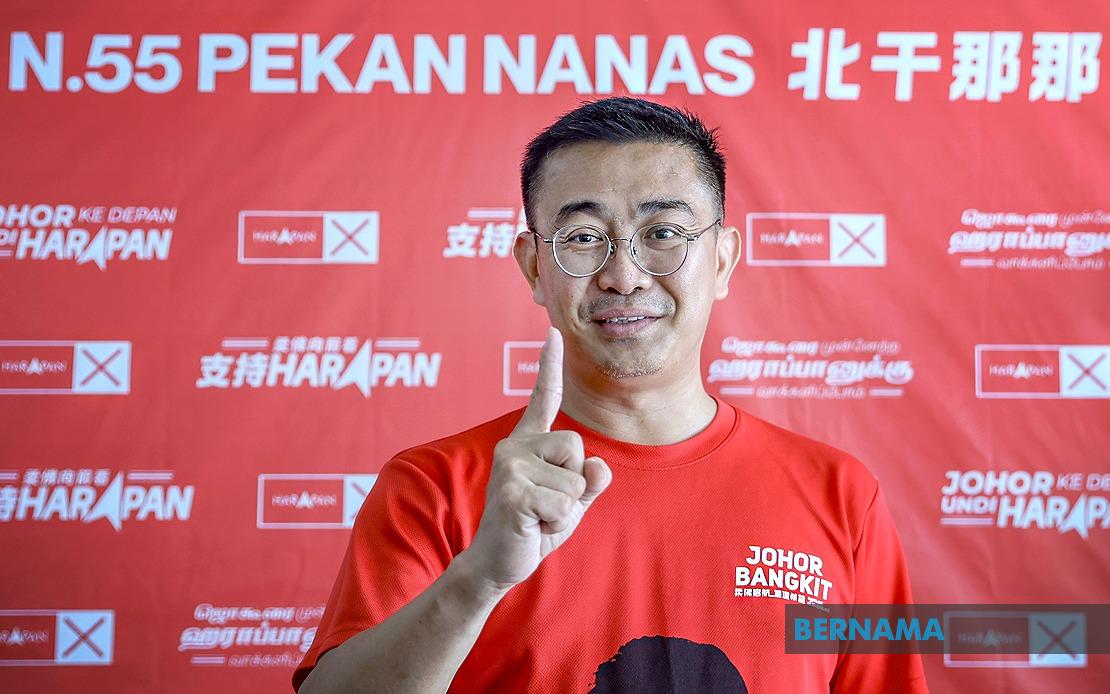
Pakatan Harapan candidate Yeo Tung Siong is mounting a determined bid to reclaim the Pekan Nanas state seat in Johor, drawing confidence from his previous tenure as the constituency's representative from 2013 to 2022. The former assemblyman's campaign strategy revolves around demonstrating tangible achievements during his earlier service, positioning his track record as the primary argument for why voters should return him to office in this election cycle.
Yeo's confidence appears grounded in substantial grassroots engagement. Throughout the campaign period, he has conducted extensive outreach across Pekan Nanas, estimating that he has personally connected with approximately 60 per cent of the electorate through a comprehensive mix of engagement activities. These include traditional walkabout programmes, community talks, organised group meetings, house-to-house visits, and informal engagements at public markets, flea markets, and local restaurants. This intensive voter contact strategy has reportedly generated encouraging responses, suggesting a receptive constituency base that remembers his previous work.
The former vice-principal and discipline teacher emphasises accessibility and direct service delivery as hallmarks of his representation style. Rather than relying on formal protocols or intermediaries, Yeo positions himself as readily contactable and willing to personally address constituent concerns. This hands-on approach reflects a broader calculation that voters in the constituency value representative responsiveness, particularly in a rural and semi-rural area like Pekan Nanas where personal connections between politicians and constituents carry significant weight.
During his two terms as assemblyman, Yeo secured RM500,000 in government allocation specifically to address the Pulai River's flow through straightening works—a project aimed at resolving chronic flooding issues that have long plagued the area. Beyond infrastructural solutions, he collaborated with private sector partners to implement drainage improvements at Kampung Melayu Raya. These concrete achievements demonstrate a capacity to navigate both government bureaucracy and private partnerships, a skill set valuable in a state development context where multiple stakeholders must be coordinated.
The campaign interactions have revealed two dominant voter concerns: traffic congestion and employment opportunities. Both issues carry particular salience in Pekan Nanas given its geographic positioning relative to Johor Bahru and its relatively limited industrial base compared to other parts of the state. These grievances are not unique to the constituency but reflect broader Southeast Asian challenges as urbanisation and inter-state mobility increase regional integration demands.
Yeo's response prioritises infrastructure connectivity. He has committed to pushing for two strategic shortcut route projects—one linking Ulu Pulai to Pekan Nanas, and another connecting Pulai to the Sri Bunian junction. These routes are calculated to reduce travel time between Pontian and Johor Bahru, potentially improving market access and employment reach for local residents. Such infrastructure projects have multiplier effects beyond simple congestion relief; they expand economic opportunity zones and integrate peripheral constituencies into broader regional labour markets.
On employment, Yeo proposes to revive a career carnival programme that he previously organised during his tenure as assemblyman. This initiative would partner with major companies operating in or near Pekan Nanas to directly connect job seekers with employers, addressing the structural employment gap that persists in constituencies lacking significant local industrial presence. The carnival model is cost-effective and leverages existing private sector relationships, suggesting a pragmatic understanding of governance constraints.
Social welfare support rounds out his platform. Yeo emphasises ensuring that vulnerable residents receive appropriate assistance through government channels including the Social Welfare Department (JKM) and the Social Security Organisation (SOCSO). This dimension addresses poverty-related concerns and reflects recognition that not all constituency issues stem from physical infrastructure or macroeconomic conditions; targeted social support remains necessary for household economic resilience.
The electoral context sees Yeo facing a direct contest against incumbent Tan Eng Meng from Barisan Nasional. This one-on-one configuration simplifies voter choice and potentially favours the candidate with stronger personal brand recognition and demonstrated service record. The presence of an incumbent challenger, rather than an entirely fresh candidate, also frames the election as a referendum on continuity versus change within the constituency.
Yeo's campaign narrative rests on demonstrating that his two-term track record justifies confidence in his ability to continue delivering for Pekan Nanas. This approach appeals particularly to voters prioritising proven performance over political rhetoric or party affiliation alone. In a Malaysian political context where many voters retain memories of specific developments or failures within their constituencies, a former representative's ability to point to tangible achievements carries substantial persuasive weight.
The Pekan Nanas contest reflects broader patterns within the 16th Johor state election, where many races feature candidates attempting to reclaim seats lost in previous electoral cycles. Yeo's campaign exemplifies the strategic calculus that previous service and demonstrated competence, combined with intensive voter engagement, can overcome the advantages typically enjoyed by incumbent candidates. Whether this approach successfully reverses the seat dynamics will become clear when voters make their final determination.

