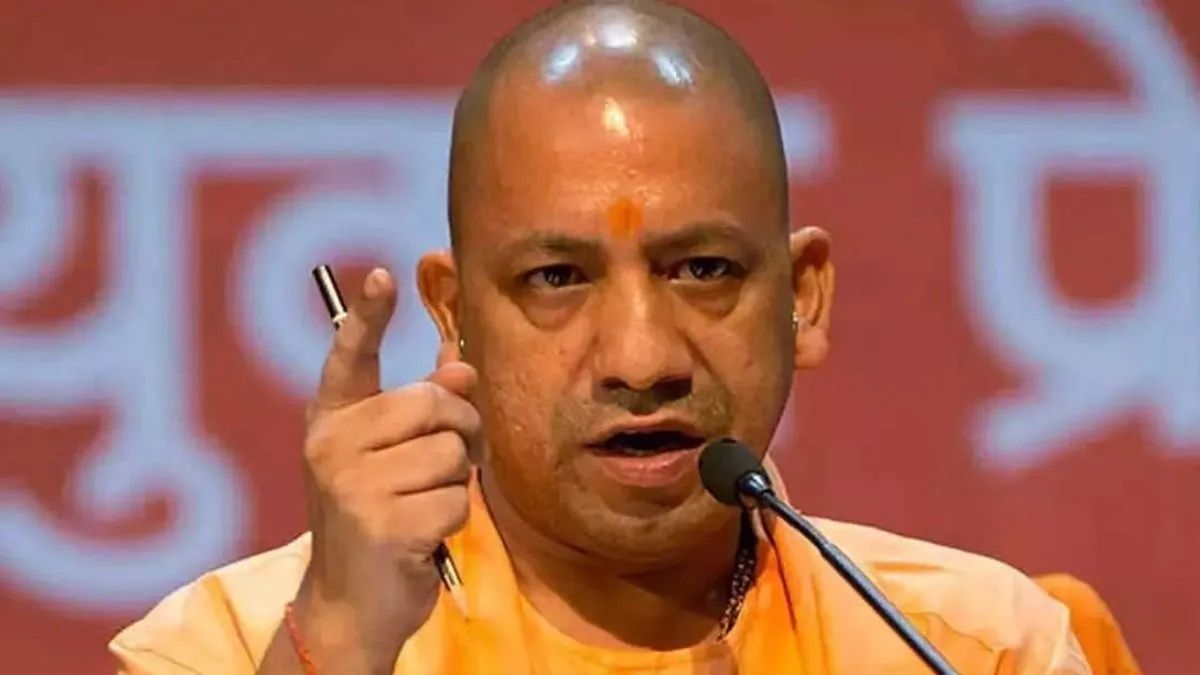
The controversy engulfing India's newly completed Ram Temple in Ayodhya has escalated into a high-stakes political confrontation, with Uttar Pradesh Chief Minister Yogi Adityanath drawing a hardline stance after authorities registered the first formal complaint in a donation-theft investigation. Speaking at a public event in Deoria on Friday, Adityanath framed the case as more than a financial matter, positioning it as a struggle to protect the sanctity of religious conviction itself and warning that anyone undermining popular faith would face serious repercussions.
The administration's swift movement on the case follows the completion of a Special Investigation Team report, which triggered immediate action by state authorities. Adityanath's remarks suggest the government views the incident not merely as administrative or criminal misconduct but as a potential assault on the spiritual significance that the Ram Temple represents to millions of Hindu believers across India and the diaspora. His repeated emphasis on separating truth from falsehood indicates recognition that the emerging narrative could have profound implications for how the temple, inaugurated with considerable fanfare, is perceived in the years ahead. The chief minister's language—invoking religious devotion and protecting dharma—reflects the deeply emotive nature of the temple's construction and what it symbolizes in contemporary Indian politics.
Adityanath's framing of opposition extends beyond the immediate theft investigation to encompass historical grievances involving the temple's construction itself. He specifically targeted the Indian National Congress and the Samajwadi Party, accusing both organisations of historical resistance to the Ram Janmabhoomi movement and the temple's development. The Congress party, he contended, had previously rejected the historical existence of Ram and sought to block the temple's construction through prolonged legal battles and what he characterized as an extensive legal strategy. This rehashing of old disputes suggests the ruling Bharatiya Janata Party (BJP) intends to use the current controversy as an opportunity to reinforce its political narrative about defending Hindu interests against secular opposition.
The chief minister's accusations against opposition parties grew more pointed when addressing their alleged treatment of Hindu religious observances and celebrations. Adityanath claimed these parties had historically fired upon Ram chant devotees, disrupted Ram Navami celebrations, banned Krishna Janmotsav festivities, and restricted the Kanwar Yatra pilgrimage—a seasonal religious journey undertaken by millions. He also referenced communal tensions, invoking the Lar riot specifically, to suggest a pattern of hostility toward Hindu religious expression under previous administrations. These historical references serve dual purposes: they validate the BJP's claim to be the true guardian of Hindu interests, while simultaneously delegitimizing opposition parties' moral authority to comment on the current donation case.
The political dimension became even more pronounced as Adityanath dismissed criticism from opposition quarters as stemming from ulterior motives rather than genuine concern for religious propriety. He argued that parties now raising concerns about faith tampering were the very organisations that had previously worked against temple construction and Hindu religious freedoms. This argumentative strategy—essentially claiming that opposition critique on this issue is inherently tainted by historical anti-Hindu positions—aims to preempt legitimate questions about governance and accountability by framing them as politically motivated attacks. For Malaysian observers, this dynamic illustrates how religious and historical grievances become weaponized in India's political discourse, often complicating objective institutional accountability.
Adityanath's appeal directly to Ram devotees carried an implicit warning against allowing emotions to be exploited for political purposes. By urging believers not to heed allegations from opposition sources, the chief minister attempted to maintain public support for the government's investigative process while simultaneously discrediting alternative narratives before they gain traction. This approach risks creating a bifurcated interpretation of events depending on political allegiance—a phenomenon increasingly common in Indian politics where factual consensus becomes elusive. The instruction to opposition parties to either present concrete evidence or cease making allegations suggests the government expects to control the narrative around whatever the investigation reveals.
The reference to a "double engine government" stopping plunder by the Samajwadi Party indicates how the donation case has become entangled with broader claims of administrative competence and anti-corruption credentials. By positioning the BJP-led state and national governments as reformist forces reversing previous malfeasance, Adityanath seeks to position any findings from the investigation as vindication of the ruling coalition's governance model. However, this framing also creates expectations that any lapses uncovered will be comprehensively addressed, as failure to do so would contradict the government's own anti-corruption messaging.
The temple donation theft case carries significance beyond Uttar Pradesh, resonating throughout India's Hindu-majority regions and among the global Indian diaspora for whom Ayodhya holds profound religious importance. The temple's completion after decades of legal and political struggle represented a watershed moment in Hindu nationalism's political trajectory in India. Any scandal involving misappropriation of funds donated in religious faith strikes at the symbolic purity of this achievement and threatens to tarnish what many supporters view as a historic vindication of their political and cultural vision. Adityanath's aggressive response reflects acute awareness that the reputational stakes extend far beyond the immediate financial loss involved.
For Malaysian and Southeast Asian contexts, this controversy illuminates broader tensions surrounding religious institutions, political authority, and accountability that transcend borders. Across the region, religious sites and donations occupy contested spaces where spiritual significance intersects with institutional management and financial governance. How Indian authorities resolve this particular case—whether they pursue investigations transparently or appear to shield connected parties—will influence perceptions about the relationship between political power and religious institutions throughout South Asia. The controversy also demonstrates how historical grievances and political polarization can compromise the capacity for dispassionate institutional accountability.
Adityanath's insistence that investigation proceedings should proceed without political commentary reflects administrative necessity, yet the chief minister himself immediately contextualized findings within his political worldview. This contradiction highlights the difficulty of maintaining institutional integrity when religious institutions become intertwined with political movements and when leaders simultaneously invoke their roles as government officials and custodians of religious sentiment. The coming weeks will reveal whether the Special Investigation Team's findings are handled with the transparency and thoroughness that would distinguish this case from the political theatre that has thus far surrounded it.
The broader challenge facing the Uttar Pradesh administration involves demonstrating that governance mechanisms function independently of political considerations while the chief minister simultaneously frames the investigation through an explicitly political lens. For Indian citizens and international observers assessing institutional development in India, the manner in which this donation case concludes will offer insights into whether religious institutions can be simultaneously spiritually significant and subject to ordinary accountability standards, or whether the two dimensions inevitably diverge when political stakes run high.

