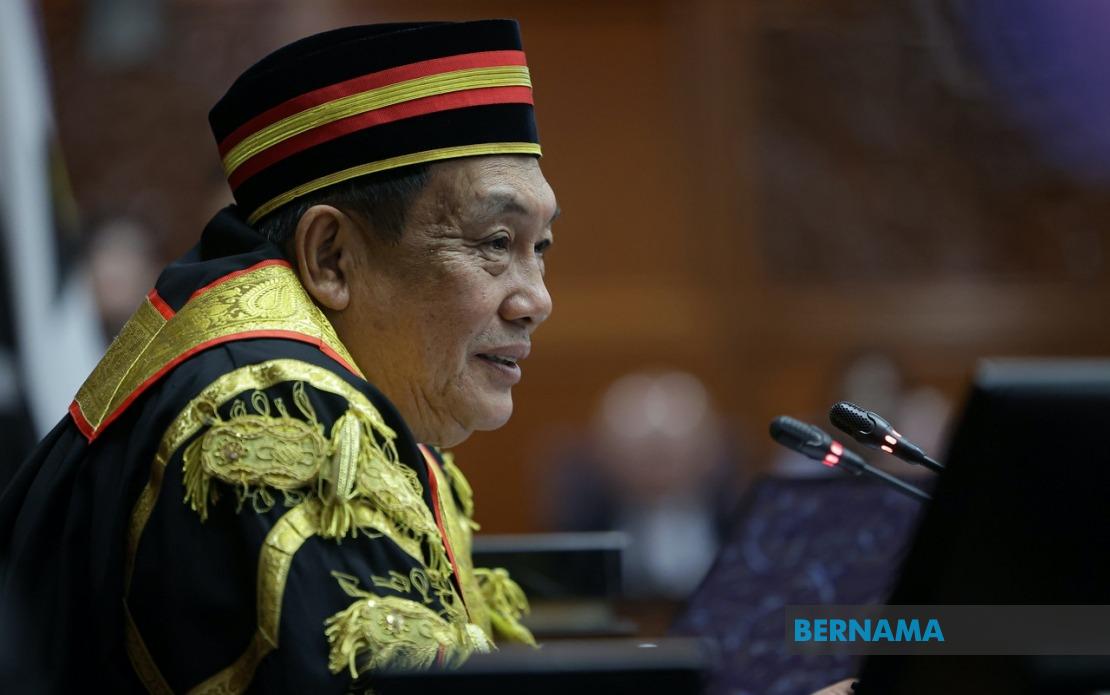
Senate President Datuk Awang Bemee Awang Ali Basah has characterised Malaysia's Youth Parliament as far more than a symbolic initiative, positioning it instead as an indispensable crucible for nurturing democracy among the nation's younger generation. Speaking at Universiti Malaysia Terengganu during the "Tranung Mari! From Campus to Parliament: Youth Voices Shaping Malaysia's Future" programme, Awang Bemee underscored how the platform equips emerging leaders with the intellectual tools and ethical foundations they require to navigate complex civic challenges.
The Senate president's framing of Youth Parliament as a "school of democracy" carries particular significance for a nation grappling with questions about generational engagement and institutional trust. By emphasising the experiential dimension—where young people engage in genuine debate, face constructive criticism, and learn to accommodate majoritarian outcomes—Awang Bemee highlighted how abstract principles of representative governance translate into lived practice. This pedagogical model recognises that understanding democracy requires more than textbook familiarity; it demands participation in actual democratic rituals, including the uncomfortable moments when one's position loses ground to competing arguments.
Central to Awang Bemee's vision is the notion that leadership comprises multiple, interconnected capacities rather than a singular talent for oratory or command. His articulation—that leadership demands listening as much as speaking, problem-solving rather than mere instruction-giving, and stewardship alongside authority—reflects a maturation of thinking about what functional governance requires. For Malaysian youth, many of whom inherit a complex multicultural political inheritance, this framework offers a counterweight to personalised or purely transactional approaches to leadership.
The complementary role Awang Bemee assigned to Youth Parliament within the broader parliamentary ecosystem deserves examination. Rather than positioning the initiative as ornamental or advisory, he argued that Parliament's function as final decision-maker is enriched by Youth Parliament's capacity to articulate generational perspectives. This relationship acknowledges that long-term policy stability requires intergenerational buy-in and that younger voters' concerns about economic mobility, climate resilience, and technological disruption cannot remain peripheral to parliamentary deliberation. For Malaysia specifically, where median age continues falling, bridging this institutional gap carries democratic and practical significance.
The three pillars Awang Bemee outlined—openness with inclusive democracy, quality education suited to contemporary needs, and liberty paired with responsibility—form an integrated framework rather than discrete commitments. The first pillar, premised on Malaysia's religious, ethnic and cultural pluralism as foundational strength rather than administrative burden, invites young people to recognise diversity as generative rather than merely tolerable. This framing becomes increasingly vital as polarisation trends globally and regionally; youth platforms that normalise respectful disagreement across communal lines contribute to social resilience.
The second pillar extends educational ambition beyond examination performance towards competencies that emerging employment landscapes demand. Awang Bemee's explicit inclusion of artificial intelligence literacy and digital skills reflects recognition that youth entering the workforce over the coming decade will navigate technological disruption their predecessors scarcely anticipated. His mention of the Blue Economy—encompassing marine renewable energy, sustainable aquaculture, and related sectors—signals alignment with Malaysia's economic diversification strategies, offering young people pathways into emerging sectors whilst anchoring opportunity within environmental stewardship frameworks.
The third pillar addresses the paradox of digital citizenship: unprecedented access to platforms for expression coupled with amplified capacity for spreading harmful content. Awang Bemee's framework—verify before sharing, scrutinise before believing, understand before judging—provides practical ethical guidance for young people navigating information ecosystems characterised by deliberate misinformation and algorithmic amplification of divisive content. His insistence that freedom of speech carries corresponding responsibility resonates particularly in Southeast Asian contexts where social media has occasionally precipitated communal tensions.
The structural initiative embedding Youth Parliament within parliamentary processes reflects institutional adaptation to demographic realities. The roadshow spanning higher education institutions explicitly attempts to dissolve the perceived distance between campus life and legislative chambers, a gap that historically contributed to youth disengagement from formal politics. By bringing Parliament's senior administration into dialogue with students—as occurred during the "Malaysian Youth: Drivers or Spectators?" forum featuring Parliament Malaysia chief administrator Datuk Dr Ahmad Husaini Abdul Rahman—the programme signals that institutional leadership genuinely values youth input rather than merely performing consultation rituals.
For Malaysia's regional standing, positioning youth civic participation as central to democratic renewal offers differentiation within broader Southeast Asian political trajectories. Whilst some regional peers have constrained space for youth activism, Malaysia's deliberate cultivation of intergenerational parliamentary dialogue suggests confidence in democratic institutional resilience. The emphasis on developing leaders with integrity and informed responsibility addresses longstanding concerns about governance quality, implicitly acknowledging that democratic legitimacy ultimately depends on leadership cohorts who internalise ethical norms rather than merely obeying formal rules.
The implicit argument underlying Awang Bemee's remarks—that nations investing in youth democratic development today secure their institutional futures—carries particular weight for Malaysia. As the country navigates transitions toward high-income status, digital economy integration, and evolving regional geopolitics, the quality of emerging leadership cohorts will substantially determine whether institutional responses remain adaptive or become brittle. Youth Parliament, conceived as practical laboratory rather than ceremonial exercise, potentially yields leaders equipped for genuine problem-solving rather than script recitation.
Awang Bemee's confidence that Malaysian youth can become "bridge-builders" uniting communities and solving problems reflects optimism tempered by strategic realism. Rather than invoking generic faith in youth idealism, his remarks emphasised the scaffolding—institutional platforms, educational preparation, ethical frameworks—required to translate youthful energy into sustained civic contribution. This grounded approach acknowledges that generational potential realises only through deliberate institutional investment and mentorship from established leadership.
The convergence of Youth Parliament expansion with broader parliamentary engagement strategies suggests institutional recognition that contemporary democratic governance requires active youth participation rather than passive compliance. For Malaysia, where youth constitute substantial population shares and where generational attitudes toward technology, diversity, and environmental stewardship diverge considerably from older cohorts, creating legitimate channels for youth voice becomes not merely pedagogically valuable but institutionally necessary. The initiative's success will largely depend on whether parliamentarians genuinely incorporate youth input into decision-making or whether the exercise remains fundamentally consultative theatre.

