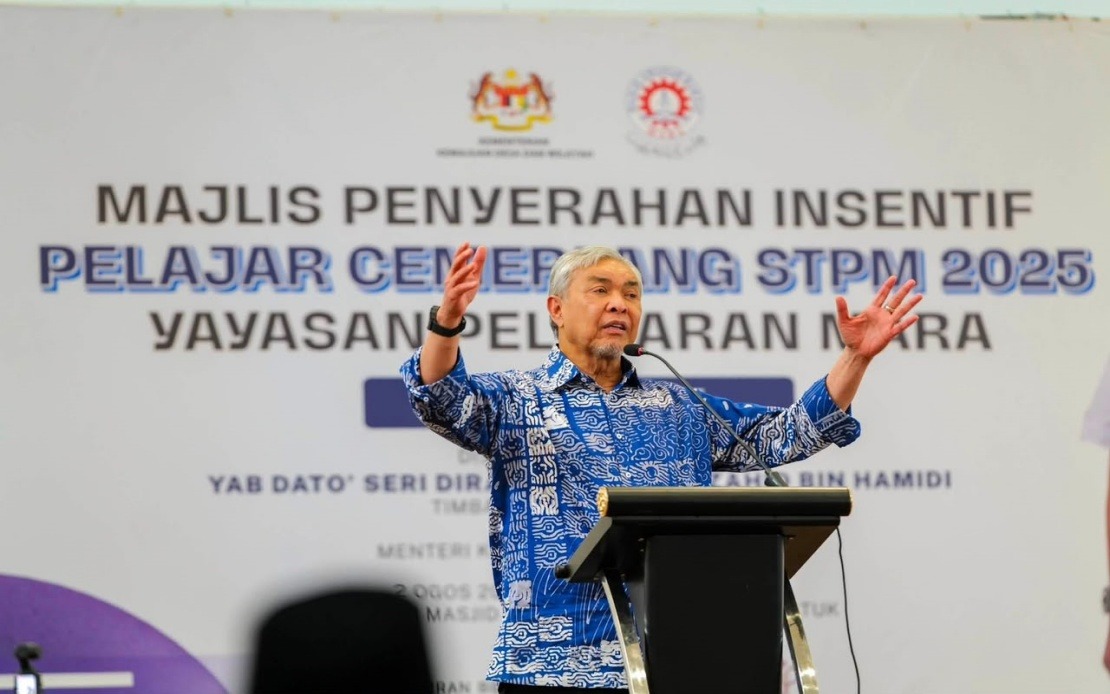
The Yayasan Pelajaran MARA (YPM) has honoured 38 students from two Bagan Datuk secondary schools for their exceptional performance in the 2025 Sijil Tinggi Pelajaran Malaysia (STPM) examination. The recipients, drawn from Sekolah Menengah Kebangsaan Khir Johari and Sekolah Menengah Kebangsaan Tun Abdul Razak, received recognition through the YPM's Excellence Incentive programme, which aims to motivate top academic performers across Malaysia. The awards underscore the calibre of students emerging from Perak's Bagan Datuk district and reflect the continued investment by government-linked educational foundations in nurturing talent at the pre-university level.
Deputy Prime Minister Datuk Seri Dr Ahmad Zahid Hamidi, who also serves as the Member of Parliament for Bagan Datuk, highlighted the broader significance of these achievements during an announcement on his official social media channels. Beyond the STPM recognition, he drew attention to three students from the district who have earned admission to Al-Azhar University in Egypt, where they will pursue studies in Islamic Syariah and Usuluddin. This international pathway represents a significant accomplishment for the students and demonstrates their readiness for advanced Islamic education at a globally respected institution. The inclusion of these overseas placements in the announcement reflects the government's strategic interest in supporting students pursuing religious and Islamic studies abroad.
In addition to the STPM Excellence Incentive recipients, a further 23 students from the same schools have been awarded support through the YPM Education Compassionate Fund. This parallel programme addresses financial barriers to education and underscores the foundation's dual approach to student support, combining merit-based recognition with need-based assistance. The compassionate fund mechanism is particularly significant in Malaysian educational policy, as it ensures that economic constraints do not prevent talented students from progressing to higher education. The provision of such support alongside excellence awards sends a strong message that both achievement and circumstance are factored into educational opportunity allocation.
Datuk Seri Dr Ahmad Zahid Hamidi framed these outcomes as evidence of untapped potential within Bagan Datuk's student population. His remarks stressed that when young people receive appropriate opportunities, quality guidance, and systematic support, they demonstrate capability comparable to peers in other regions. This observation carries implications for how policymakers assess educational disparity across districts, particularly in states like Perak where some areas face infrastructure or resource constraints relative to more developed regions. The success of Bagan Datuk students suggests that district-level variation in outcomes may reflect institutional factors and support systems rather than inherent differences in student capacity.
The Bagan Datuk MP placed particular emphasis on education's transformative role in community development, articulating a conviction that knowledge acquisition represents an optimal investment in human capital formation. This framing aligns with Malaysia's broader national development agenda, which has long positioned education as foundational to economic growth and social mobility. His remarks carry resonance for Malaysian parents and educators grappling with questions about educational priorities amid competing economic pressures. By elevating the narrative around these students' achievements, the parliamentary representative reinforced the connection between individual academic success and collective community progress.
The recognition programme also carries implications for educational policy in the state of Perak and the broader Klang Valley region. YPM's decision to expand and publicise its incentive schemes through high-profile political endorsement suggests deliberate effort to increase awareness among target student populations and their families. When government figures actively promote educational awards, they create demonstration effects that may encourage greater participation in scholarship applications and academic competitions. The visibility generated through such announcements can influence parental expectations and student motivation in ways that extend beyond the immediate cohort of awardees.
Datuk Seri Dr Ahmad Zahid Hamidi's call for parents to maintain their role as sources of encouragement and support addresses a dimension of educational success often underemphasised in policy discussions. The emphasis on family involvement recognises that academic achievement depends not only on school infrastructure and teacher quality but also on the home environment and parental engagement. In Malaysian educational contexts, where family support systems vary significantly across socioeconomic strata, this reminder carries practical weight. The message implicitly acknowledges that institutions cannot fully compensate for inadequate home support, while also affirming that institutional support can amplify the effects of positive family involvement.
The announcement includes an explicit hope that more Bagan Datuk students will pursue higher education both within Malaysia and internationally, with the expectation that they will subsequently contribute to local development. This articulation of a brain gain strategy—attracting talent back to the district after tertiary education—reflects concern about talent migration in smaller parliamentary constituencies. Many rural and semi-urban Malaysian districts experience outmigration of educated youth to metropolitan areas; the deputy prime minister's statement suggests awareness of this pattern and desire to create incentives for return migration. However, the success of such strategies depends on availability of employment opportunities and quality of life considerations in the home district, factors not addressed in the current announcement but relevant to long-term talent retention.
The timing of these awards during the August period aligns with Malaysia's academic calendar transition, when STPM results are typically released and students plan their higher education pathways. YPM's proactive recognition during this window serves strategic purposes, both motivating future cohorts of students and validating the foundation's role in the educational ecosystem. For Malaysian secondary school students currently preparing for major examinations, these accounts of peer achievement in established incentive programmes can influence academic aspiration and effort allocation. The documentation of success stories, particularly when amplified through official channels and political figures, contributes to construction of normative expectations around achievement in specific communities.
Beyond the immediate recognition of these 38 students, the YPM initiative reflects broader patterns in Malaysian educational governance, where semi-autonomous foundations play significant roles in supplementing government provision. These institutions operate with government support but retain operational flexibility that allows targeted interventions based on merit, need, or policy priorities. The existence of parallel funding streams—excellence incentives, compassionate funds, and international scholarship pathways—suggests layered approaches to student support that attempt to address multiple barriers and motivations. For policymakers evaluating educational equity, such multi-pronged programmes offer potential models, though their effectiveness depends on awareness, accessibility, and alignment with student aspirations.
The recognition of Bagan Datuk students also intersects with Malaysia's commitment to developing Islamic scholarship, evidenced by the emphasis on Al-Azhar placements. Malaysia maintains strategic educational partnerships with premier Islamic institutions globally, viewing them as sources of theological expertise and Islamic intellectual capital. Students pursuing syariah and usuluddin studies abroad are positioned as future leaders in Malaysia's Islamic institutions, whether in religious governance, education, or judicial systems. The public acknowledgment of these international placements signals government investment in this pipeline and reinforces Islamic education as a legitimate and valued pursuit within Malaysia's broader educational framework.

