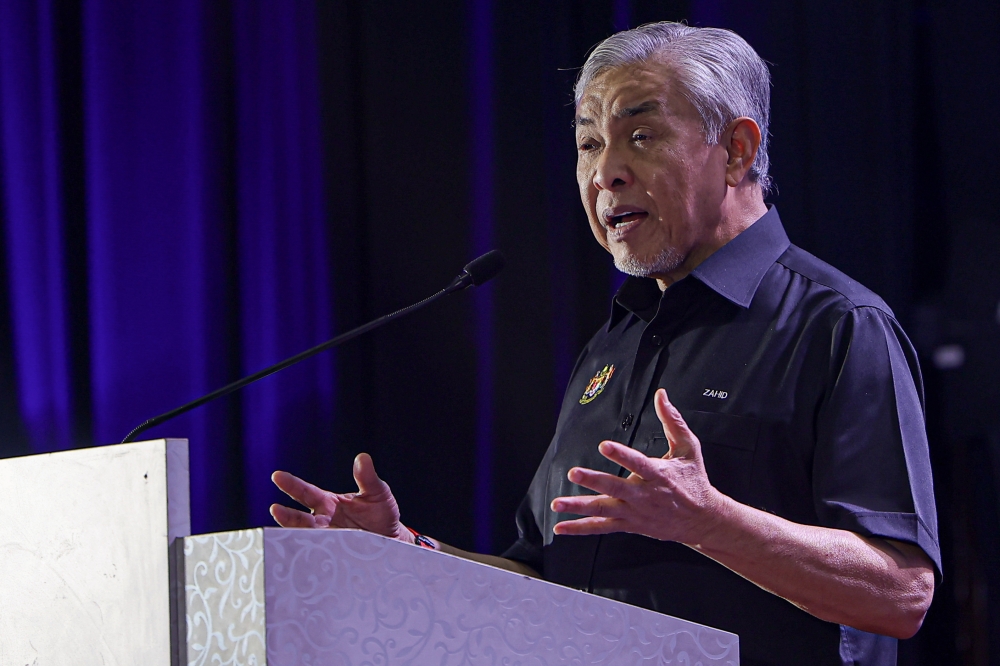
Deputy Prime Minister Datuk Seri Ahmad Zahid Hamidi has levelled serious allegations that civil service officers across multiple ministry departments are facing coercion to attend Barisan Nasional-linked activities during the current phase of state electoral campaigns. The assertion, made in Putrajaya, raises fresh questions about the intersection of government administration and political party machinery during election periods—a sensitive area in Malaysian governance where the boundary between official duties and partisan engagement remains contested.
Zahid's claim touches on a longstanding tension in Malaysian politics: the extent to which the state apparatus can be mobilised for the benefit of ruling coalition parties without compromising civil service neutrality. Federal regulations, including the Code of Ethics for the Malaysian Civil Service, establish that public officers must remain impartial and refrain from direct partisan involvement. However, the practical implementation of these principles has historically proven difficult to enforce, particularly when senior political figures signal expectations about workforce participation in campaign-related functions.
The timing of Zahid's statement carries particular weight given Malaysia's fragmented electoral calendar. State elections continue to be staged across different states on separate dates, meaning various regions are simultaneously conducting campaigns while civil servants theoretically remain bound by their duty to serve all citizens regardless of political affiliation. This ongoing campaign environment creates recurring opportunities for the type of pressure Zahid alleges to manifest across the bureaucracy.
The incident underscores how election cycles in Malaysia can test the institutional independence of government agencies. When ministry officers are expected or encouraged to participate in activities organised by or closely aligned with ruling coalition entities, the distinction between legitimate official participation and improper political mobilisation becomes blurred. Even without explicit coercion, the hierarchical nature of government employment may create implicit pressure on subordinates to align with political initiatives endorsed by their superiors.
Zahid's decision to publicly air these allegations—rather than addressing them through internal civil service mechanisms—suggests either frustration with existing oversight mechanisms or a deliberate strategy to highlight what he views as systematic pressure on the civil service. By bringing the matter into public discourse, the Deputy Prime Minister may be attempting to establish accountability for practices he contends are occurring across government departments.
The implications for the civil service are considerable. If such pressure campaigns are indeed widespread, they represent a departure from the professional standards that have theoretically governed Malaysian public administration. The civil service is intended to function as a permanent, politically neutral institution that serves governments of all political complexions. When that neutrality is compromised through systematic pressure to participate in partisan activities, the entire institutional framework is weakened.
For ordinary Malaysians, these allegations carry practical significance. Citizens expecting impartial treatment from government agencies may reasonably question whether civil servants are allocating their time and attention fairly or whether they are distracted by political obligations. The quality of public service delivery can suffer when government employees are expected to divert resources toward political campaign activities.
The broader Southeast Asian context is also relevant. Several countries in the region struggle with similar challenges regarding civil service politicisation. How Malaysia addresses this issue—whether through stronger enforcement of neutrality codes, clearer guidelines defining permissible activities, or stronger consequences for coercion—may offer lessons for neighbouring states grappling with comparable governance questions.
Government response to Zahid's allegations will be crucial in determining whether the matter receives serious institutional attention or is allowed to fade from public discourse. If confirmed, such pressure would warrant investigation and corrective action to reinforce civil service principles. Conversely, if the allegations lack substantiation, clarification would help restore confidence in the impartiality of government operations.
The situation also illuminates the challenge facing senior officials who must navigate between maintaining party loyalty and upholding institutional independence. Zahid's public remarks suggest he believes the current arrangement has tilted too far toward political mobilisation at the expense of civil service neutrality. His intervention may serve as a catalyst for broader discussion about how to establish clearer boundaries between legitimate government activities and partisan campaign work during election periods.
Moving forward, Malaysian institutions may benefit from revisiting and reinforcing guidelines that protect civil servants from pressure to participate in political activities. Strengthening these protections would help ensure that government agencies maintain their primary focus on delivering public services rather than being drawn into campaign machinery. The stakes extend beyond individual election cycles to encompass the fundamental question of whether Malaysia's civil service can retain its institutional independence and professional character during increasingly frequent and overlapping electoral contests across different state jurisdictions.

