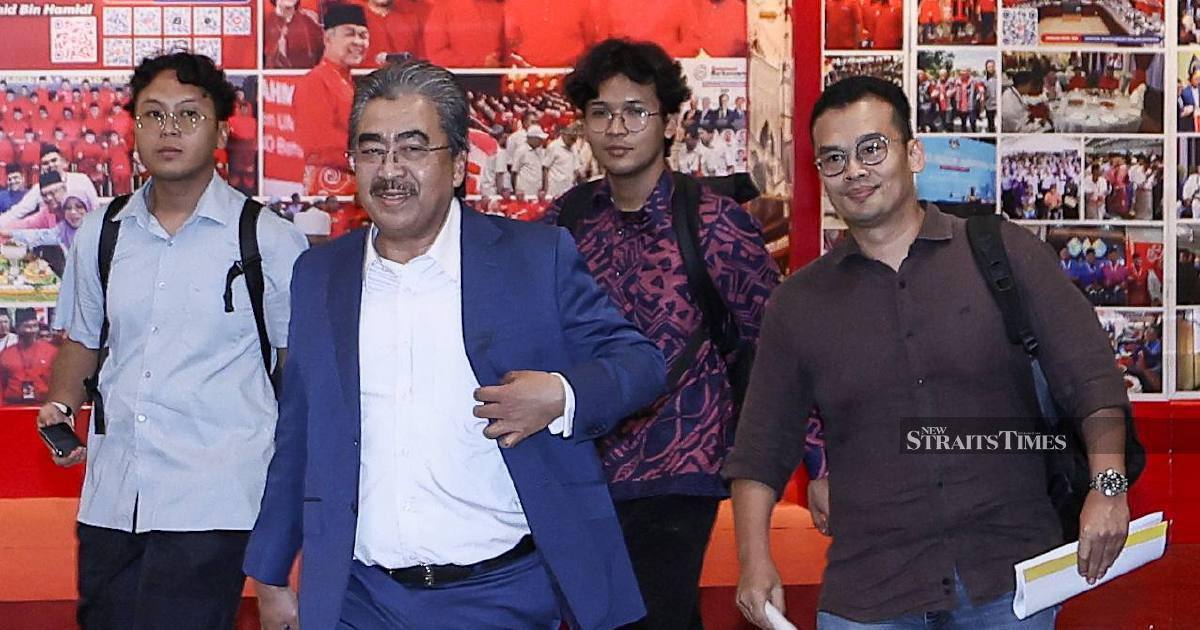
Deputy Prime Minister Zahid Hamzah has assembled Malaysia's top coalition leaders for a closed-door briefing on the recently declassified Royal Commission of Inquiry report examining the operations and management of Lembaga Tabung Haji (TH), the hajj savings institution that administers pilgrimage finances for hundreds of thousands of Malaysian Muslims. The high-level gathering at Umno party headquarters in Kuala Lumpur represents a carefully choreographed effort to align the leadership of both major political coalitions—Barisan Nasional and Perikatan Nasional—on the sensitive institutional review before any wider public discussion unfolds.
The decision to hold the briefing in restricted format underscores the politically delicate nature of the RCI findings. Lembaga Tabung Haji has long occupied a sacred position in Malaysian public administration, managing contributions from approximately 1.8 million account holders who save specifically for their hajj obligations. The institution's credibility and operational integrity carry profound implications not merely for financial stewardship but for public trust in government-linked entities managing religious and personal savings. Any critical findings from the royal commission would inevitably draw scrutiny toward governance failures, investment decisions, or administrative lapses—matters that reflect directly on political oversight.
Tabung Haji's path to this formal inquiry reflects mounting public concern that accumulated over several years. The hajj savings body has faced repeated questions regarding its investment portfolio performance, particularly after market downturns substantially reduced account values for some members. Questions about whether institutional leadership adequately safeguarded contributors' funds, whether risk management protocols were sufficiently robust, and whether governance structures prevented conflicts of interest have persisted in parliamentary debates and media reporting. These concerns ultimately prompted the establishment of the royal commission to conduct a comprehensive examination of internal operations and decision-making processes.
The participation of leaders from Perikatan Nasional alongside the Barisan Nasional coalition signals an attempt to transcend partisan divisions on this particular institutional matter. Since the country's fractured political landscape has made consensus difficult on numerous policy questions, the coordination between these two competing coalitions suggests recognition that Tabung Haji challenges transcend ordinary electoral politics. The institution's importance to the Muslim majority population and its role in facilitating religious obligations means that mismanagement carries consequences extending beyond financial considerations into the realm of religious and cultural responsibilities.
The RCI's declassification represents a deliberate release of findings previously held under restricted access. This administrative decision carries its own significance, implying that authorities believed information was ready for controlled dissemination to senior leadership before broader public revelation. The timing and method of disclosure—through executive briefings rather than immediate legislative scrutiny or public announcement—reveals preferences within government circles regarding how sensitive institutional reviews should be managed and digested by leadership structures.
For Malaysian political observers, this gathering illustrates how sensitive institutional governance issues are navigated within Malaysia's coalition-based parliamentary system. Senior leaders require advance briefings on damaging institutional reports to prepare messaging, coordinate responses across party lines, and potentially discuss remedial actions before public announcements occur. This approach permits leadership to establish unified positions and prevent the kind of competitive finger-pointing that would transpire if individual parties first learned of critical findings through media channels or parliamentary proceedings.
The implications for Tabung Haji contributors remain uncertain pending wider disclosure of RCI recommendations. Potential remedies could range from management personnel changes to structural governance reforms, enhanced oversight mechanisms, investment policy revisions, or accountability measures targeting past decision-makers. Contributors—particularly those whose account values were substantially diminished during volatile market periods—will scrutinize whether findings validate their longstanding concerns and whether proposed solutions genuinely prevent recurrence of identified problems.
Beyond the immediate institutional concerns, the RCI process and its findings carry broader significance for Malaysian governance standards. Royal commissions represent formal mechanisms through which government addresses systemic institutional problems, investigates alleged failures, and proposes corrective frameworks. Public confidence in such processes depends upon transparent investigation, candid findings, and demonstrable implementation of reforms. How authorities handle Tabung Haji's RCI report—whether through genuine accountability or protective positioning of incumbent interests—will influence perceptions regarding government responsiveness to institutional governance failures.
The hajj savings institution's challenges also reflect global patterns affecting sovereign wealth funds and government-managed investment vehicles. Performance pressures, market volatility, governance complexity, and the perpetual tension between risk-taking necessary for returns and prudent fund protection create vulnerabilities in institutional management. Lembaga Tabung Haji's experience offers instructive case study material for other comparable institutions across Southeast Asia managing savings or investment vehicles dependent on public trust.
Looking forward, Malaysian political constituencies will await substantive disclosure of RCI findings and government responses. For the millions of contributors whose religious obligations and personal finances intertwine with Tabung Haji's performance, the inquiry outcome carries tangible consequences. For political leadership, the challenge involves demonstrating that institutional accountability operates meaningfully despite political incentives to minimize institutional embarrassment. The restricted briefing represents preliminary navigation of that tension, with wider public reckoning presumably forthcoming.

