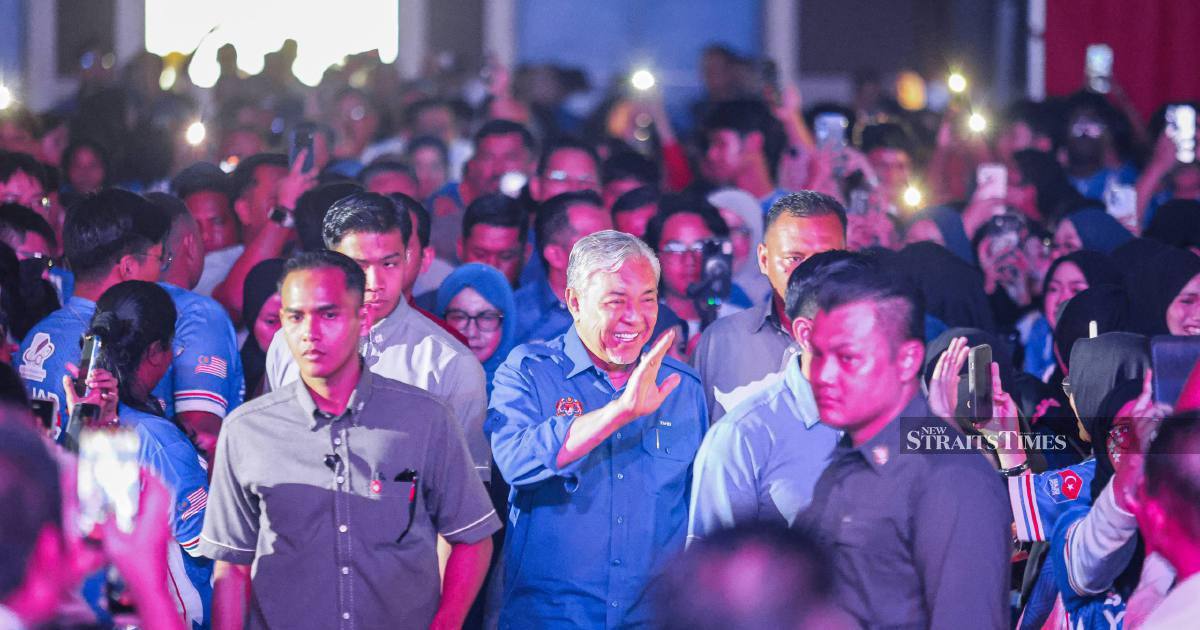
Barisan Nasional is banking heavily on retaining the confidence of Johor's younger voters to secure a decisive victory in the July 11 state election, with party leaders positioning caretaker menteri besar Datuk Onn Hafiz Ghazi as the coalition's primary appeal to the youth demographic. The centrality of this strategy reflects the coalition's recognition that generational support remains critical in determining the electoral outcome in Malaysia's southern economic engine.
Onn Hafiz, who currently leads the state government in a caretaker capacity, has become the face of BN's developmental agenda in Johor. His appointment as the coalition's leading figure signals a calculated effort to present fresh leadership while maintaining continuity of governance. The 39-year-old politician represents a bridge between traditional BN values and the aspirations of younger voters who increasingly demand accountability, transparency, and concrete delivery of public goods.
The campaign's emphasis on youth engagement stems from demographic realities that have shifted Malaysian electoral politics over the past decade. Younger voters now constitute a substantial portion of the electorate in Johor, and their participation rates have proven volatile. BN recognises that losing ground among this cohort could fracture its traditional dominance in a state where the coalition has historically performed strongly. The party's focus on Onn Hafiz's agenda attempts to neutralise perceptions that BN represents outdated politics disconnected from young people's concerns.
Johor's development trajectory under the current administration offers concrete terrain for this pitch. Infrastructure projects, economic diversification efforts, and investments in skills training have been framed as deliverables that demonstrate BN's capacity to govern effectively. The state's role as a crucial economic component of Malaysia's southern corridor means that development outcomes here have ripple effects across the broader region, making governance competence a tangible election issue rather than abstract political positioning.
The coalition's strategy also acknowledges that Johor presents both opportunity and risk. The state has shifted political terrain multiple times in recent electoral cycles, and complacency could prove costly. BN's decision to elevate Onn Hafiz reflects an assessment that personality-driven politics around competent, engaged leadership can overcome structural headwinds facing traditional coalition politics. The caretaker menteri besar's relative youth and clean governance credentials offer differentiation from older political narratives.
For Malaysian and Southeast Asian observers, this campaign reveals how regional parties are adapting to electoral volatility by emphasising technocratic competence and visible results over ideological positioning. The BN approach mirrors strategies adopted by governing coalitions elsewhere in the region, suggesting convergence around results-based legitimacy rather than partisan loyalty alone. This trend has significant implications for how Asian democracies compete and sustain electoral support across generational divides.
The July 11 election will test whether this formula resonates with Johor's electorate. Opposition parties have their own youth-focused candidates and messages, creating a genuine competitive environment where younger voters will exercise meaningful choice. The outcome will signal whether BN can successfully modernise its appeal or whether the coalition's traditional support base is eroding faster than new recruitment can offset.
Johor's position as Malaysia's second-largest economy amplifies the stakes beyond state-level politics. A decisive BN victory would strengthen the coalition's narrative of renewed relevance and capability heading into future federal-level competition. Conversely, a narrower-than-expected margin would validate concerns among BN strategists about declining intergenerational transfer of party loyalty, prompting urgent reassessment of political messaging and candidate selection processes.
The emphasis on Onn Hafiz also reflects BN's broader talent management strategy. By showcasing younger leaders who deliver results, the coalition aims to project institutional depth and succession planning, countering narratives that portray BN as a collection of aging establishment figures. This generational positioning carries significance not merely for Johor but for how the coalition positions itself to Malaysian voters across all states and demographics.
Youth engagement in electoral campaigns represents one of the most reliable indicators of party health and longevity. BN's investment in securing Johor's younger voters through the Onn Hafiz campaign signals recognition that winning future elections requires building support among cohorts who did not experience BN's historical dominance and approach politics through contemporary lenses emphasising governance quality, digital engagement, and policy responsiveness. The July 11 election will provide a crucial data point on whether this adjustment strategy is succeeding.

